Iran's Nuclear Red Line Is a Negotiation Tactic, Not a Wall
Tehran's refusal to discuss its nuclear program until hostilities cease is strategically coherent — but it hands Washington a propaganda weapon in the process.
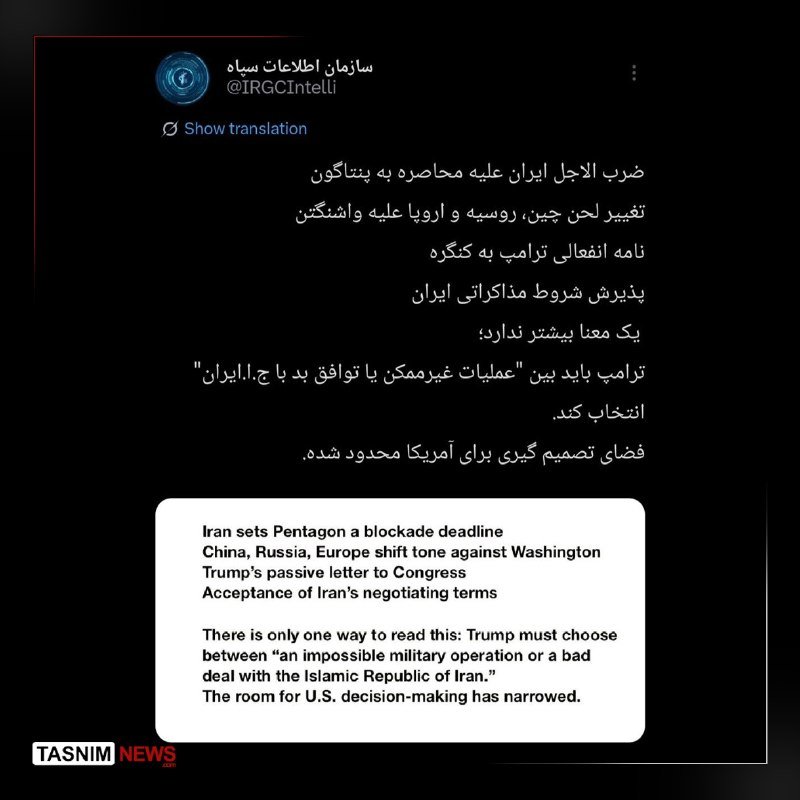
Iran has delivered what Axios, citing two informed sources, describes as a fourteen-point proposal to Washington — and attached a deadline. One month. That is the window Tehran has given the Trump administration to begin substantive negotiations, according to the 3 May 2026 Axios report carried across wire services.
There is a second condition buried in that proposal. According to a separate New York Times account, also published on 3 May 2026, Iranian officials have stated explicitly that no discussion of the country's nuclear program will occur until hostilities are permanently ended. The word matters: permanently. Not suspended. Not paused. Ended.
Taken together, the two elements form a negotiating posture that is coherent in its own logic — and potentially self-defeating in terms Western diplomats will recognise immediately.
The structural logic of linkage
Tehran's position is not irrational. It is a restatement of a principle Tehran has held since at least 2015: that nuclear concessions made under the shadow of sanctions and military pressure are concessions extracted under duress, and therefore reversible and legally questionable. By insisting that any nuclear talks be conditioned on a full cessation of hostilities, Iran is not merely making a demand — it is trying to establish the sequence of events that would govern any subsequent agreement. Deal first, nuclear commitments second.
That sequencing question is not trivial. It is, in fact, the central structural dispute that has defined Iran nuclear diplomacy since the original JCPOA. The United States — under Obama, under Biden, and now under Trump — has consistently preferred the inverse order: verification of nuclear curbs first, sanctions relief second. Iran has always preferred the inverse. The 3 May proposal does not break new ground on this point. It simply reaffirms an established and non-negotiable starting position.
What is new is the temporal pressure. The one-month deadline introduces an element of urgency that Tehran has not previously imposed on direct US negotiations. It signals that Iran does not intend to allow talks to stretch indefinitely while sanctions bite. That is a negotiating tool, not an ideological position.
Washington's dilemma
The danger for Washington is not that Iran is being unreasonable. It is that Iran's stated preconditions sound, in summary form, like an unreasonable maximalist position — and that makes them useful as counterpropaganda.
A negotiating party that refuses to discuss its most sensitive proliferation-related programmes until an overarching political settlement is reached is, in the language of Western framing, a party that is not serious about denuclearisation. That framing is available to the Trump administration regardless of whether it is accurate. And it will be used.
The harder truth is that Iran understands this. Tehran's officials, according to the NYT reporting, are not naive about how Washington presents these issues publicly. The refusal to pre-commit to nuclear talks before a ceasefire is permanent is, among other things, a bid to make the sequencing question unsellable as a concession. Tehran is trying to foreclose the diplomatic manoeuvre in which the US extracts nuclear commitments first and then uses the absence of a broader political settlement to impose additional pressure.
What the deadline actually means
A one-month negotiating window is unusually short for state-level diplomacy. It is long enough for working-level talks to begin — not long enough for the kind of comprehensive settlement Iran is apparently demanding. That asymmetry suggests the deadline is performative as much as it is substantive.
Tehran is signalling impatience. It wants visible engagement, not another round of preliminary conversations that buy time while sanctions continue to tighten. The deadline functions as a cost-imposer: if Washington walks away or stalls, Iran can credibly claim it offered a structured path toward negotiation and was refused — a framing that has multipolar resonance in diplomatic circles well beyond the Western alliance system.
Whether that framing succeeds depends on variables the source material does not fully specify — notably the degree to which European and Asian partners are willing to intermediate, and whether the Trump administration has appetite for a deal at all. The Axios report does not indicate whether the fourteen-point proposal includes any concessions on matters other than sequencing. That omission matters.
The stakes of failure
If the one-month window closes without substantive engagement, the most probable trajectory is continued escalation on the sanctions front and an intensified US pressure campaign — with the nuclear question left formally unresolved but practically constrained by the absence of a deal. That outcome serves neither side cleanly. Iran continues to face economic pressure. The United States continues to face the reality of an Iranian nuclear programme that, without a negotiated framework, cannot be verifiably constrained through any mechanism short of military action.
The alternative — serious engagement within the window — requires Washington to accept a sequencing premise it has historically rejected. Whether the Trump administration is willing to do that is the operative question the next thirty days will answer. Iran's conditions are not maximalist in their internal logic. They may prove maximalist in their political reception.
This publication will continue monitoring the reporting from Tehran and Washington for signs of working-level engagement before the stated deadline.
Wire provenance
This editorial synthesis draws on the following public wire/social posts:
- https://t.me/FarsNewsInt/84712
- https://t.me/GeoPWatch/44891
- https://t.me/FarsNewsInt/84708