Iran's Three-Stage Peace Proposal Reshapes US Negotiation Calculus as Pakistan-Mediation Channel Emerges
Tehran's detailed three-stage framework for ending hostilities, mediated through Islamabad, represents the most concrete diplomatic overture from Iran in recent negotiations, though disputed maritime incidents complicate the signaling environment.
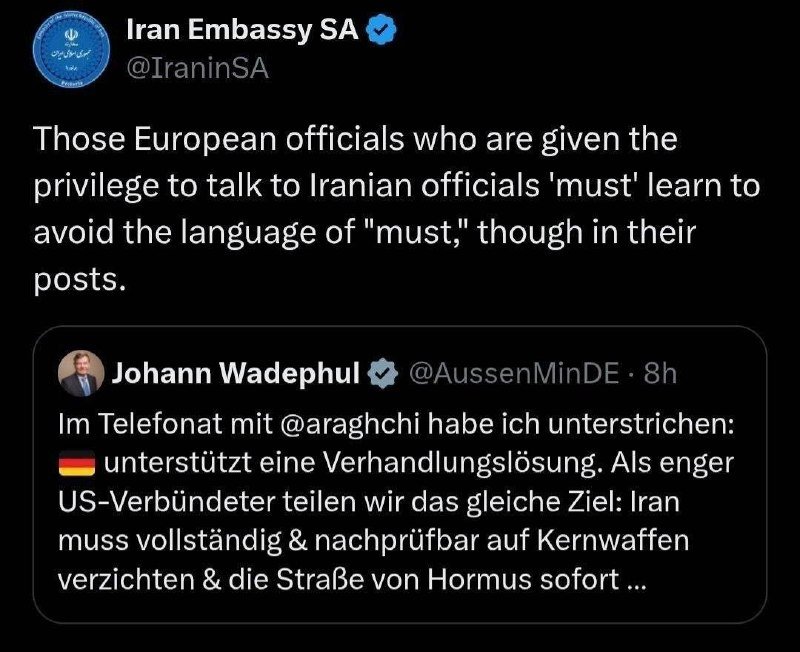
Iran has transmitted a detailed three-stage proposal to the United States through Pakistan, according to reporting by Al Jazeera on 3 May 2026, marking the most concrete diplomatic framework Tehran has put forward in the current round of negotiations. The proposal, described by Iranian-aligned sources as a comprehensive roadmap to end the war, begins with an immediate ceasefire and the formal cessation of hostilities. The existence of a written counterproposal from Washington, currently under review by Iranian officials, signals that both parties have moved beyond preliminary posturing into substantive exchange—a development that analysts have sought for months.
The Al Jazeera disclosures, sourced from what the network describes as informed interlocutors familiar with the negotiating channel, reveal an unusually specific structure to Iran's approach. Rather than offering broad principles or conditional frameworks, the three-stage design maps explicit sequencing: a first phase terminating active combat operations, followed by secondary arrangements covering verification and monitoring mechanisms, with a third stage addressing longer-term political and economic dimensions of a durable settlement. Whether that third stage encompasses sanctions relief, regional security guarantees, or the status of disputed assets remains the substantive question dividing the two capitals. What is clear is that Tehran has moved from rhetorical openness to procedural specificity—a qualitative shift in the negotiating posture.
Pakistan's Back-Channel Role Comes Into Focus
The mechanism transmitting these proposals is itself newsworthy. According to reporting from Tasnim on 3 May 2026, Iran's 14-point response on ending the war was formally delivered to Pakistani mediators, with Islamabad serving as the primary conduit for communications between Tehran and Washington. This represents a notable reconfiguration of diplomatic geography: Pakistan, a nuclear-armed state with longstanding but often adversarial ties to both Iran and the United States, has positioned itself as the indispensable interlocutor in a back-channel that bypasses more formal multilateral formats.
The choice carries both practical and political logic. Pakistan's intelligence and diplomatic services maintain established relationships with Iranian counterparts that Western governments cannot easily replicate, while Islamabad's strategic relationship with Washington—however strained—provides a familiar institutional framework. Whether Pakistan is acting as a neutral facilitator or has actively encouraged the process to position itself as a regional peace-broker remains unclear from available sources. What is verifiable is that the Pakistani channel is now the operational backbone of what has become a functioning, if unofficial, diplomatic pipeline.
Maritime Tensions Complicate the Diplomatic Signal
The diplomatic momentum exists against a backdrop of ongoing regional volatility. Earlier on 3 May 2026, Tasnim reported that Iranian armed forces had stopped a vessel near the Strait of Hormuz—the world's most critical maritime chokepoint for oil shipments. The report, attributed to a Fars news agency correspondent, generated significant concern in shipping and security circles given the strait's centrality to global energy markets. However, Tasnim subsequently corrected the record, noting that initial reports of a bulk carrier seizure were false. The sequence—unconfirmed claim, widespread amplification, formal correction—underscores the difficulty of independently verifying events in a contested maritime environment and the speed at which provocative imagery can destabilize diplomatic atmospherics.
That the correction arrived within hours is significant. It suggests either genuine initial uncertainty in reporting chains or a deliberate Iranian decision not to escalate the maritime dimension while nuclear talks proceed through the Pakistani channel. The most charitable reading is discipline: Tehran appears aware that military bravado near Hormuz would undermine the goodwill its negotiating proposal seeks to generate. The least charitable reading is that confusion management is itself a tool—demonstrating reach without accepting the costs of exercise. The sources do not resolve which interpretation applies.
The Structural Logic of Tehran's Timing
The proposal arrives at a moment of accumulated pressure. Months of economic strain, compounded by sanctions that have degraded Iran's oil-export capacity and constrained access to international financial infrastructure, have created conditions under which negotiated relief becomes increasingly attractive to a regime that has survived through resilience rather than prosperity. The incoming US administration's stated willingness to pursue diplomatic channels—without the maximalist preconditions that deadlocked previous talks—created an opening Tehran has apparently decided to test.
What the three-stage framework reveals, structurally, is an attempt to separate the achievable from the aspirational. An immediate ceasefire does not require agreement on the harder political questions; it can be verified, monitored, and—critically—can deliver immediate humanitarian relief that both sides can claim credit for. The sequencing allows each party to declare victory at stage one while deferring the contentious architecture of stage three. This is not unique to Iranian diplomacy—interim agreements routinely exploit the psychological difference between what parties will accept in extremity versus in prosperity—but it is a recognizable negotiating posture that has worked in comparable settings.
What Remains Unresolved and Why It Matters
Several dimensions of this evolving situation remain opaque in the available sourcing. The specific content of the American counterproposal has not been disclosed by any confirmed outlet. The verification mechanisms referenced in stage two—what they would look like, who would operate them, under what mandate—have not been detailed in the public record. The role of other regional actors, including Israel, which has maintained that any Iran nuclear arrangement must include permanent constraints on enrichment capacity, is absent from the current reporting. The sources do not indicate whether the Pakistani channel has communicated Israeli red lines to either party.
What can be stated with confidence is that a functional, if indirect, negotiation between the United States and Iran now exists, that Pakistan has become its primary institutional vessel, and that Iran has put substantive proposals on the table rather than procedural placeholders. Whether those proposals represent genuine flexibility or tactical sequencing designed to extract early sanctions relief while deferring hard commitments is a question the current evidence does not answer. The coming days, as both capitals process the other's written responses through Islamabad, will determine whether the diplomatic window remains open or whether the familiar pattern of near-misses reasserts itself.
This publication's approach to the Iran negotiation coverage differs from wire-service emphasis on military posturing by foregrounding the Pakistani mediation channel and treating the back-channel architecture as analytically primary—a structural choice that conventional reporting often submerges beneath the headline claims of each side.
Wire provenance
This editorial synthesis draws on the following public wire/social posts:
- https://t.me/englishabuali/12438
- https://t.me/abualiexpress/8921
- https://t.me/tasnimplus/15421
- https://t.me/tasnimplus/15423
- https://t.me/farsna/6721