Iran Confirms US Response on 14-Point Peace Plan Delivered via Pakistan
Tehran confirms it received Washington's response to a 14-point peace proposal through an intermediary, with the nuclear question explicitly excluded from the framework.
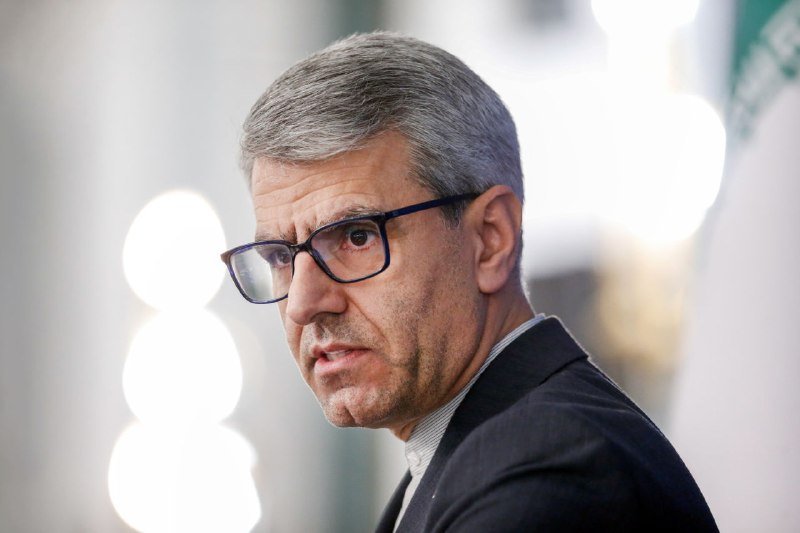
Iran's Foreign Ministry confirmed on 3 May 2026 that the United States has delivered a response to Tehran's proposed 14-point peace framework, with the communication routed through Pakistan. The acknowledgment marks the first direct confirmation from an Iranian official that backchannel diplomatic exchange is underway, following weeks of speculation in regional and international wire reports.
Foreign Ministry spokesman Esmail Baghaei said in a press statement carried by Iranian state media that Washington's view regarding Tehran's proposal has been conveyed to Iran via Pakistan, and that the position is currently under review. "After final deliberation, Iran will announce its stance," Baghaei said, according to remarks published by Tasnim News on 3 May. The spokesman added that the proposed 14-point plan addresses exclusively the resolution of ongoing conflict, and that the nuclear question holds no place within the framework.
The disclosure arrives amid renewed regional concern over security flashpoints that have drawn in multiple Gulf states, and follows a period of elevated diplomatic activity between Washington and Tehran through channels that have rarely been publicly acknowledged. Pakistan, which shares a long land border with Iran and maintains a complex bilateral relationship with both parties, has previously served as an informal diplomatic intermediary in regional disputes, though its precise role in this instance remains incompletely delineated by available sourcing.
A Framework Built Around War, Not the Nuclear File
The explicit exclusion of the nuclear programme from the 14-point plan signals a strategic recalibration in Tehran's negotiating posture. Previous rounds of nuclear diplomacy under the Joint Comprehensive Plan of Action placed the uranium enrichment dispute at the centre of any potential agreement, with sanctions relief contingent on verifiable limits to Iran's atomic activities. The current framework, by contrast, appears designed to de-link the nuclear question from whatever conflict-resolution architecture Iran is proposing, creating a sequence in which a ceasefire or war-ending agreement would precede any broader nuclear negotiation.
That sequencing matters. It allows Tehran to table a proposal that addresses what Iranian officials publicly describe as the most pressing concern — the continuation of hostilities — without immediately confronting the issue that has historically produced the sharpest disagreements with Western interlocutors. Whether Washington views this as a constructive first step or as an attempt to isolate the nuclear file from consequences remains the central question the backchannel exchange is designed to answer.
Iranian state media framing presents the plan as a humanitarian and stabilisation exercise rather than a political concession. The 14 points, as described by Baghaei, centre on ending bloodshed and establishing conditions for regional dialogue. Tehran's willingness to table such a framework without a nuclear component may reflect a calculation that a partial de-escalation agreement, even a limited one, shifts leverage in subsequent rounds of negotiation.
What Remains Deliberately Unsaid
Neither the Iranian nor the Pakistani statement specifies the content of Washington's reply, nor does either side confirm whether the US response was transmitted in writing or conveyed verbally through diplomatic personnel in Islamabad. Regional wire services have carried unconfirmed accounts of a Pakistani envoy visiting Tehran in recent weeks, but available sourcing does not independently corroborate the timing, level of delegation, or substance of those reported meetings.
Equally unclear is whether the Trump administration's response — assuming it has indeed replied — was prepared by the State Department or reflects a position developed through the offices of a special envoy or regional envoy with delegated negotiating authority. US officials have not commented publicly on the existence of the 14-point proposal or on the Pakistani intermediary channel, and no American statement confirming receipt or content appears in the sources reviewed for this article.
The gap between Tehran's public confirmation and silence from Washington is analytically significant. Iran has chosen to announce that a response has been received and is under review. The United States has not. That asymmetry may reflect deliberate White House strategy — keeping diplomatic options undeclared publicly while maintaining operational contact — or it may reflect genuine uncertainty within the administration about how to engage a framework that excludes the nuclear question. The sources reviewed do not permit a determination between those interpretations.
Structural Context: The Pakistan Corridor and Its Limits
The choice of Pakistan as intermediary is neither accidental nor frictionless. Islamabad maintains formal diplomatic relations with Tehran, hosts a Pakistani mission in the Iranian capital, and has periodically sought to position itself as a regional security actor capable of bridging Gulf divides. During the most acute phase of US-Iran confrontation in 2019-2020, Pakistan's leadership explored backchannel options at Washington's request, according to public statements by Pakistani officials at the time.
Yet Pakistan's own relationship with Iran is marked by sustained tension along their shared Balochistan border, periodic cross-border incidents, and Tehran's documented support for groups that Islamabad considers destabilising. Using Pakistan as a conduit means Iran is communicating through an intermediary that has its own distinct — and at times conflicting — interests in how regional disputes resolve. That is a structural feature of the channel, not a bug: intermediaries often prove useful precisely because they impose constraints that force both sides to engage more precisely.
The broader structural frame is one of managed disengagement rather than wholesale reconciliation. The 14-point plan, as described by Baghaei, does not amount to a comprehensive peace framework covering all outstanding disputes. It addresses a war — which war is not specified in the available sourcing, though Iranian diplomatic language in regional contexts typically references multiple ongoing conflict theatres. The exclusion of the nuclear file preserves the hardest issue for a later stage, suggesting a staged approach in which both sides test whether limited de-escalation can hold before confronting the questions that have historically produced breakdown.
Stakes and Forward View
The stakes of this backchannel exchange are asymmetric but consequential for all parties. For Tehran, a successful initial exchange — one that produces neither a public American rebuff nor an immediate return to the negotiating table on Western terms — validates the staged approach and potentially buys diplomatic latitude. If the US response is perceived as constructive, Iran gains leverage to shape the agenda for subsequent rounds. If it is dismissive, Iran retains the ability to publicly position itself as the party seeking dialogue while Washington refuses to engage.
For Washington, the question is whether a framework that deliberately excludes the nuclear programme represents a useful short-term de-escalation tool or a strategic trap designed to decouple sanctions pressure from Iran's atomic ambitions. The administration has made clear, through repeated statements by senior officials over the preceding eighteen months, that no sanctions relief will be offered without verifiable nuclear constraints. A plan that excludes the nuclear question may be viewed as an attempt to sidestep that prerequisite.
For Pakistan, the intermediary role carries its own risks and rewards. Success in facilitating a diplomatic opening could elevate Islamabad's regional standing and provide a degree of security assurance along the Balochistan border. Failure, or a perception that Pakistan facilitated an exchange that produced nothing, reinforces the view that the country lacks the leverage to deliver outcomes both sides find binding.
The immediate forward view is a period of quiet diplomatic assessment. Baghaei said Iran will announce its stance after internal deliberation, a formulation that gives Tehran time to calibrate its public response without committing to a timeline. Whether Washington chooses to match that public silence with continued operational engagement or uses the pause to recalibrate its own position is the next material question. The sources do not indicate when that next development is expected.
This publication's framing differs from the wire accounts primarily in its treatment of the Pakistani intermediary channel as a structural feature rather than a procedural footnote, and in its emphasis on the strategic significance of the nuclear file's explicit exclusion from the 14-point plan — a detail that received limited attention in the initial wire rounds.
Wire provenance
This editorial synthesis draws on the following public wire/social posts:
- https://t.me/ClashReport/11458
- https://t.me/tasnimnews_en/47891
- https://t.me/JahanTasnim/11234