Iran Warns US Against Interference in New Strait of Hormuz Maritime Regime
Tehran's parliamentary security chief has issued a direct warning that any American intervention in a newly established maritime regime for the Strait of Hormuz will be treated as a violation of the existing ceasefire framework, escalating bilateral tensions at a moment when diplomatic channels remain largely silent.
On 3 May 2026, Ebrahim Azizi, chair of the Iranian parliament's National Security and Foreign Policy Committee, posted a warning in Persian on the social platform X that left little room for diplomatic ambiguity: any American interference in the newly established maritime regime governing the Strait of Hormuz would be treated as a violation of the ceasefire agreement currently in place between the two sides.
The statement, which circulated across multiple Iranian state-adjacent and Arabic-language outlets within the hour, represents the most direct parliamentary-level articulation of Tehran's position on the strait's governance since the new regime was announced. Azizi's language was deliberately emphatic — framing the strait's management as a matter outside Washington's purview and depicting US attention to the arrangement as inherently destabilising.
What the New Regime Entails
The sources do not provide a comprehensive description of the maritime framework Tehran has implemented, but multiple references point to a formalised, state-led governance structure for transit operations through the strait that Iran characterises as its sovereign prerogative to establish. The timing of Azizi's warning suggests the regime is either newly operational or approaching a threshold where foreign scrutiny — particularly from Washington — has intensified.
The Strait of Hormuz is among the most consequential waterways in global energy logistics. Roughly 20 to 25 percent of the world's oil supply passes through the narrow passage annually, and any disruption carries immediate consequences for global markets. Iran's geographic position along both shores gives it substantial leverage over commercial transit, a reality that has historically shaped both regional security dynamics and Western strategic planning.
The ceasefire framework Azizi references is not described in detail across the available sources. Whether it constitutes a formal written agreement, a set of mutual understandings brokered through intermediaries, or an informal de-escalation arrangement is not clear from the Telegram reports alone. The precise terms — what behaviours constitute violations, who adjudicated the original agreement, and what enforcement mechanisms exist — are not specified in the statements circulating as of publication.
The Parliamentary Dimension
What distinguishes this episode from a standard diplomatic exchange is the institutional weight behind it. Azizi does not speak as a lone hardliner or an individual unaffiliated with Tehran's power structure. The National Security and Foreign Policy Committee of the Iranian parliament holds a defined role in shaping and endorsing the Islamic Republic's security posture, particularly on matters involving external threats and territorial integrity claims.
By issuing the warning through his official parliamentary capacity rather than through the foreign ministry or the supreme leader's office, Iran has framed the Hormuz question as a matter of legislative as well as executive concern. That distribution matters: it signals that the position has undergone a degree of internal deliberation and carries institutional backing beyond a single official's impatience with American posturing.
The phrasing of the statement — that the Persian Gulf and the Strait of Hormuz "will not be managed with Trump's delusional posts" — reveals the tenor of Iranian irritation with the current US administration's public communications. Whether that language reflects calculated domestic messaging, genuine diplomatic frustration, or a deliberate attempt to set a boundary before any formal engagement remains ambiguous from the sources available.
Ceasefire Architecture and Its Fault Lines
The ceasefire reference is the article's most consequential ambiguity. If a ceasefire framework exists between the United States and Iran, it implies a level of diplomatic contact that has not been publicly confirmed through official channels. The available sources do not date-stamp the ceasefire's establishment, do not name the intermediaries if any were used, and do not specify what triggers the violation condition Azizi has described.
That absence of specificity is itself informative. States that formalise mutual restraint agreements typically prefer clarity about what constitutes a breach, partly to avoid escalation through misunderstanding. The Iranian statement's vagueness about the ceasefire's terms could indicate a deliberate ambiguity designed to give Tehran wide latitude in determining what counts as American interference — or it could reflect the limits of what the parliamentary committee has been briefed on.
From Washington's perspective, the silence from the US side as of this publication is notable. The Trump administration's approach to Iran has oscillated between maximum pressure and occasional diplomatic signalling, but no senior American official has publicly responded to Azizi's warning as of the time of writing. Without a US counter-statement, the threshold for triggering the violation condition remains undefined from the American side — a vacuum that could prove significant if ship-tracking data or commercial transit disputes draw attention to the strait in the coming weeks.
Regional and Global Stakes
The Strait of Hormuz sits at the intersection of several overlapping tensions: the US-Saudi strategic relationship, Iran's rivalry with Gulf Arab states, ongoing sanctions architecture imposed by Western governments, and the persistent presence of US naval forces in the Persian Gulf. Any new maritime regime that Iran characterises as sovereign governance — rather than a negotiated arrangement — reshapes the baseline of what constitutes acceptable behaviour in the waterway.
Gulf Cooperation Council states have historically relied on US regional presence as a counterweight to Iranian naval capabilities. A unilateral Iranian framework for the strait, if it gains any international toleration or goes unchallenged, could gradually alter the calculus of Gulf Arab states whose security arrangements with Washington depend on a degree of US operational access to the region.
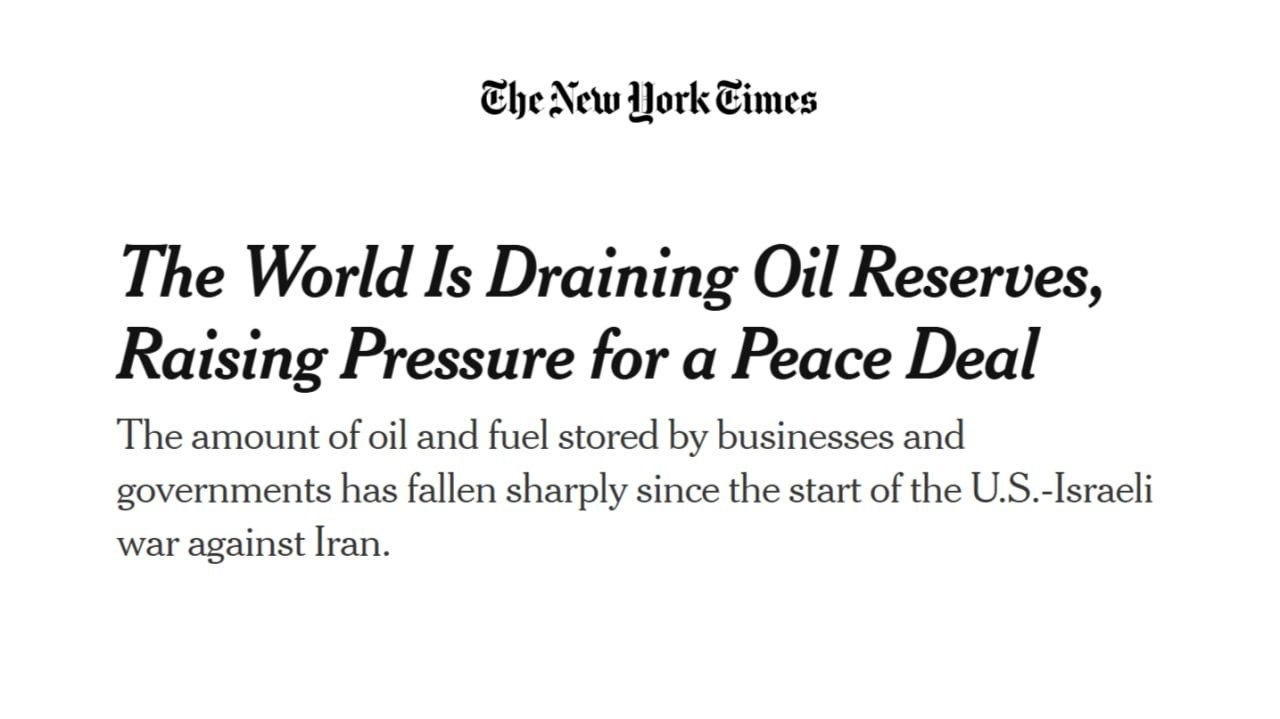
The energy dimension is immediate and cannot be understated. Global oil markets are sensitive to supply disruption signals from the strait, and even a perception that the ceasefire framework is under strain can move markets. Insurance costs for tankers transiting the area, charter rates, and forward contract pricing all respond to geopolitical signal quality from the region.
What Remains Unknown
Several material facts are not established by the available sources. The precise content and origin of the ceasefire agreement Azizi references cannot be independently verified from the Telegram posts currently in circulation. The operational details of Iran's new maritime regime — patrol zones, inspection protocols, communication channels for commercial vessels, and any liaison arrangements with regional navies — are not described. Whether any UN agency, flag state association, or commercial shipping body has been formally notified of the new arrangements is also not specified.
Separately, the sources do not indicate whether any bilateral communication channel exists between Washington and Tehran that could be used to de-escalate a potential incident without a public confrontation. The absence of such a channel, if it is real, would make Azizi's warning more destabilising, as there would be no back-channel to clarify misinterpretations before they escalate.
The parliamentary vote or consensus process that produced Azizi's statement also remains opaque. Whether the full parliament, the Supreme National Security Council, or the foreign ministry has endorsed the framing is not addressed in the Telegram reports. That institutional ambiguity matters for assessing how durable this position is if pressure mounts.
The Strait of Hormuz has functioned as a flashpoint before. The question this episode poses is whether the new maritime regime represents a genuine restructuring of the waterway's governance — or a political signal designed for domestic and diplomatic audiences rather than an operational fact on the water. The answer will depend on what happens the next time a US naval asset or commercial vessel with US interests transits the strait under the new arrangement.
Desk note: Wire coverage of this development was dominated by Iranian state-adjacent Telegram channels carrying Azizi's full statement in Persian. Western wire services had not published standalone reporting on the warning as of publication time. Monexus chose to lead with the institutional framing — what the parliamentary role signals about internal Iranian consensus — rather than the content of the posts themselves, which received adequate amplification in the regional Telegram ecosystem. The ceasefire ambiguity was flagged prominently rather than papered over, given its central importance to the escalation claim.
Wire provenance
This editorial synthesis draws on the following public wire/social posts:
- https://t.me/osintlive/124892
- https://t.me/alalamfa/45321
- https://t.me/rnintel/89234
- https://t.me/GeoPWatch/55671