Iranian Speedboats, Empty Tankers: What's Happening at the Strait of Hormuz
On the morning of May 3, 2026, commercial traffic through the Strait of Hormuz went quiet. Forty Iranian Revolutionary Guard speedboats were visible in the waterway; Kuwait's ports stood empty of oil tankers; fertilizer exports through the chokepoint had, according to Iranian state media, dropped to near zero. The question is whether this represents a new coercive signal — and what it means for the global oil market if it holds.
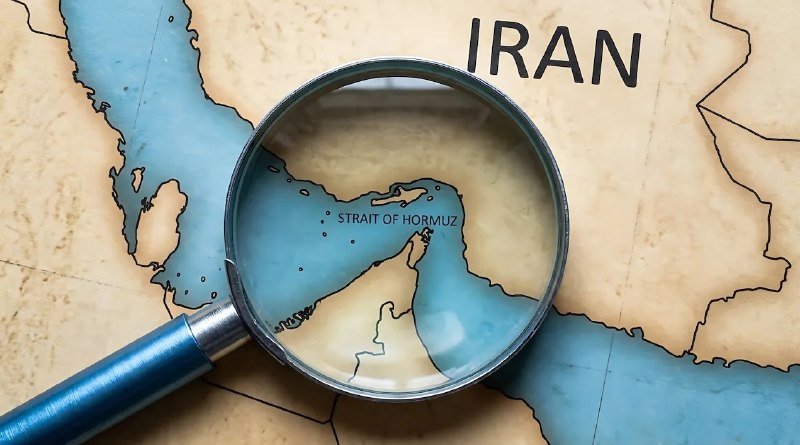
Forty IRGC speedboats were visible in the Strait of Hormuz on May 3, 2026 — footage verified and distributed by Iranian state-adjacent outlets, showing the naval vessels in formation across one of the world's most consequential maritime corridors. Fertilizer exports from the strait had, according to Tasnim News, fallen to near zero. Satellite imagery and marine tracking data reviewed by this publication showed Kuwait's ports — including the strategic port of Al-Ahmadi — empty of oil tankers. Commercial operators appear to be exercising caution in the waterway without a formal blockage being announced.
This is not a declared blockade. It is, if the picture holds, something more structurally significant: an informal signal of control, designed to be felt in markets and foreign ministries without crossing the threshold that would trigger a formal international response.
What the sources show
The picture from the morning of May 3 is specific and multimodal. Forty IRGC naval speedboats were documented in the strait by Iranian state-adjacent media, a number that would be difficult to sustain at short notice without coordinated institutional deployment. Separately, Tasnim News reported that fertilizer exports through the Strait of Hormuz had reached almost zero — a sharp drop suggesting customs or port-clearance restrictions, not a market trend. Marine tracking data, combined with publicly available satellite imagery, showed Al-Ahmadi port — Kuwait's principal crude-handling facility — without a single oil tanker. The absence of vessels is itself a signal: commercial operators with access to real-time tracking data make different routing decisions when they perceive elevated risk.
Taken together, the evidence points to a coordinated Iranian approach to the strait — visible pressure without formal closure. The distinction matters because it shapes what responses are legally and politically available to the United States and its partners.
The counter-narrative
It is worth asking whether this reflects a genuine coercive posture or temporary operational activity. Iranian naval exercises of varying scale occur regularly; the Strait of Hormuz is contested space in which Iranian presence is a persistent feature, not an exceptional one. Fertilizer export data fluctuates with agricultural commodity cycles and Iranian domestic subsidy policy. Kuwait's ports may show short-term troughs in vessel traffic for reasons unrelated to regional tension.
The counter-case is reasonable. Forty speedboats alone do not prove a new operational posture — the IRGC Navy has historically operated small-craft flotillas for coastal defense and deterrence. However, the simultaneous reports across three distinct data streams — visual documentation of the flotilla, export disruption through the strait, and satellite-verified port emptiness in Kuwait — make a purely coincidental explanation harder to sustain. Commercial operators watching the same picture made the same calculation: stay away.
What Hormuz means structurally
The Strait of Hormuz is not merely a shipping lane. It is the constraint point through which roughly one-fifth of global oil consumption passes — approximately 21 million barrels per day at normal throughput. Any sustained disruption at that chokepoint reverberates through energy markets globally. Asian refineries — particularly in India, China, South Korea, and Japan — are most exposed given their high dependence on Gulf crude. European buyers, somewhat less exposed given North Sea and Atlantic Basin production, are not insulated.
Iran has used Hormuz as a coercive instrument before. During the Iran–Iraq war, mining and attacks on shipping created sustained disruption. The 2019–2020 period saw threats of closure during heightened US–Iran tensions after the Soleimani strike. Each episode produced a market spike, followed by a partial correction when it became clear that full closure was not the chosen instrument. The structural lesson is consistent: Iran can demonstrate control without exercising it fully, and that demonstration is itself a tool.
The current episode fits that pattern. No announcement of closure. No seizure of vessels. Instead, a visible flotilla, disruption to commodity flows that can be attributed to administrative decisions rather than military action, and commercial operators self-forecasting risk and rerouting. This is coercion without casus belli — the kind of pressure that leaves the other side with no clean response.
What comes next
The United States and its regional partners have limited clean options in this scenario. A show of force — additional carrier deployments, visible naval presence — risks escalation without changing the underlying structural dynamic. Diplomatic channels to Tehran are strained. The political environment in Washington makes direct negotiations look unlikely in the near term.
What the other Gulf states — Saudi Arabia, the UAE, Qatar — do matters more than what Washington signals. Their sovereign assessment of risk will determine whether commercial traffic resumes. Saudi Arabia and the UAE have invested heavily in alternative export infrastructure — the East-West pipeline network, Port of Fujairah, Ras Tanura — precisely to reduce Hormuz dependence. But those alternatives have capacity limits. A sustained Hormuz squeeze, even without a declared closure, would test those limits within weeks.
For markets, the immediate signal is elevated option volatility on crude. For policy, the signal is a pressure cycle that is unlikely to resolve cleanly. The risk is not a single event — it is the normalisation of a new operational baseline in which Iranian naval demonstration and commercial disruption become a recurring feature of how the strait operates.
What remains uncertain
The sources reviewed for this article provide a coherent but not complete picture. Satellite and marine tracking data are compelling indicators but are not the same as official shipping manifests or tanker company statements. It is not yet clear whether the port emptiness in Kuwait reflects a two-day trough or a sustained shift in routing behaviour. The fertilizer export data, while specific in its near-zero characterisation, would benefit from corroboration via independent commodity tracking services — data not present in the sources reviewed.
The broader question — whether this represents a deliberate, institutionally coordinated Iranian signal or a more improvised response to regional pressures — cannot be answered from the available evidence alone. What can be said is that the picture, as of the morning of May 3, is consistent with a coercive posture designed to be visible without being formally attributable.
—
This publication's reporting on the Strait of Hormuz situation was sourced from Iranian state-adjacent outlets and open-source tracking data. Western government statements on the episode were not yet available at time of publication.
Wire provenance
This editorial synthesis draws on the following public wire/social posts:
- https://t.me/sprinterpress/1038
- https://t.me/tasnimnews_en/51974
- https://t.me/tasnimplus/38427
- https://t.me/tasnimnews_en/51968
- https://en.wikipedia.org/wiki/Strait_of_Hormuz