Iran's 'Friendly' Blockade: How a Naval Siege Became America's New Coercive Architecture
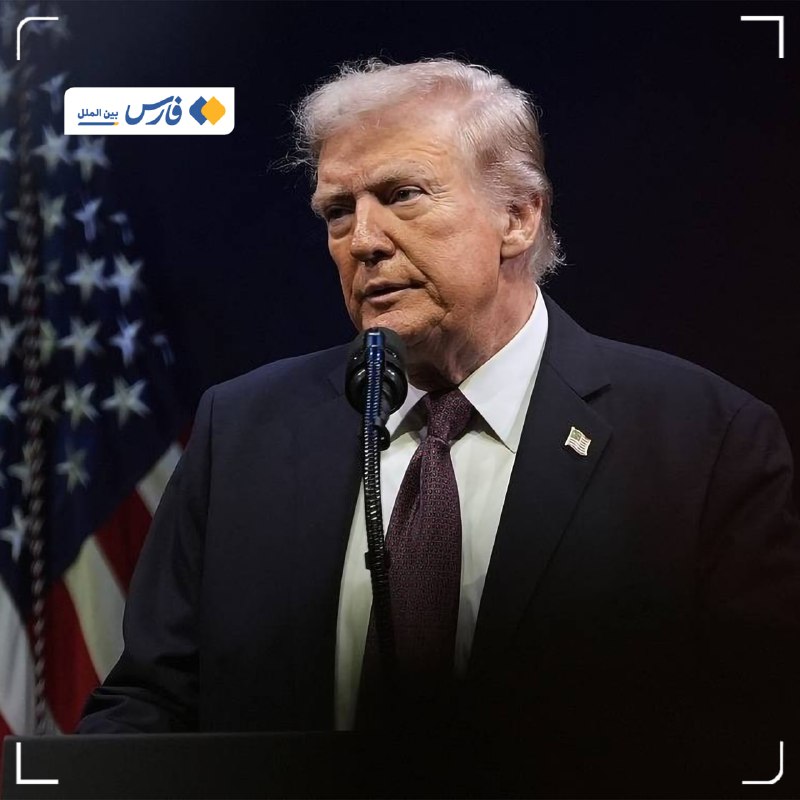
The tanks are not rolling, but the pressure is immense. On the morning of 3 May 2026, President Donald Trump addressed a joint session of Congress and declared that the 60-day window for Iranian military operations had closed without escalation. Iran hostilities, in his framing, had ended. Hours later, the American Automobile Association released its daily fuel survey: the national average for a gallon of regular gasoline had jumped to $4.39 — the steepest single-day increase since the administration was forced to pause its planned strike on Iranian nuclear facilities in late March.
The two events were not unrelated. The blockade that Washington calls "friendly" — an arrangement that has kept Iranian tankers from loading crude and foreign buyers from completing payments through the SWIFT financial messaging system — has been compressing global supply in a way that defies the administration's insistence that the operation lacks the character of war. Oil traders who expected a diplomatic wind-down in April instead watched the price of Brent crude settle in the mid-$90s range as the blockade's enforcement arm proved more durable than its diplomatic counterpart. The discrepancy between the White House's triumphant language and the pump-price reality illuminates something important about how the United States is choosing to wage pressure without war — and what that means for consumers, allies, and the Iranian government alike.
The Price Signal Nobody Wanted
The $4.39 figure is not simply a reflection of market anxiety. It represents a structural shift in supply chains that the blockade has imposed on a global energy market still recovering from the post-pandemic dislocations of 2022 and 2023. Iranian crude, before the escalation, accounted for approximately 3.5 percent of global daily production — a relatively modest share that nonetheless lubricated several critical import streams in China, Turkey, and South Korea. When the US Navy began intercepting vessels suspected of carrying Iranian oil in late March, those streams did not dry up immediately. They contracted, slowly and then all at once, as insurance premiums on Gulf shipments spiked and Chinese buyers began demanding documentation from shippers that the US Treasury had determined was impossible to provide under the sanctions architecture.
The administration has sought to manage the optics by noting that no shots were fired, no vessels were sunk, and no declared state of war exists between Washington and Tehran. That framing is technically accurate and strategically convenient. It allows the White House to argue that the blockade represents enforcement of existing sanctions law rather than an act of naval warfare — a distinction that matters enormously in international courts and in the political calculus of allied governments who might otherwise feel obligated to condemn it. But for American drivers filling up before a holiday weekend, the legal architecture of the intervention is irrelevant. What registers is the number on the pump.
NBC News reported the $4.39 gallon figure as the largest single-day surge since the March pause. The comparison is instructive: the administration felt sufficient political pressure from the last price spike to halt a strike it had already authorized. The question now is whether the same pressure will shape the next decision point — and whether the blockade's architects have accounted for the compounding effect of sustained elevated prices on consumer confidence and, by extension, political support for the operation.
The Language of 'Friendly' Coercion
Trump, speaking to Congress on 3 May via CGTN's live broadcast, offered a characteristically paradoxical assessment. He described the naval posture in the Gulf as a "very friendly blockade" — a phrase that managed to be both technically precise and profoundly misleading. The blockade is not, in the legal sense, a traditional wartime seizure operation. It does not involve a declared intent to capture Iranian vessels. Instead, it functions as a systematic enforcement mechanism: ships identified as carrying Iranian crude are boarded, their cargo is documented, and their crews are held in limbo until flag-state governments or insurance companies negotiate their release. The process is slow, humiliating for Tehran, and designed to make Iranian oil toxic to buyers — not by banning it, but by making the paperwork of buying it so perilous that risk-averse traders walk away.
This is the distinctive architecture of twenty-first-century economic statecraft. It is not the blunt instrument of a full embargo, which would require allies to sacrifice access to Iranian energy entirely. It is softer than that and, in some ways, more corrosive: it does not forbid purchases, it makes them practically impossible to execute without risking secondary sanctions exposure. The distinction matters to the White House because it allows the administration to argue it is enforcing existing law rather than escalating to war. It matters less to the Iranian government, which watches its export revenues contract month by month while watching Washington claim the operation is not hostile.
Trump himself complicated the diplomatic framing with a remark reported on 2 May: that Iran had "not yet paid a big enough price" for its behaviour. The statement, reported via Polymarket's real-time feeds from the campaign trail, sits in tension with the administration's official line that the operation is winding down. If Iran has not yet paid enough, the operation is not winding down — it is ongoing, with the price of entry set deliberately high. The ambiguity appears deliberate. It allows the administration to signal to domestic hardliners that the pressure will continue while signalling to international partners that the most acute phase has passed. Whether Tehran reads it that way is another question entirely.
The Structural Logic of Secondary Enforcement
The blockade's true significance is not the immediate price spike, dramatic as that is. It lies in what the operation reveals about how the United States is choosing to deploy its economic and naval weight in the post-Afghanistan, post-Iraq strategic environment. The US no longer wants ground wars in the Middle East. Domestic political consensus for them does not exist, and the operational track record — two decades, two trillion dollars, two managed retreats — has produced a institutional aversion to large-scale troop deployments in the region. But the US retains overwhelming superiority in two domains: financial architecture and naval presence. The blockade is the logical expression of that superiority without the political liabilities of boots on the ground.
The mechanism works because the dollar remains the global reserve currency and SWIFT remains the nervous system of international trade finance. When the US Treasury identifies a vessel, an insurance company, or a port authority as carrying Iranian crude, it does not need to send a diplomat to demand compliance. It sends a letter invoking secondary sanctions risk. The receiving institution calculates its exposure — the cost of losing access to US financial markets, the cost of losing correspondent banking relationships, the cost of a Treasury designation — and makes a business decision. In almost every case, the decision is to disengage from Iranian oil rather than risk the secondary consequences.
This is not a new strategy. It is the same architecture the US deployed against North Korea, against Russian oligarchs after 2022, and against Venezuelan oil exports during the Maduro years. What makes the Iranian application distinctive is its scale and its duration. The previous maximum-pressure campaign under the Trump administration from 2018 to 2021 produced significant economic damage to Iran but did not achieve the geopolitical submission the White House sought. The current operation, which builds on that historical baseline while adding the naval enforcement layer, is more comprehensive and more difficult to circumvent through the shell-company networks and dark-fleet tanker operations that Tehran deployed in the first round.
Historical Parallels and Their Limits
Blockades are not new to the Gulf. The British navy maintained a comprehensive oil embargo against Persia in 1951 and 1952 as part of the Abadan crisis, an operation that contributed to the eventual overthrow of Mohammad Mosaddegh. The US itself maintained a formal blockade of Cuba during the Missile Crisis in 1962 — a 13-day operation that demonstrated how quickly a naval encirclement can produce a crisis point that forces all parties to the table. The contemporary US operation shares structural features with both historical cases: it is designed to constrain an adversary's economic lifelines while maintaining enough ambiguity to avoid triggering mutual-defence obligations that could pull in third parties.
But there are meaningful differences that make historical comparison imperfect. The British operation in 1951 was backed by a coordinated effort from Shell, BP, and the Anglo-Persian Oil Company to physically prevent Iranian oil from reaching markets — a coordination between state and private sector that would be illegal under current US antitrust law. The Cuban blockade was a 13-day crisis, not a systematic months-long operation. The current Iranian blockade is longer in duration than either, less formally declared than either, and more dependent on financial mechanisms than on physical interdiction. These differences matter for the precedent they set: the US is normalising an operational mode that blends naval presence with financial enforcement in a manner that sits in the grey zone between peace and war.
Tehran has watched the precedents accumulate. Iranian officials, writing in state-aligned media, have argued that the blockade constitutes an act of war regardless of Washington's preferred terminology. Iran's Revolutionary Guard Corps has conducted mock seizure exercises in the Strait of Hormuz and periodically announced that the waterway's traffic is subject to Iranian oversight. The gap between US characterisation and Iranian perception of the operation's status creates genuine risk of an incident — a commercial vessel struck by a miscalculation, a warship boarding that escalates beyond its parameters, a retaliatory cyber operation against US financial infrastructure — that transforms the grey zone into something considerably less ambiguous.
Who Bears the Cost
The consumers filling their tanks at $4.39 a gallon are the most visible bearers of the blockade's cost, but they are not the only ones and not necessarily the most consequential over time. China, which has maintained a significant Iranian oil import programme despite US secondary sanctions, is absorbing Iranian crude at prices that reflect the bloc's difficulty in finding clean financing channels. Beijing has developed alternative payment mechanisms — yuan-denominated oil contracts, commodities-backed swap arrangements — that reduce but do not eliminate its exposure to US financial pressure. The structural outcome, if the blockade persists, is a more rapid bifurcation of global oil markets into a dollar-denominated bloc and a yuan-denominated bloc, with Iran and Russia anchoring the latter.
For the Trump administration, that bifurcation is both the operation's intended consequence and its most significant long-term liability. A world in which Chinese and Russian energy transactions clear through non-SWIFT channels is a world in which the dollar's reserve-currency status erodes incrementally. The blockade is effective at strangling Iranian oil exports. It is also, in the medium term, a promotional campaign for dollar-alternative financial infrastructure. The administration is betting that the pressure it applies in the next twelve to eighteen months produces a negotiated outcome with Tehran — a new nuclear framework, a concessions-for-relief exchange — before the structural damage to dollar hegemony becomes irreversible.
That bet is not unreasonable. It is also not guaranteed to pay off. Tehran has demonstrated in previous negotiations that it can sustain economic pressure for years while waiting for political conditions to shift. The Iranian government watches American domestic politics as carefully as American officials watch Tehran's nuclear facilities. The pause in March — the decision to halt the strike after the price spike became politically untenable — confirmed to Iranian strategists that there is an electoral floor beneath the pressure campaign. What the administration calls a friendly blockade, Tehran may simply call a target of opportunity: a pressure source that has costs on both sides, and whose removal in exchange for concessions is the logical outcome of a sustained negotiation.
The 60-day deadline has passed. The naval task force remains on station. Gas prices at the pump reflect a supply compression that is real, immediate, and not of the kind that electoral calendars easily absorb. The administration has declared victory in the language of diplomacy. The market has registered something closer to the truth: a siege by another name, with all the costs that word implies, distributed across millions of ordinary consumers who were not party to the decision.
This publication covered the blockade's announcement through CGTN's live Congressional feed, the price data through NBC-reporting carried by PressTV, and Trump's direct remarks via Polymarket's real-time campaign reporting. The structural analysis draws on standard open-source accounts of SWIFT sanctions enforcement and Gulf naval posture.
Wire provenance
This editorial synthesis draws on the following public wire/social posts:
- https://t.me/presstv/142847
- https://x.com/Polymarket/status/1921489456789348610
- https://x.com/Polymarket/status/1921485256142758194