IRGC Navy Orders Vessels Out of UAE Anchorages Amid Unconfirmed Strait of Hormuz Seizure Reports
The IRGC Navy has directed vessels anchored off Ras Al Khaimah to move toward Dubai or Iranian waters, as unconfirmed reports circulate of an attack and possible seizure of a commercial ship in the Strait of Hormuz.
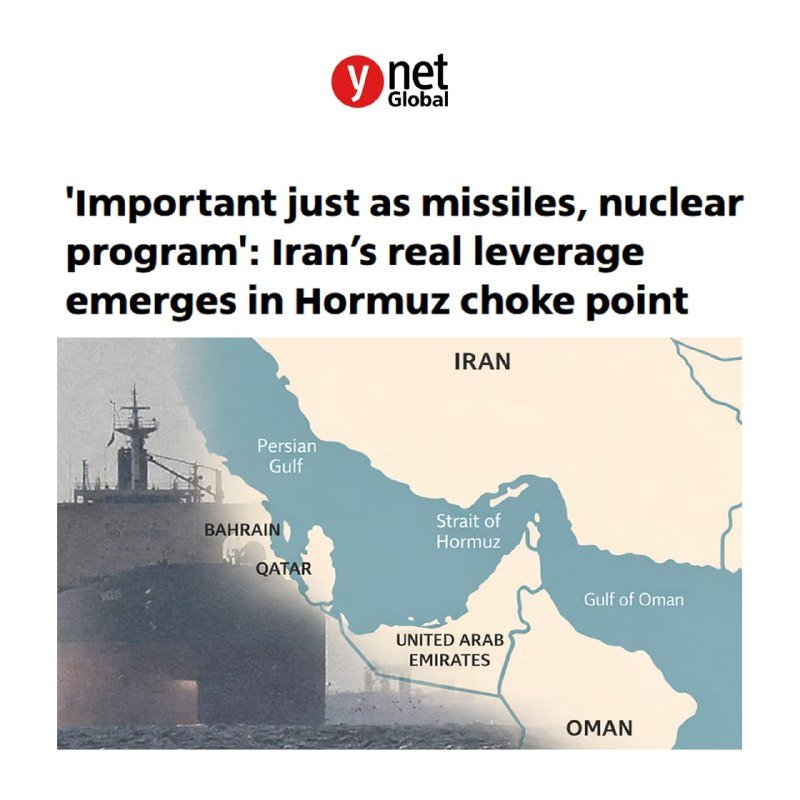
On the evening of 3 May 2026, the Islamic Revolutionary Guard Corps Navy issued a direct order to vessels anchored off Ras Al Khaimah, in the northern United Arab Emirates, to weigh anchor and move immediately toward Dubai or face consequences. The directive, confirmed by multiple regional monitoring channels, arrived as unconfirmed reports circulated of an attack on — and possible seizure of — a commercial bulk carrier in the Strait of Hormuz.
The sequence of events remains incompletely verified. A VHF broadcast directed ships to clear their anchorages near Ras Al Khaimah, according to the United Kingdom Maritime Trade Operations office. The IRGC Navy then issued its own order, with one channel reporting the explicit threat: move now or bear "the consequences." Oil tankers were reportedly told to shift toward Iranian territorial waters.
What is clear is that a naval escalation of this nature, targeting the anchorages of a third-country partner state, does not occur in isolation. It arrives as US-Iran nuclear negotiations have repeatedly stalled, as sanctions pressure on Tehran has intensified, and as a new US administration has signalled both maximum-pressure rhetoric and concurrent diplomatic openings. The IRGC Navy is not a regular naval service; it is a parallel force structured for asymmetric deterrence and strategic signalling, and its commanders act with political awareness that commercial shipping in the Persian Gulf is exquisitely sensitive to uncertainty.
A Pattern Renewed
Iranian maritime provocations near the Strait of Hormuz are not new. The waterway, which handles roughly 20 percent of global oil trade, has been a site of periodic tension for decades. What has changed in recent years is the operational boldness of the IRGC Navy relative to the Islamic Republic's conventional military, and the increasing willingness to target vessels in ways that stop short of outright attack but impose significant cost — delays, rerouting, insurance surcharges, and reputational damage to flag states and owners.
Iran has detained foreign vessels before under varying pretexts, from environmental violations to unpaid debts. In each case, the seizure served a dual purpose: extracting leverage in bilateral negotiations and demonstrating to regional adversaries that the Strait of Hormuz is not a neutral corridor. The current incident, if confirmed as a seizure, fits that established pattern, but the timing and scope remain contested.
Western governments and their regional partners are watching closely. The UAE, which hosts significant foreign naval presences and depends on freedom of navigation for its own oil-exports infrastructure, faces an acute challenge: how to respond to an Iranian military order issued inside its own territorial waters without triggering a broader incident.
What the Sources Do and Do Not Confirm
The available reporting confirms that the IRGC Navy ordered anchored vessels at Ras Al Khaimah to move. It confirms that a VHF broadcast was issued directing ships away from the anchorages. It confirms that at least one channel reported an attack and likely seizure of a bulk carrier in the Strait of Hormuz, with the caveat that this claim has not been independently corroborated by established wire services.
What the sources do not confirm: the identity of the vessel, its flag state, its ownership, or the legal pretext — if any — offered by Tehran for its actions. No Western government has issued a formal statement as of this reporting window, and no maritime classification society has confirmed damage to a named vessel. The gap between what regional monitoring channels are reporting and what official confirmation would establish is significant.
This is a recurring dynamic in Gulf maritime coverage. Local monitoring feeds, often run by analysts with strong analytical track records, frequently report developments hours or days before wire services can verify them. The information environment is deliberately opaque; Iran does not announce seizures via press release, and the commercial shipping industry has strong incentives to avoid public confrontation with a state that controls a critical chokepoint. Caution is warranted in treating the unconfirmed seizure report as established fact — but the IRGC Navy's directive to vacate UAE anchorages is, in itself, a substantive data point warranting attention.
The Structural Context
The Strait of Hormuz is, structurally, the world's most important oil chokepoint and one of the most legible pressure points in international geopolitics. Tehran understands that disruptions here generate immediate global market reaction, which in turn generates political pressure on Western governments to negotiate rather than confront. This is not a flaw in Iranian strategy — it is the strategy.
What is newer is the context in which this particular incident occurs. The resumption of US-Iran nuclear talks has produced no breakthrough. The Trump administration has simultaneously offered diplomatic concessions on sanctions relief and escalated military positioning in the Gulf. Regional partners — Saudi Arabia, the UAE, Israel — are each watching with their own threat calculations, and each has its own preferred posture toward Tehran. The IRGC Navy's directive to vessels in UAE waters is, among other things, a signal to all three audiences: Washington, the Gulf monarchies, and the shipping industry.
Stakes
If the unconfirmed seizure is real, the immediate consequences fall on the vessel's owners and flag state — whoever they are, they face detention, legal ambiguity, and a negotiation process that will not be public. The broader consequence falls on the tanker market: every such incident raises insurance premiums for vessels transiting the strait, and repeated incidents reshape routing decisions in ways that have permanent effects on freight economics.
If the IRGC Navy's directive to clear UAE anchorages is not followed by further escalation, it will read as a warning shot — a demonstration of reach and willingness that imposes costs on the shipping industry without triggering a military response. That is the outcome Tehran typically prefers, and it is the outcome that is hardest for Western governments to counter without appearing to escalate.
The UAE's position is delicate regardless of how this resolves. Ras Al Khaimah's free-trade zone and port infrastructure depend on maritime stability. A pattern of Iranian naval interference in UAE anchorages, if it continues, puts that stability at risk and forces a choice between commercial accommodation and security escalation — a choice no Gulf state makes lightly.
Whether this incident escalates further or quietly subsides into diplomatic back-channels will depend on how the vessel question resolves, on whether the United States chooses to respond publicly, and on whether the IRGC Navy's commanders judge that the political cost of the action has been worth its deterrence value. The next 48 hours will be revealing.
Wire provenance
This editorial synthesis draws on the following public wire/social posts:
- https://t.me/rnintel/2843
- https://t.me/FotrosResistancee/1847
- https://t.me/FotrosResistancee/1846
- https://t.me/Middle_East_Spectator/2104