Israel's 'Not If, But When' Is a Diplomatic Death Sentence—And Washington Is Enabling It
Senior Israeli officials have publicly declared that military action against Iran is inevitable. Iran's simultaneous offer to dismantle its nuclear program should give the world pause before dismissing it as propaganda. The gap between the two positions reveals a problem that goes deeper than any deal can fix.
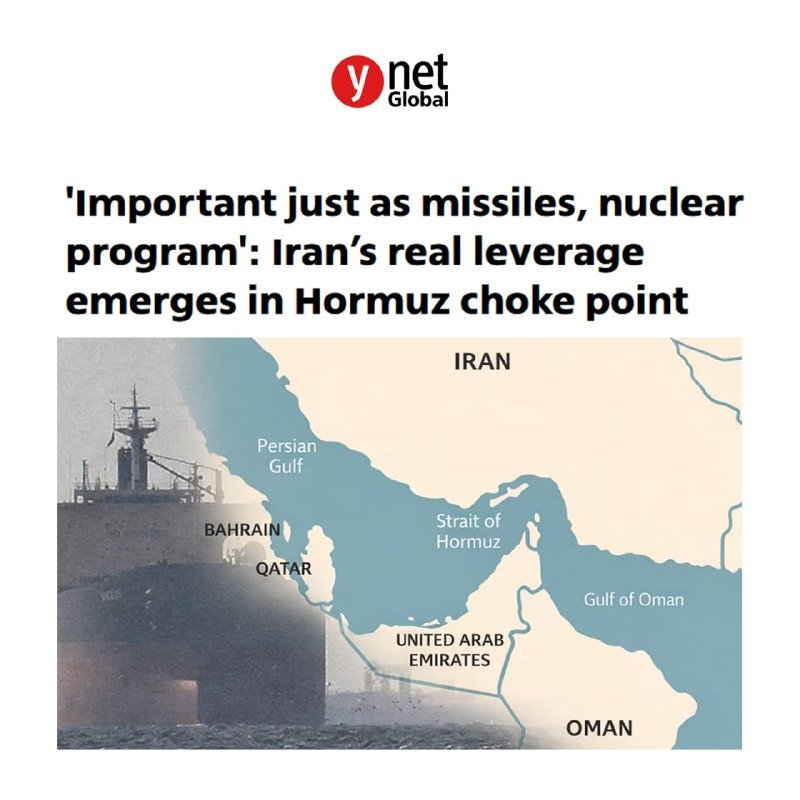
Israeli officials have a habit of saying the quiet part loud. On 3 May 2026, senior Israeli officials told Channel 14 that a return to fighting with Iran is "not a question of if, but when"—a formulation that reads less like strategic communication and more like an announcement of identity. The same day, Channel 12 reported that Israel is preparing contingencies for multiple American responses to Iranian escalation. Simultaneous with these declarations, Iranian state-adjacent channels carried a proposal—attributed to Iranian officials and reported by Israeli Channel 12—involving the dismantling of nuclear facilities, a region-wide ceasefire, the gradual reopening of the Strait of Hormuz, and the staged lifting of sanctions.
No one in Tel Aviv seems interested.
That asymmetry should trouble anyone still pretending this conflict has a diplomatic off-ramp.
The Offer on the Table
The Iranian proposal, as reported by Israeli Channel 12 on 3 May 2026, is not a maximalist document. It does not demand the withdrawal of American forces from the Gulf, the dissolution of the Abraham Accords, or the recognition of any particular political order. It offers to dismantle its nuclear facilities under supervision, end fighting across the region, reopen the Strait of Hormuz—through which roughly 20 percent of the world's oil passes—and accept a phased sanctions relief. Whether this represents a genuine strategic pivot or a stalling tactic calibrated for domestic and Chinese audiences remains genuinely unclear. The sources do not specify who inside Iran's leadership authorized the proposal, what internal debates preceded it, or whether the Islamic Revolutionary Guard Corps was consulted. Those are material omissions.
What is clear is that the proposal contains the basic architecture of a deal the international community has pretended to want for twenty years. The question is whether anyone in the room wants it badly enough to take yes for an answer.
Why Tel Aviv Is Not Listening
Israeli officials' dismissal of the proposal follows a pattern that predates this specific moment. For years, the Israeli position has been that any agreement with Iran—nuclear or otherwise—is inherently provisional, because the Islamic Republic's ideological foundation is adversarial by design. This is not an irrational reading of Iranian political culture. The regime has consistently funded and armed non-state actors hostile to Israel; its rhetorical posture toward the Jewish state has not moderated in proportion to its diplomatic engagements. From Jerusalem's perspective, a temporary nuclear freeze is not a solution—it is a countdown.
The Channel 14 statement reflects that worldview stripped of diplomatic hedging. "Not if, but when" is a statement of ontological commitment, not tactical prediction. It says: we have decided who Iran is, and we will act on that decision regardless of what documents Tehran signs. Israeli officials are reportedly preparing for multiple American response scenarios—which suggests they expect the operation to generate bilateral friction with Washington, and have decided to proceed anyway. That is a significant data point. It means the Israeli calculation now treats American displeasure as an acceptable cost rather than a constraint.
Washington's Complicity
The Channel 12 reporting on Israeli preparations for American responses raises a question the sources do not fully answer: what is Washington actually doing? The Trump administration's posture toward Tehran has oscillated between maximum pressure and selective overture, but the underlying assumption—that Iran can be contained through sanctions and the threat of force—is shared across both parties in a way that leaves little room for creative diplomacy. American officials have publicly insisted on不吃不喝 Iran renouncing enrichment entirely as a precondition for any deal, a position Iran has rejected as sovereignty-violating and non-negotiable.
The result is a structured paralysis. The United States will not accept the Iranian proposal as written. Israel will not accept it as written. Iran, having made its most significant concession in years, receives the silence treatment—and is then told, when it predictably resumes enrichment activities, that it never intended to negotiate in good faith. This is not a diplomatic process. It is a process that mimics diplomacy long enough to exhaust the other side's options.
The Structural Problem No Deal Solves
The deeper issue is that neither the Israeli rejection nor the Iranian offer is really about the nuclear file. Nuclear weapons capability is the symptom. The disease is the absence of any acceptable political order for the Gulf—one that accommodates both Iranian regional ambitions and Israeli security requirements and American hegemonic interests in a configuration that does not require perpetual conflict to maintain. No document currently on the table accomplishes that. The Abraham Accords normalized certain Arab-Israeli relations but conspicuously excluded any resolution of the Palestinian question, which continues to shape how much of the region understands Israeli power. The Iranian proposal addresses the nuclear program but not the IRGC's network of regional proxies, which Israel views as existential.
A genuine deal would require all parties to accept constraints they have spent decades building their domestic political identities around. Israel cannot accept a legitimated Iranian regional presence without a reckoning with what that says about its own strategic doctrine. Iran cannot accept permanent nuclear restrictions without a similar reckoning. Washington cannot facilitate that bargain without acknowledging that its own regional posture has contributed to the problem.
None of those reckonings are visible in the current moment. What is visible is an Israeli government telling its domestic audience that war is inevitable, an Iranian government that has made a concession no Western official publicly engaged with, and an American administration that appears to have concluded the outcome is foreordained.
Stakes
If Israel proceeds with military action, the immediate consequences are predictable: escalation across multiple fronts, disruption of Strait of Hormuz transit, and a humanitarian crisis that will dwarf anything the region has absorbed in recent years. American military assets will be drawn in whether Washington intends them to be or not. The window for any negotiated outcome—however imperfect—will close, perhaps permanently. Iran's nuclear program, which military analysts differ on in terms of breakout timeline, may accelerate rather than slow in response to an existential threat. The very argument Israel uses to justify action—that only force can solve this—may produce the outcome it claims to fear.
If, conversely, the Iranian proposal represents a genuine opening and it is simply left to rot, the message to Tehran is that the path to relief runs through weapons, not negotiation. That calculus should concern everyone, not only those who live within range of the missiles.
The "not if, but when" framing treats this as a decision already made. History suggests that when governments announce inevitability, they often discover they were right—because they removed the pressure to consider alternatives. The world may be watching that mechanism operate in real time.
The question is not whether Israel has the right to defend itself. It does. The question is whether the people making these decisions have genuinely asked whether the outcome they are producing is one anyone actually wants to live in.
Wire provenance
This editorial synthesis draws on the following public wire/social posts:
- https://t.me/BellumActaNews/28432
- https://t.me/BellumActaNews/28431
- https://t.me/wfwitness/29441
- https://t.me/wfwitness/29438