The Cult of the Martyr, Engineered for the Screen
Iran's Supreme Leader runs one of the most disciplined religious-media operations in the world. The question is what problem he is trying to solve with it.
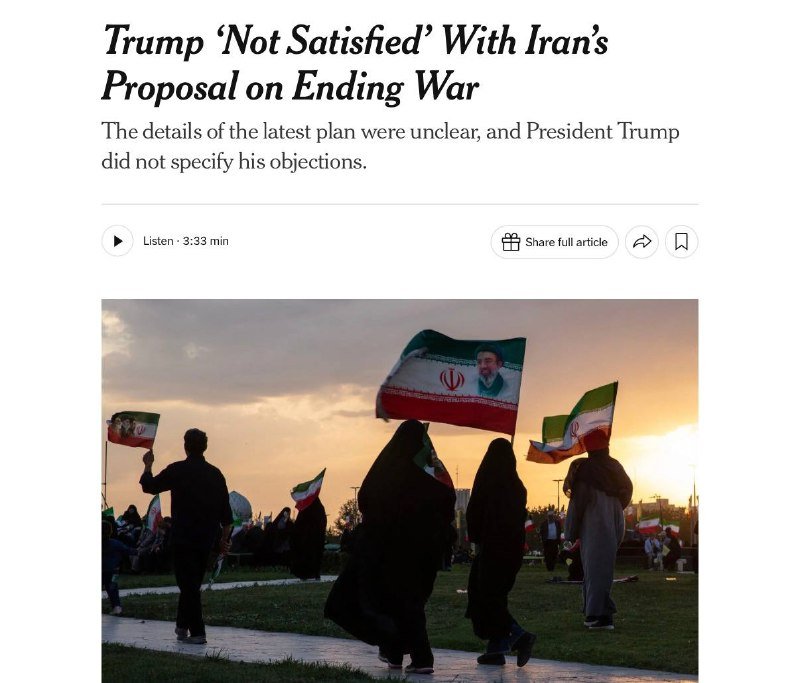
On 3 May 2026, the English-language Telegram channel operated by Ayatollah Ali Khamenei's office published its daily content calendar without variation. A post labeled "A word to my martyred Leader" appeared alongside the channel's regular offering of Quranic recitation, Islamic injunctions, and framed photographs of the Supreme Leader. The cadence has not changed for years. The formatting is consistent. The vocabulary recycles the same cluster of concepts: martyrdom, loyalty, pledge, Islamic world.
This is not amateur media management. It is one of the most disciplined religious-media operations in existence, and it deserves closer scrutiny than it typically receives from Western analysts more comfortable cataloguing sanctions violations or nuclear timeline fluctuations.
The Architecture of Devotion
Khamenei's Telegram presence—and by extension, his affiliated social accounts across platforms—operates on a logic that distinguishes it sharply from official state media. Where IRNA or PressTV broadcast as institutional mouthpieces, the Khamenei channel cultivates something closer to pastoral authority. The channel presents itself as a spiritual conduit, offering daily Quranic reading schedules, commentary on Islamic obligation, and a curated selection of the Supreme Leader's public statements. The content is formatted in English, Farsi, and Arabic simultaneously, suggesting an audience that stretches well beyond Iran's 88 million citizens.
The "martyred Leader" formulation is the operation's load-bearing concept. By repeatedly invoking what the channel describes as "fulfilling what they have pledged to Allah," the messaging ties individual religious obligation to loyalty toward the Supreme Leader himself. This is not accidental. It is a framework that positions Khamenei as the obligatory pivot point between personal faith and collective Islamic identity. The daily Quran recitation posts—which reached page 353 of a 30-juz compilation on 3 May 2026—provide the theological warrant for that positioning. Reading the scripture is framed as a duty; the channel makes itself the delivery mechanism.
What the Content Calendar Reveals
Every major Telegram post from the channel carries a standardized identifier: a hashtag cluster, a category label, and a visual treatment consistent across years of archives. The regularity is itself a statement. It tells subscribers that this office does not lose its institutional grip; that the Supreme Leader's word arrives on schedule; that the Islamic Republic possesses a continuity and coherence its adversaries—external and internal—should not underestimate.
The political significance of this consistency is easy to miss if one is scanning for breaking news. But regime maintenance is not the same work as crisis response. Khamenei's media operation is not primarily in the business of breaking stories. It is in the business of constructing a moral universe in which loyalty to the Islamic Republic is indistinguishable from fidelity to Islamic teaching. The Quranic verses selected for daily recitation—particularly passages from Surah An-Nur addressing bodily discipline, communal obligation, and the boundary between the permissible and the forbidden—do not appear to be chosen at random. They map, with notable precision, onto the behavioral codes the regime most needs its audiences to internalize.
The Geopolitical Signal
This is where the analysis typically gets too Western-centric. Khamenei's media operation is not merely domestic propaganda dressed in religious language. It is soft infrastructure targeting the broader Muslim world, particularly communities in the Middle East, South Asia, and increasingly, Western diaspora populations. The English-language output is not a courtesy for foreign correspondents. It is the product itself, designed for audiences who will never consume Iranian state television in Farsi.
The "Islamic world" framing—deployed repeatedly in the channel's posts about Quranic recitation and martyrdom culture—serves a specific geopolitical purpose. It positions Iran not as a nation-state pursuing particular strategic interests, but as the custodian of a civilizational project. The daily devotional content is the proof of concept. It says: we are not merely a government; we are the living apparatus of Islamic political theology.
This matters for several reasons Western analysts tend to underweight. First, it provides Khamenei's regional proxies and allied movements a legitimacy substrate that operates independently of military capability or economic resources. Second, it gives the Islamic Republic a mechanism for influence that survives the sanctions and isolation that degrade its conventional diplomatic capacity. Third, it creates a messaging architecture that can be activated or intensified on schedule—during periods of regional tension, during mourning periods for assassinated commanders, during moments when the regime needs to demonstrate its grip on the devotional imagination of its base.
The Counter-Narrative Worth Taking Seriously
It would be too convenient to read this operation as purely cynical—Khamenei as a religious grifter monetizing Quranic verse for political credit. The counter-argument deserves engagement. Khamenei's media posture is also consistent with a genuine theological commitment to the idea that Islamic governance requires institutional scaffolding, and that the Supreme Leader occupies a functional role in sustaining that scaffolding. The daily devotional posts, by this reading, are not instrumental manipulation; they are the substance of the job.
There is something to this. The Islamic Republic's founding premise—that clerical authority and political governance form an organic whole—is structurally baked into every post the channel publishes. Khamenei's media operation is, in this sense, doctrinally honest. It publishes what it believes. The question for outside observers is not whether Khamenei believes his own framework, but whether that framework's internal coherence makes it more durable, or more brittle, than its critics assume.
What the Daily Calendar Actually Tells Us
The regularity of Khamenei's social media operation signals institutional stability at a moment when outside observers have spent three years prognosticating the Islamic Republic's imminent fracture. Nothing in the channel's output suggests a regime scrambling for narrative control. The cadence is deliberate, the formatting consistent, the theological register unchanged by external pressure.
That steadiness is not nothing. It suggests a regime that has decided its core audience—domestic and regional—responds more reliably to continuity than to crisis performance. The martyrdom framework, in particular, is a remarkably flexible narrative instrument. It absorbs losses without conceding error. It transforms casualties into recruitment material. It makes the Supreme Leader the custodian of a story that preexists him and will outlast him.
The West's analytical problem with this is that its frameworks for understanding ideological states are calibrated for institutions that operate on incentive structures the Islamic Republic does not share. Khamenei's media operation does not seek to persuade skeptics. It seeks to sustain believers. That is a harder target to destabilize—and a more important one to understand accurately.
This publication noted the contrast between Khamenei's disciplined daily output and the more reactive communications posture of Western governments' public-facing social media, which tends to concentrate engagement during crises rather than building sustained devotional architecture.
Wire provenance
This editorial synthesis draws on the following public wire/social posts:
- https://t.me/Khamenei_en/3742
- https://t.me/Khamenei_en/3741
- https://t.me/Khamenei_en/3740