Lebanese Parliament Member Warns Aligned Media Over Incitement as Post-War Tensions Simmer
A Hezbollah-aligned parliamentarian's pointed remarks about media accountability expose a structural dynamic that is replaying itself across post-conflict Lebanon: political actors who command institutional power also command the media environment around them, and both are increasingly difficult to separate.
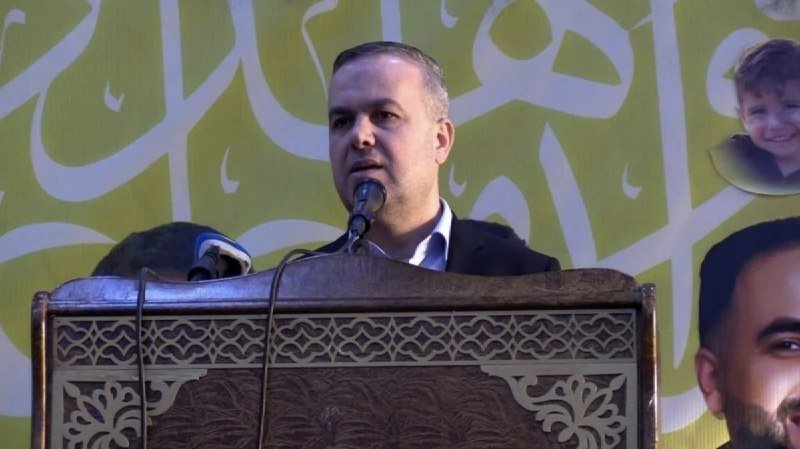
On 3 May 2026, Hassan Fadlallah, a member of the Lebanese Parliament representing Hezbollah, delivered a set of remarks via the Iranian Arabic-language outlet Al-Alam that amounted to a public warning about the consequences of irresponsible media coverage. The statements, reported as a sequence of urgent wire dispatches, carried a clear structural logic: when media channels aligned with state authority mistreat national symbols and martyrs, they become responsible — along with those who direct them — for the violence their coverage incites. Whoever wishes to preserve civil peace, Fadlallah added, must control both their own speech and the mouthpieces they fund.
What makes these remarks analytically significant is not the specific accusation, but the premise embedded in it. Fadlallah was speaking from within an institution — parliament — and addressing a media ecosystem in which his own political formation is a dominant actor. The warning about aligned media doing damage to the resistance is a claim about accountability. But accountability, in the Lebanese context, is complicated by the fact that the political formation he represents simultaneously holds institutional parliamentary standing and a distinct armed-and-political identity that has historically operated outside full state oversight. When Fadlallah demands that aligned media behave responsibly, he is speaking as someone with standing to make that demand — and that standing itself is part of what the remarks are designed to reinforce.
The Accountability Frame and Its Limits
Political figures who control media assets warning about media incitement is not a contradiction — it is a familiar structural position. Actors with institutional power tend to expand the boundaries of legitimate speech when their own outlets are involved and contract them when their critics are. This dynamic is well documented in environments where media ownership overlaps with political authority. The accountability argument becomes a rhetorical resource that serves both defensive and offensive purposes: it disciplines aligned outlets while delegitimizing opposition coverage. What makes Fadlallah's remarks notable is the explicitness with which he links media performance to civil peace — and by implication, to the potential for organized political violence if that peace is ruptured. That framing is a reminder that in Lebanon, media is not simply a marketplace of ideas. It is a site where political authority is contested, and where the stakes of that contestation have historically run higher than editorial disagreements elsewhere.
The Resistance Narrative in Post-War Context
Fadlallah's second major point — that resistance does not require permission when there is aggression and occupation, and that defending land requires no national authorization — is a restatement of a position Hezbollah has held since its founding. It is also a statement calibrated for a specific present. Lebanon signed a ceasefire agreement with Israel in January 2026, but the terms remain contested, the withdrawn Israeli forces have left behind disputed border zones, and Hezbollah's own organizational status is actively being negotiated as part of the broader political settlement. Within that context, the claim that resistance needs no authorization is not merely ideological. It is a positional statement: it asserts that the resistance's own judgment about threats and necessary responses is sovereign, and that no external process — ceasefire terms, state edicts, international pressure — can neutralize that right. That claim sits uneasily with the Lebanese state's stated goal of reasserting its monopoly on the use of force across its territory. The gap between those two positions is not semantic. It is the central structural fault line of Lebanese post-conflict politics.
Media and Political Economy
The pattern that Fadlallah's remarks reveal is one in which media channels do not simply cover political conflict but are embedded within it. Aligned outlets serve as amplifiers for institutional positions; opposition media are framed as threats to civil stability. When a political actor with substantial media influence warns that those mouthpieces risk destabilizing the country, the warning itself is a media act — it shapes the information environment even as it claims to be policing it. The risk in this pattern is well understood in media studies: in politically concentrated environments, accountability rhetoric tends to be applied asymmetrically. Aligned coverage is treated as legitimate institutional communication; critical coverage is treated as incitement. That asymmetry does not produce a neutral media ecosystem. It produces one in which the louder voice has the institutional infrastructure to frame its own conduct as responsible and its opponents' conduct as dangerous — regardless of the actual content of what is being published or broadcast.
What This Means Going Forward
Lebanon's political future will be shaped significantly by how competing actors navigate the tension between legitimate dissent and what gets framed as dangerous provocation. The parliament member's remarks suggest that the resistance framing — resistance as a right that requires no external authorization — will remain a fixture of how Hezbollah-aligned politicians communicate, particularly when they perceive threats to their organizational standing. That framing is not new. What is new is the post-war institutional context in which it operates: a state attempting to reassert central authority, an international community watching closely, and a domestic audience exhausted by conflict and deeply attuned to the difference between political rhetoric and political reality. The next phase of Lebanese governance will depend, in part, on whether the accountability norms Fadlallah invoked are applied equally across the media landscape — or selectively, as political convenience dictates. The stakes of that question are not abstract. They are embedded in the ongoing negotiation over who controls the narrative of what happened, what it means, and who bears responsibility for the cost.
Wire provenance
This editorial synthesis draws on the following public wire/social posts:
- https://t.me/alalamarabic/105482
- https://t.me/alalamarabic/105481
- https://t.me/alalamarabic/105480
- https://t.me/alalamarabic/105479