Mali Junta Releases Interview With Captured JNIM Fighter as Russia Deepens Sahel Footprint
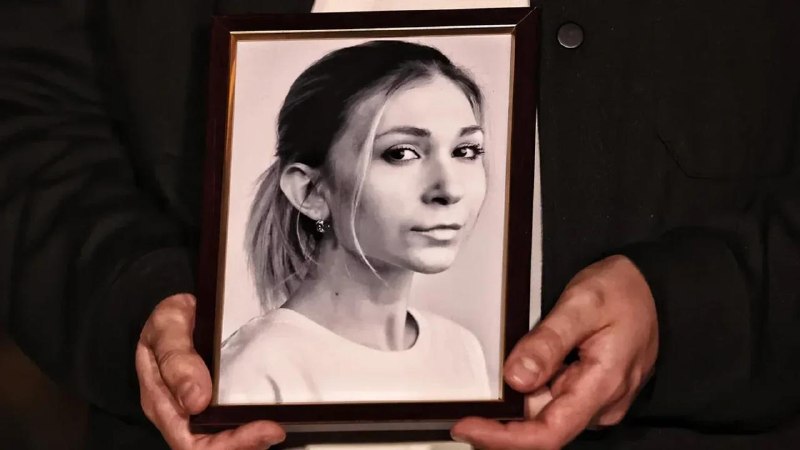
On 3 May 2026, Russian Africa Corps forces released footage of a captured JNIM militant named Hama Cisse, presenting the interview as evidence of a significant battlefield gain during the heavy fighting for Bamako the previous month. The video shows Cisse in captivity, answering questions from what appears to be a Russian-accented interviewer, against a backdrop consistent with military detention facilities in the Sahel. The release arrives as Mali's ruling military junta consolidates its partnership with Moscow and transitions its security architecture away from the French-led regional framework that dominated the Sahel for over a decade.
The episode illuminates a transformation that has reshaped West African geopolitics since the series of coups that swept Mali, Burkina Faso, and Niger between 2020 and 2023. France, which had maintained a substantial counterterrorism footprint across the region through Operation Barkhane and the subsequent Takuba Task Force, has progressively withdrawn its forces — a process accelerated by the juntas' explicit demands for exit and their subsequent outreach to Russian military contractors. Africa Corps, the successor to the Wagner Group's African operations under formalised state contracts, now fills the security vacuum that French forces left behind.
The capture of a JNIM fighter — JNIM being the al-Qaeda-linked coalition that controls substantial territory across Mali's central and northern regions — carries operational and symbolic weight for the junta in Bamako. Intelligence value aside, the footage allows the military government to demonstrate to its domestic audience that its Russian-backed security strategy is producing results. That message serves a dual purpose: it reinforces the junta's legitimacy at a time when civilian transition timelines remain indefinitely postponed, and it sustains the narrative that cooperation with Moscow delivers tangible military gains that Paris's approach could not.
The footage itself warrants careful framing. Prisoner interviews released during active conflicts frequently serve informational objectives beyond their surface content. The imagery projects capability — that Russian forces are not merely present but operationally effective against a adversary that has degraded multiple Western-backed military campaigns. It also generates pressure on JNIM's remaining fighters and sympathisers, potentially disrupting recruitment or cohesion among groups that operate with limited intelligence security. For the junta in Bamako, releasing such material reinforces the message that it has chosen the right external partner.
Counter-narratives deserve equal weight. JNIM remains a resilient, decentralised network — one that has demonstrated capacity to absorb leadership losses and adapt tactics. The capture of a single fighter, even a mid-ranking one, does not inherently degrade the group's operational architecture. Moreover, the interview content itself cannot be independently verified: the conditions under which it was recorded, the questions posed, and the translation provided all reflect choices made by the captors. Skepticism about the framing is not equivalent to disputing the fact of capture, but it is a necessary guard against treating propaganda material as straightforward intelligence disclosure.
The structural pattern here extends beyond Mali. Across the Sahel, states that have experienced military takeovers — Mali in 2020 and again in 2021, Burkina Faso in 2022, Niger in 2023 — have moved to entrench relations with Moscow while reducing or eliminating cooperation with Western security frameworks. France has withdrawn from all three countries. The United States has suspended or curtailed security assistance to Niger and is reassessing its posture in the region. The European Union's Sahel architecture has effectively collapsed. What remains is a Russian security offering — force provision backed by political alignment and economic engagement through mineral extraction agreements — that fills the space the West vacated.
Whether this arrangement delivers durable security outcomes for populations in the Sahel remains the central open question. The evidence is mixed. Russian forces and their local partners have achieved some tactical successes against jihadist groups; they have also been implicated in civilian harm incidents that have drawn condemnation from human rights organisations. JNIM and its Islamic State-linked competitors continue to carry out attacks across Mali and Burkina Faso, with civilian casualty figures remaining high in 2025 and early 2026. The substitution of Russian contractors for French soldiers has not, on available evidence, translated into a commensurate reduction in insurgent violence.
What is clearer is that the geopolitical realignment is durable at the state level. The juntas in Bamako, Ouagadougou, and Niamey have made political commitments to Moscow that go beyond security cooperation — involving mining rights, diplomatic alignment at the African Union and United Nations, and a shared rhetorical posture against what they characterise as Western imperialism. Russia, for its part, has secured basing arrangements, revenue streams from gold and hydrocarbon extraction, and a foothold in a region where the United States and France previously held decisive influence.
The release of the Hama Cisse footage on 3 May arrives at a moment of continued fluidity in the Sahel security landscape. It is a data point in a larger story — not a decisive turn, but a concrete illustration of how the Russia-Africa Corps model operates on the ground in one of the world's most active jihadist theatres. Who controls the narrative around such captures matters to the junta in Bamako. It matters equally to the populations caught between a resurgent insurgency and a security partnership whose long-term efficacy remains unproven.
This publication has covered the Sahel security transition through the lens of Moscow's expanding role since 2022, prioritising reporting from regional wire services and francophone African media alongside official statements from the Malian, French, and Russian governments.
Wire provenance
This editorial synthesis draws on the following public wire/social posts:
- https://t.me/two_majors