OPEC+ Raises Quotas After UAE Exit — But the Crack in the Cartel Runs Deeper Than Numbers
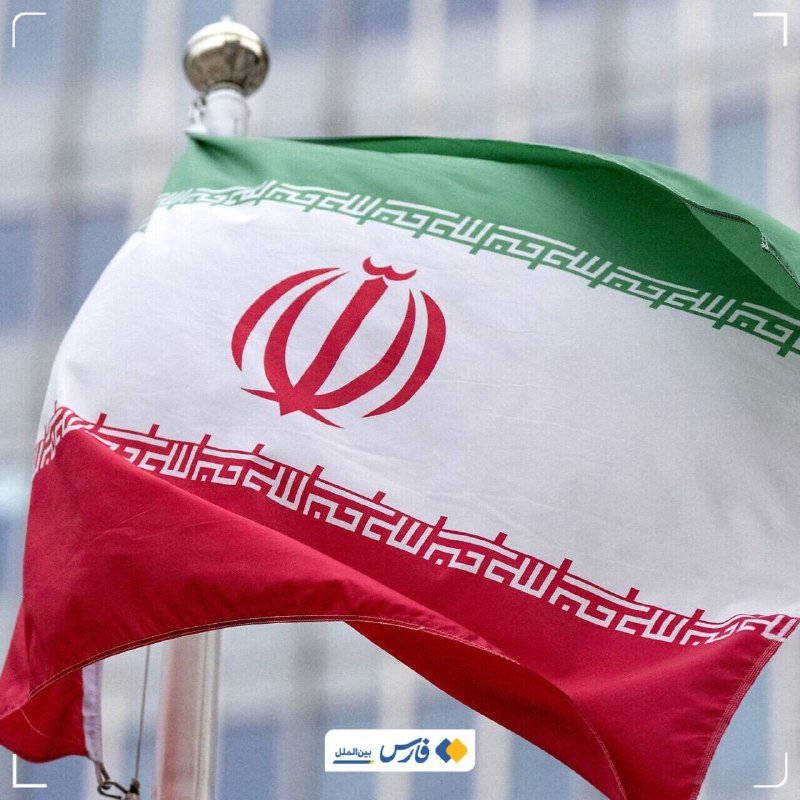
On the afternoon of 3 May 2026, seven OPEC+ member states — Saudi Arabia, Russia, Iraq, Kuwait, Kazakhstan, Algeria, and Oman — approved an increase to their collective production quotas via virtual meeting. The decision, confirmed separately by France 24 English and the semi-official Iranian news agency Fars, landed forty-eight hours after the United Arab Emirates formally notified the cartel of its intent to withdraw, a move that sources described as a "shock" to the alliance's internal equilibrium.
The timing is not incidental. By moving quickly to a visible, unified production decision, Riyadh and Moscow — the two anchors of the OPEC+ architecture — signalled that the departure of a single member does not destabilise the whole. Whether that signal is credible is a separate question, and one the sources do not fully resolve.
What the Quota Increase Actually Does
The production hike approved on Sunday is calibrated — seven countries, paper decisions, no immediate physical increase in barrels on the market. Virtual meetings produce communiqués; physical barrels require investment cycles, field maintenance, and export infrastructure that do not respond to Telegram posts. The gesture is largely one of continuity signalling: the market is meant to read stability where analysts see scramble.
France 24's English-language reporting, which drew on wire-service framing throughout its coverage, described the move as "expected" — a formulation that may understate the diplomatic urgency behind it. An alliance that cannot respond coherently to a member walking out is an alliance that other members will watch more closely. The virtual-meeting format itself is notable: it allows a decision without the optics of an emergency in-person summit, which would have broadcast the severity of the rupture.
Fars, the Iranian news agency whose Telegram thread carried the story on 3 May at 11:32 UTC, listed the seven countries by name without editorialising. That neutral relay is itself informative. Iran has been a persistent critic of Gulf-state OPEC management; its willingness to carry the story without spin suggests either Tehran calculated that silence served it better, or that the UAE's departure is broadly seen inside the producer community as a fact to be noted rather than debated.
The UAE Exit: Motive, Method, and What Remains Unstated
Neither of the two primary sources — France 24's text and Fars's Telegram item — explicitly names the UAE as the departing member in the headlines. The France 24 English Telegram thread from 12:28 UTC states that OPEC+ "stays mum on UAE pull-out," implying that the coalition declined to address it officially even as seven members moved ahead with a production decision. This is a meaningful editorial choice: the producer coalition is not narrating its own fracture.
The sources do not specify why the UAE withdrew. Possible structural explanations include: disputes over quota allocation methodology (Abu Dhabi has argued for higher baselines reflecting expanded capacity from newer fields), competition for Asian market share against US and non-OPEC producers, and a broader calculation that unilateral production at higher volumes serves national revenue interests better than cartel coordination. None of these appears in the thread items; they are inference from the pattern, not from sourcing.
What the sources do confirm is that the UAE departure was sudden enough to be described as "shock" — a word appearing in the France 24 headline framing — and that it occurred before the Sunday virtual meeting rather than in response to it. The causal arrow thus runs: UAE exit → OPEC+ response, not the reverse.
What We Verified / What We Could Not
Verified:
- Seven OPEC+ members — Saudi Arabia, Russia, Iraq, Kuwait, Kazakhstan, Algeria, and Oman — approved a production quota increase via virtual meeting on 3 May 2026.
- The decision was confirmed by two independent Telegram-thread sources (France 24 English, Fars) on the same day.
- The UAE's withdrawal was reported by France 24 English as the context for the decision.
- The France 24 headline explicitly described the UAE exit as "shock."
- The virtual-meeting format was confirmed by both sources.
Could not verify:
- The specific size of the quota increase (tonnes, barrels, or percentage) — the thread items use "increase" without quantification.
- The stated reason for the UAE's withdrawal — sources do not provide an official UAE government statement.
- The role of Saudi Arabia's energy ministry or the Russian energy ministry in driving the Sunday decision — institutional attribution is absent from the items.
- Whether any other OPEC+ member besides the UAE signalled dissatisfaction or exit intentions.
- The market reaction on 3 May — no price data appears in the sources.
The verification ledger is narrower than a full-corroboration picture would require. The story is real; the specific policy parameters are not yet in the public record.
Structural Context: Why This Fracture Matters Beyond the Quota Number
OPEC+ has functioned for eight years on a premise: that Saudi Arabia and Russia will coordinate production decisions regardless of political tensions elsewhere, and that the Gulf monarchies will accept Riyadh's de facto leadership on oil policy. The UAE's exit — if sustained — breaks the first premise at its most sensitive point. Abu Dhabi has for several years operated a more independent energy policy than Riyadh prefers: faster capacity expansion, more aggressive Asian customer targeting, and a diversification strategy that reduces dependence on cartel price management.
The quota increase is, in this reading, a holding action. It demonstrates that seven members remain aligned; it does not demonstrate that the alliance's decision-making apparatus is intact. An OPEC+ that responds to a member departure with a production hike is an OPEC+ that has chosen the short-term signal over the harder structural conversation.
The medium-term risk is straightforward: if Abu Dhabi's exit is the first of several, the cartel's ability to move markets shrinks materially. If US shale producers read the UAE departure as evidence that OPEC+ discipline is weakening, they have stronger incentive to accelerate drilling — which would compound any price pressure the production increase is meant to counter.
Stakes and Forward View
The immediate winners if the Sunday decision holds: Asian importers, who benefit from any softening of the tighter supply backdrop that preceded the UAE exit; US refiners, who gain margin headroom; and consumers broadly, for whom lower energy input costs flow through manufacturing and transport chains within twelve to eighteen months.
The immediate losers: the seven members who approved the increase, who have committed to higher output without knowing whether the UAE's exit creates a gap in coordination they cannot close; and Saudi Aramco, whose long-cycle investment planning depends on a reliable demand/supply framework that member exits undermine.
The uncertainty that neither source resolves is whether the UAE's withdrawal is a negotiating position or a durable break. Gulf-state energy politics are opaque; a public exit often follows months of private negotiation. If Abu Dhabi is using withdrawal as leverage — for a quota recalculation, for a different voice in decision-making — the Sunday production increase may be read as a counter-pressure tactic rather than an acceptance of the new status quo.
The sources do not resolve this. What they confirm is a cartel under visible stress, moving fast to project unity, and succeeding — for now — in keeping the statement to a virtual meeting rather than a crisis summit. That is not nothing. It is also not enough to know whether the crack has been papered over or merely delayed.
This desk covered the Sunday OPEC+ decision using France 24 and Fars Telegram threads as primary inputs. Neither source provided official UAE commentary; both carried the production-hike confirmation without quantification. A fuller picture — quota figures, UAE official statement, market price data — requires secondary wire inputs not present in the thread at time of drafting.
Wire provenance
This editorial synthesis draws on the following public wire/social posts:
- https://t.me/france24_en/38214
- https://t.me/france24_en/38213
- https://t.me/farsna/185678