Petro's Cuba Gambit: Latin America's Sovereignty Calculus in 2026
Colombian President Gustavo Petro has framed Cuban sovereignty as a continental test case, positioning Latin America's response to US pressure as a defining moment for regional autonomy in an era of shifting global alignments.
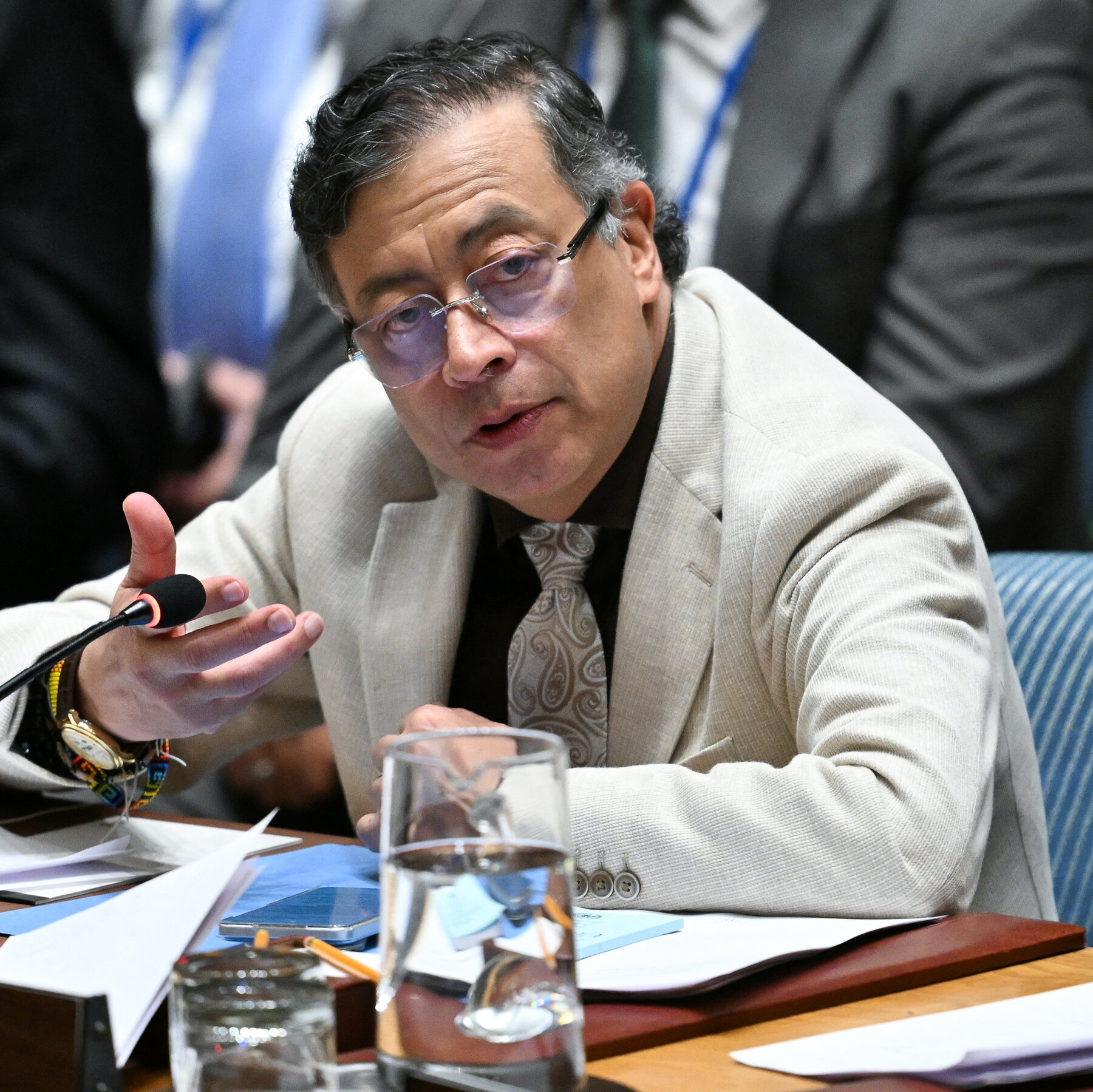
On 3 May 2026, Colombian President Gustavo Petro issued a set of declarations that amounted to the most direct articulation of Latin American sovereignty doctrine seen from Bogotá in recent memory. The statements, carried by regional wire services including Al Alam Arabic, made three claims that have since reverberated through diplomatic circles: that the continent belongs to its people, not external powers; that only Cubans may determine Cuba's political future; and that any assault on the island constitutes an assault on the region as a whole.
The declarations arrive at a moment of renewed friction between Washington and Havana, with the Biden-era Cuba policy under continued scrutiny and the Trump administration having reintroduced a suite of measures that critics say mirror the most restrictive phases of the Cold War embargo. Petro's intervention reframes what Washington presents as a bilateral matter of human rights and democratic conditionality into a question of continental self-determination, with stakes that extend well beyond the Florida Straits.
The Colombian Position: Autonomy as Architecture
Petro's statements are consistent with the foreign policy trajectory he has pursued since taking office in 2022. The Colombian leader has systematically repositioned Bogotá away from its historical alignment with Washington and toward a posture of strategic autonomy that draws on older traditions of Latin American independence, from Bolívar to the non-aligned reflex embedded in the Chávez-era discourse of the 2000s.
The language matters. Framing the continent as "a continent of freedom, not a continent of occupation" is not diplomatic courtesy; it is a direct rebuttal of the Monroe Doctrine, which has informally governed US engagement with Latin America since 1823. The doctrine's 2026 revival—implicit in the expanded sanctions regime and the Pentagon's expanded Caribbean footprint—has produced a backlash among governments that view it as an assertion of extra-continental authority over sovereign decision-making.
Colombia under Petro is not alone in this posture. Brazil, under the Lula da Silva administration's foreign policy reset, has similarly refused to align with US-led pressure campaigns against Havana. Mexico's Lopez Obrador government has maintained its own quiet solidarity with Cuba throughout. Petro's statements should be read as part of a broader regional current rather than an isolated outburst.
Washington's View: Human Rights and Democratic Conditionality
The US State Department has not issued a direct response to Petro's declarations as of publication, but the underlying US position remains consistent: Cuba's government is characterized as repressive, its economic difficulties self-inflicted, and its international relationships—particularly with Venezuela and Iran—as vectors of destabilization in the hemisphere. Under this framing, the embargo and its recent intensification are presented not as coercion but as consequences of choices made in Havana.
Administration officials have argued that engagement without preconditions rewards bad actors and emboldens other governments to resist democratic norms. The specific charges—political prisoners, restrictions on assembly and expression, the detention of journalists—have been documented by international NGOs and are not in dispute as factual matter. What is disputed is whether the pressure campaign produces the desired change or entrenches the status quo.
Petro's rejoinder is structural rather than defensive. By positioning Cuban sovereignty as a continental question, he attempts to shift the burden of proof: not "does Cuba have human rights problems?" but "does Latin America accept extra-continental jurisdiction over its own members?" The distinction matters because it reframes the debate from a bilateral US-Cuba dispute into a question of hemispheric agency.
The Regional Calculus: Who Stands Where
The Latin American response to Petro's statements has been differentiated rather than uniform, which itself is instructive.
Left-leaning governments in the so-called Pink Tide—Bolivia, Chile under Boric, Argentina under Milei, despite the latter's market-liberal orientation on economic questions—have generally been more sympathetic to Cuban sovereignty claims. The ALBA alliance (Bolivarian Alliance for the Peoples of Our America), which includes Cuba, Venezuela, Nicaragua, Bolivia, and several Caribbean states, has long framed the US embargo as a violation of international law. Petro's declarations align closely with ALBA's foundational ideology.
The more conservative governments—Ecuador under President Noboa, Uruguay under Lacalle Pou, and the Piñera-era Chile—have taken a more measured line, acknowledging the human rights concerns raised by the US while stopping short of endorsing Washington's preferred instruments of change. This middle ground is neither passive nor incoherent; it reflects a genuine division within the region over how to weigh sovereignty against accountability.
What Petro's statements accomplish is to move the centre of gravity on this debate. By invoking a pan-Latin American identity against occupation, he attempts to delegitimize the US posture without requiring other governments to defend the Cuban government's internal record. The manoeuvre is strategic: it decouples solidarity with Cuba as a sovereign entity from endorsement of its governance, a distinction that gives other regional leaders political cover to align with his framing.
Stakes: The Multipolar Moment and Latin American Agency
The deeper context for Petro's declarations is the ongoing erosion of US hegemony in the hemisphere, accelerated by the diversification of diplomatic, economic, and security relationships available to Latin American states. China's presence in the region—through trade, infrastructure investment, and diplomatic engagement—has fundamentally changed the calculus for governments that previously had limited options outside the US orbit. Russia, Iran, and Turkey have each deepened ties with various Latin American partners, providing additional counterweights to Washington.
Cuba itself has benefited from this multipolar environment. While the embargo remains in force and has been tightened, Havana's relationships with Beijing, Moscow, and Tehran have provided economic lifelines that blunt its maximum impact. Petro's framing—any attack on Cuba is an attack on Latin America—recognises this reality: in a multipolar world, the regional order cannot be settled by a single external power acting unilaterally.
The stakes for Petro are domestic as well as diplomatic. His progressive coalition depends on constituencies that view the US embargo as an injustice with deep historical roots in colonialism and racial hierarchy. Solidarity with Cuba plays well with these constituencies and reinforces the anti-imperialist narrative that underpins Petro's broader political project.
The stakes for Washington are credibility. A hemisphere in which major governments publicly reject US policy prescriptions—with explicit linkage to historical patterns of intervention and domination—is a hemisphere in which US influence is diminishing, not through military defeat but through the quiet realignment of partners who no longer see alignment as automatic.
For Latin America's own governments, the question is whether the multipolar moment produces genuine autonomy—genuinely independent foreign policies responsive to national interests—or merely swaps one form of dependency for another. Petro's answer is that the continent must decide for itself, on its own terms. The test will be whether other governments agree, and whether the declaration translates into sustained institutional practice rather than rhetorical posture.
What Remains Uncertain
The sources reviewed for this article do not specify the precise occasion for Petro's declarations—whether they were delivered in response to a specific triggering event, such as a new round of US sanctions, or a speech at a regional forum. The Al Alam Arabic wire coverage captures the statements but provides limited additional context about venue, audience, or surrounding diplomatic activity. Monexus was unable to independently confirm whether other heads of state have publicly endorsed or distanced themselves from Petro's framing as of the time of publication. The gap matters because the effectiveness of solidarity rhetoric depends on whether it translates into coordinated institutional action—common positions in multilateral forums, aligned voting, coordinated diplomatic demarches—or remains an isolated declaration.
Wire provenance
This editorial synthesis draws on the following public wire/social posts:
- https://t.me/alalamarabic/
- https://t.me/alalamarabic/
- https://t.me/alalamarabic/