The Price of Protection: Artillery Fire and the Erosion of Medical Neutrality in Lebanon
Israeli artillery struck southern Lebanon on 3 May 2026, wounding five people — four of them paramedics. The attack exposes a recurring violation of protections that international law has long considered settled. What the targeting of medical personnel in Tyre district tells us about the erosion of the Geneva Conventions in modern conflict.
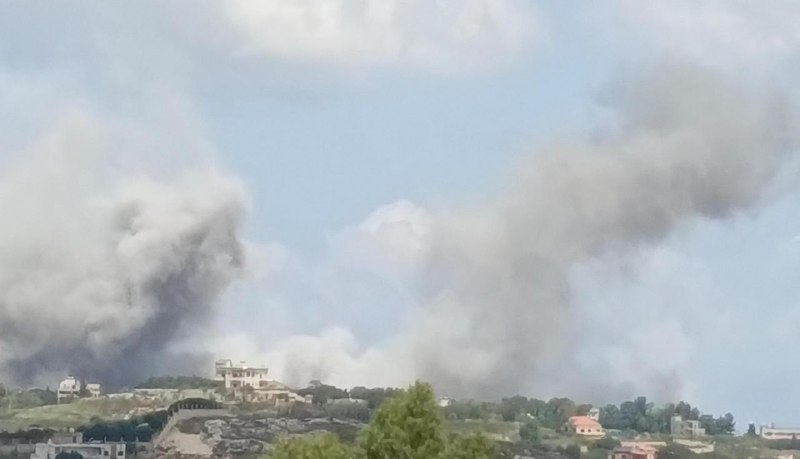
Israeli artillery struck southern Lebanon on the morning of 3 May 2026, wounding five people — four of them paramedics — in the Tyre district, according to Lebanon's health ministry. Emergency workers had responded to an initial strike when a second Israeli round landed among the responders. The pattern of first strike, rescue call, then follow-on strike has been documented before. International law has a clear line on this. The line keeps being crossed.
Medical personnel operating under the Red Cross emblem are explicitly protected under the Geneva Conventions. Attacking them is classified as a grave breach — a war crime. The protection is not ambiguous or subject to interpretation. It is one of the foundational prohibitions of international humanitarian law, embedded in the 1949 conventions and reinforced through subsequent protocols. When the Lebanese health ministry reported that four of the five wounded in Tyre district were paramedics, the legal characterisation was not in question. What is in question is whether that legal architecture has any practical force.
Israel has not issued a statement specifically addressing the incident in Tyre, but the IDF has previously stated it targets infrastructure it associates with Hezbollah, which it says uses civilian areas for military purposes. This dual-use argument — that medical facilities, roads, or residential areas serve militant operations and therefore become legitimate targets — has been the consistent justification offered by Israeli military spokespeople when similar strikes have been reported. The argument is familiar. The scrutiny it faces has grown.
The targeting of medical personnel in this instance follows a documented pattern. UN investigators have catalogued multiple incidents in which medical workers were hit while responding to casualties, a dynamic they describe as a systematic erosion of the protections the Red Cross emblem historically conferred. International bodies have issued findings noting that medical neutrality — the principle that the wounded, whether combatant or civilian, receive care regardless of affiliation — has been progressively weakened in conflicts where one party disputes the status of the other party's medical infrastructure. The Geneva Conventions were written to settle exactly this ambiguity. What the pattern of documented violations suggests is that the settlement is no longer holding.
The precedent is not new. After the 2006 Lebanon war, UN observers documented violations of medical protection on both sides, though the asymmetry of Israeli firepower meant Lebanese health infrastructure bore the heavier toll. The current strikes in southern Lebanon — targeting Beit Yahoun and Kounine as well as the Tyre district — continue a pattern that international observers have flagged repeatedly, placing emergency responders in the position of knowing their insignia offers diminishing protection. The logic is straightforward and grim: a medic entering an area hit by artillery is not immune from a second strike simply because international law says they should be. The law says what should happen. What happens instead is recorded in the casualty tallies.
The structural reality is this: when a principle holds absolutely, it rarely needs to be stated as a principle. It just operates. When it begins to erode, the erosion follows a consistent grammar — a security justification for the first strike, an operational necessity argument for the second, and a dual-use framing that gradually extends the definition of what constitutes a military target. Medical workers, roads, schools, and residential buildings all eventually fall into the same category: places where militants are or may be, and therefore places where striking is permissible. The protection of medics is the first casualty of this logic because they are present at every other casualty.
For the paramedics of Tyre district, this is the operational environment. Every emergency call is now a calculation of risk that includes not just the hazard of unexploded ordnance or ongoing fire, but the documented possibility that a second strike will follow the first. Their health ministry listed them as wounded, not killed. That distinction matters — it is the narrow margin between a law that has been degraded and a law that has been abandoned. The international response will determine which trajectory holds. A documented violation with no accountability is a signal that the protection has been removed from the category of binding constraint and moved to the category of aspiration. A response that holds the violation to account — even imperfectly — maintains the architecture. Neither outcome is assured.
The strikes in Tyre, Beit Yahoun, and Kounine on 3 May are not an isolated incident. They are the latest entries in a ledger that international humanitarian organisations have been maintaining throughout 2026. What that ledger shows is a consistent pattern of medical personnel caught between the law's promise and the reality of the strike. Whether the promise has any remaining force is the question these paramedics' survival now forces into the open.
This publication covered the Tyre district paramedic attack with reference to Lebanese health ministry reporting and regional Telegram-sourced dispatches. Western wire services had not independently confirmed the casualty figures at time of writing.
Wire provenance
This editorial synthesis draws on the following public wire/social posts:
- https://t.me/thecradlemedia/
- https://t.me/thecradlemedia/
- https://t.me/alalamarabic/