Project Freedom's hollowed-out escort: diplomacy or deterrence theater?
Trump announced a humanitarian naval escort through the Strait of Hormuz — but the fine print reveals no US warships will be involved. That gap between the headline and the operational reality tells us something important about where American power actually stands in 2026.
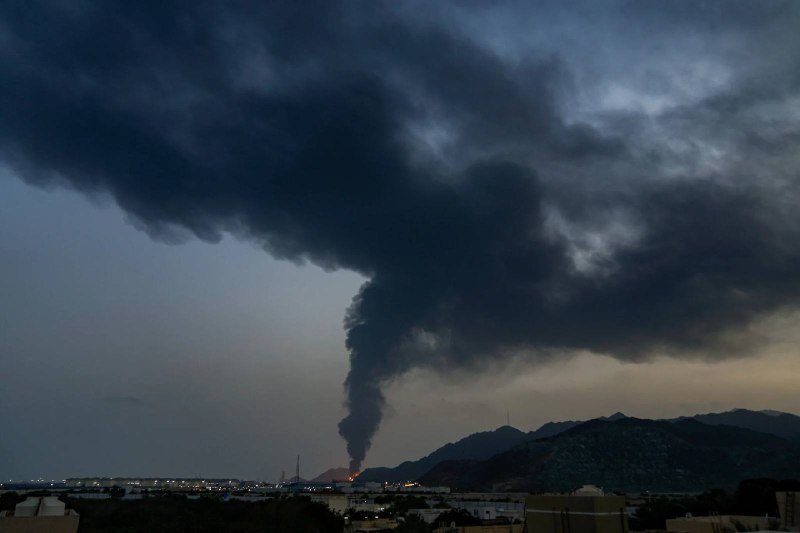
On 3 May 2026, President Trump announced what he called Project Freedom — a US effort to escort neutral foreign ships stuck in the Strait of Hormuz, framed explicitly as a humanitarian gesture and set to begin the following Monday morning Middle Eastern time. The announcement carried the familiar cadence of American crisis management: decisive language, a clean label, a warning attached. Any interference, Trump said, would be met with consequences. The framing wrote itself. Iran had held commercial traffic hostage; America was coming to free it.
Except the fine print, released within hours by a US official, told a different story. Project Freedom will not include escort by US warships. The operational mechanism — coordination between insurance companies, shipping companies, and partner nations — amounts to a commercial logistics arrangement, not a naval deployment. The warships that were supposed to be the point are not there.
The gap between the headline and the actual plan
This is not a minor detail. The Strait of Hormuz is not a contested parking lot. It is the conduit through which roughly 20 percent of global oil trade flows, a fact that makes any disruption there simultaneously an economic and a geopolitical event. When Iran or Iranian-aligned actors threaten shipping in the strait, the threat is credible precisely because the water is narrow — at its narrowest, the shipping channel is just 21 nautical miles wide — and because any military engagement there risks escalation that no single state wants to own.
The US has historically treated Hormuz patency as a core interest. The Fifth Fleet is based in Bahrain. Freedom of navigation operations have been a standing feature of American naval doctrine for decades. So when Washington announces an escort operation and then quietly specifies that no warships will be involved, the honest reading is that the administration wants the deterrent signal without paying the deterrence cost. The headline — American ships freeing trapped vessels — plays well domestically and with regional partners. The substance — coordination and insurance backstops — is what actually gets implemented.
That gap matters because it reshapes the credibility calculation for everyone watching. Iran sees an announcement that sounds muscular but an operational reality that is circumscribed. Regional partners see commitment but not commitment at the level that would require American casualties. The message sent to adversaries is mixed by design.
The humanitarian framing as strategic instrument
Calling the operation a humanitarian gesture is not neutral language. It is a deliberate framing choice that does several things at once. It pre-emptively disciplines any response from critics who might oppose military engagement — opposing a humanitarian mission to free trapped ships is a difficult political position to hold. It positions Iran as the party responsible for a humanitarian crisis, which the Iranian government now must either acknowledge or deny. And it shifts the ethical burden: the US is acting to alleviate suffering, while Iran, if it interferes, is acting to perpetuate it.
This is standard practice in American crisis communication, but it deserves scrutiny rather than passive acceptance. Humanitarian framing has been used to construct legal and political justifications for operations that go well beyond alleviating suffering. The language is not evidence of the motive, and it is not a guarantee of the operational scope. What it is, reliably, is a tool that narrows the Overton window around what responses are considered legitimate.
The question worth asking is whether this framing serves the stated goal — freeing trapped ships — or whether it primarily serves the broader goal of signaling US presence in the Gulf without the costs associated with a direct naval escort. If the latter, the humanitarian label is doing ideological work that the operational plan on its own would not justify.
What a credible escort actually requires
A genuine escort operation through a contested waterway involves several things that Project Freedom, as described, conspicuously does not include. US naval vessels with visible presence. Rules of engagement that allow for preemptive response to interference. Communication with Iranian naval command to establish clear boundaries and deconfliction channels. And, crucially, willingness to absorb the escalation risk that comes with any kinetic engagement in a chokepoint through which the global economy flows.
The coordination model — insurance companies, flag states, and commercial shipping arranging their own passage — works reasonably well in peacetime conditions or in contexts where no state is actively threatening traffic. It works considerably less well when the threat is specific and state-sponsored. Insurance markets can price risk, but they cannot deter a mine-laying operation or a fast-attack boat swarm. Shipping companies can reroute, but rerouting around Hormuz adds weeks to transit times and meaningful cost to already-marginal commercial operations.
What this suggests is that Project Freedom, in its actual operational form, is better understood as a diplomatic and commercial pressure campaign than as a military escort. The US is signaling that it has skin in the game without deploying the assets that would make the skinning literal. The goal may be to raise the diplomatic cost of continued Iranian interference by making clear that Washington is paying attention — that the issue is elevated — without crossing the threshold that would require actual military engagement.
That is a coherent strategy, but it is not the strategy the headline announced. And that gap between announcement and operational reality is where the risk lives. If Iran calls the bluff — or more precisely, tests whether the coordination model can function under even modest pressure — the administration will face a choice between absorbing the humiliation of a failed initiative or escalating to the warship presence it explicitly ruled out.
The harder question underneath
Strip away the humanitarian framing and the deterrence theater, and what is actually at stake is a question that goes beyond Hormuz and beyond this specific announcement. What does American forward presence mean in 2026 when it is increasingly mediated through commercial coordination rather than direct military deployment? The Fifth Fleet still exists. The bases are still there. The alliance structures are intact. But the willingness to put American sailors in harm's way for the purpose of keeping a trade route open appears to have contracted meaningfully.
That contraction is not unique to this administration. It is a structural feature of American foreign policy that has been developing across administrations and is now showing up in the gap between the language of commitment and the operational commitments actually on the table. Project Freedom is a clear example: the announcement reads like a restoration of American resolve, but the actual plan is a workaround that reflects a genuine reluctance to use the most obvious instrument.
Whether that reluctance is prudent — avoiding costly entanglement in a secondary theater — or reckless — emboldening adversaries who learn that American threats have a short shelf life — depends entirely on the follow-through. On what actually happens when, not if, Iranian forces probe the edges of the coordination model. The world will find out on Monday.
This publication's coverage prioritises the operational specifics over the headline framing. The wire services led with the announcement; this piece focuses on what the announcement actually contains — and what it conspicuously leaves out.
Wire provenance
This editorial synthesis draws on the following public wire/social posts:
- https://x.com/reuters/status/20510442
- https://t.me/euronews
- https://t.me/osintlive