Scott Bessent's Three-Part Signal: Oil, Iran, and the New Economics of Coercion
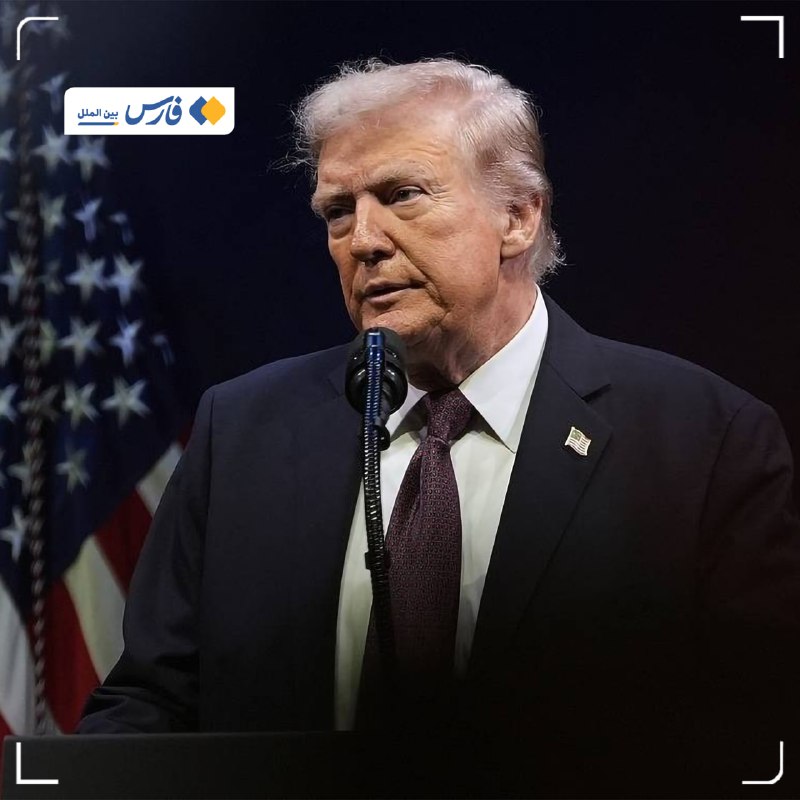
On 3 May 2026, Treasury Secretary Scott Bessent delivered a cluster of public statements that, separately, might read as routine administrative communication. Taken together, they form something more deliberate: a three-part geopolitical signal in which energy markets, coercive economic pressure on Iran, and emerging technology risk are arranged into a single coherent framework — one that aligns with the administration's broader posture toward great-power competition and Middle Eastern architecture.
The first claim, reported via the DDGeopolitics Telegram channel on 3 May 2026 at 17:13 UTC, was that oil prices would fall within a three-to-nine-month window — a forecast that runs sharply counter to what industry analysts have been projecting. The second, conveyed via the abualiexpress Telegram channel at 16:06 UTC the same day, was more blunt in its framing: "We are strangling Iran economically. They cannot pay salaries to their soldiers." The third, appearing on the Polymarket X account at 16:48 UTC, was directed at a domestic American audience: Americans should be concerned about AI hacking their bank accounts.
Three audiences. Three register shifts. One administration speaking with unusual directness about the intersection of energy economics, financial warfare, and technology security.
The Oil Forecast That Breaks With the Street
The most commercially significant of Bessent's three statements is the oil price prediction. The claim that prices will decline within three to nine months contradicts prevailing industry sentiment, which has been shaped by OPEC+ production discipline, lingering uncertainty about Russian supply disruption, and demand forecasts that — while moderating in some projections — have not pointed toward the kind of supply glut that would drive a meaningful price collapse.
The timing matters. Bessent is not simply making an economic forecast; he is communicating a timeline to markets. If traders believe the Secretary of the Treasury has inside insight into the administration's energy posture — or, more precisely, believes the administration has tools to engineer a price decline — that belief itself becomes a market input. A Treasury secretary who is widely perceived as credible in this space can move futures markets with a well-placed statement, and the self-fulfilling nature of that movement is itself a policy instrument.
The most obvious mechanism for driving oil prices down would be a Iran nuclear deal that removes sanctions-related supply constraints, or an escalation of the Saudi-Israeli normalization process that primes the market for increased Gulf production. Both scenarios have been discussed in various configurations throughout 2025 and into 2026. If the administration has moved closer to either — or has simply decided to signal its expectation of a market correction — that is itself a form of strategic communication. The question is whether the forecast reflects genuine administrative leverage over energy markets, or whether it is a reputational bet that Bessent is placing on his own credibility.
Industry analysts who track the intersection of sanctions enforcement and energy markets note that the Trump administration's approach to Iranian oil exports has been notably more aggressive in its enforcement posture than the Biden-era gradualism that preceded it. Secondary sanctions on entities transporting Iranian crude, coordinated with UAE and Chinese financial institutions in ways that previous administrations preferred to handle more quietly, have materially compressed the volume of Iranian oil reaching global markets. That compression — not a supply glut — is the mechanism most likely driving the administration's confidence in a price decline: if demand remains flat and Iranian supply is further squeezed, the price dynamics shift in ways that benefit both the energy consumer's political base and the sanctions architecture against Tehran.
Economic Strangulation as Strategy, Not Side Effect
The framing of the Iran claim — "strangling Iran economically. They cannot pay salaries to their soldiers" — is notable for its directness. It does not use the sanitized vocabulary of sanctions enforcement or pressure campaigns. It uses the language of asphyxiation. That matters for several reasons.
First, it reflects an administration that has moved away from the more measured language of its predecessors toward a doctrine that treats economic coercion as a primary instrument of statecraft, not a supplementary measure to diplomacy. The Biden administration's approach to Iran involved a careful calibration: enough pressure to extract negotiating leverage, not so much as to foreclose a deal. The current administration appears to have concluded that this calibration was itself the problem — that maximum pressure, delivered consistently and publicly, produces outcomes that diplomatic caution could not.
Second, the specific claim about soldiers' salaries is a granular indicator of economic impact that suggests the administration has intelligence — or believes it has intelligence — about the Iranian government's operational constraints. Paying soldiers is a basic function of state authority. An army that cannot be paid is an army that degrades. That degradation, over time, changes the cost-benefit calculus of the Iranian leadership's regional posture: its support for proxy groups in Iraq, Syria, Lebanon, and Yemen, its nuclear programme posture, its negotiating leverage in any future talks.
This is the logic of economic strangulation as a substitute for military confrontation. It is also, from the Iranian government's perspective, an existential challenge. The Iranian rial has experienced significant volatility against the dollar over the past 18 months, and the sanctions architecture has made it progressively harder for the Islamic Republic to access foreign exchange reserves or to process international transactions through the SWIFT-adjacent financial architecture. When a government cannot pay its soldiers, its ability to project power beyond its borders contracts in proportion.
The administration appears to be betting that this contraction, sustained over a sufficient period, will produce either a change in Iranian behaviour or a change in the Iranian government's willingness to negotiate on terms that the United States finds acceptable. That bet carries risk: economic desperation can produce escalation rather than capitulation, and regimes cornered by financial pressure have historically shown a willingness to take asymmetric actions they might not contemplate under less constrained conditions. The administration appears to be managing that risk by calibrating its public communication to signal inevitability — to present the economic trajectory as already determined, thereby reducing the perceived value of resistance.
The Domestic Layer: AI and the American Bank Account
The third claim — that Americans should be concerned about AI hacking their bank accounts — sits differently from the other two. It is directed at a domestic audience, it is not falsifiable in the short run, and its primary function appears to be awareness-raising rather than strategic signaling to adversaries.
But it is not without geopolitical dimension. The framing of AI as a threat to financial infrastructure is, in the current administration's posture, inseparable from the broader framing of technological competition with China. American financial infrastructure — the SWIFT network, the dollar-denominated clearing system, the correspondent banking relationships that underpin global trade — is a structural asset as significant as any aircraft carrier group. Maintaining the integrity of that infrastructure against AI-enabled attacks is a national security priority, and the administration appears to have decided that framing it as a threat to ordinary Americans' bank accounts is the most politically effective way to sustain funding and legislative attention for the issue.
This is a known communication strategy: translate systemic threats into personal stakes, and you broaden the political coalition that cares about the response. The infrastructure that protects trillion-dollar transaction flows also protects the individual checking account. The administration has apparently decided that making that connection explicit serves its interests.
The AI threat itself is not hypothetical. Financial institutions globally have reported a rise in AI-enabled fraud attempts, including sophisticated phishing campaigns, deepfake-assisted identity theft, and automated probes of banking system interfaces. The threat is real; the question is one of calibration and response. A Treasury secretary telling Americans to be concerned about AI hacking their accounts is participating in a broader public communication campaign that also serves to justify greater oversight and regulatory authority over the financial technology sector — a sector that has, until recently, operated with considerable regulatory latitude.
What the Three Claims Share
Bessent's three statements, made within a span of hours on 3 May 2026, share a common architecture: they each position the administration as having superior information, stronger tools, and a clearer view of the trajectory than external critics or adversaries possess. The oil price forecast is not hedging — it is asserting a future that the administration claims to be engineering. The Iran claim is not diplomatic — it is triumphalist, describing an outcome already in progress. The AI warning is not speculative — it is preemptive, establishing the administration as a guardian of the domestic financial order before a threat fully materialises.
This is a communication posture that prioritises perceived strength over nuance. It accepts the risk that falsification — if oil prices do not fall, if Iran does not capitulate, if AI banking fraud does not become the crisis the administration warns of — will carry reputational costs. But it also accepts that credibility, once established, is itself a policy tool. A Treasury secretary who is believed to know where energy markets are heading can move those markets. An administration that is believed to be strangling an adversary can amplify the deterrent effect of that strangulation. A government that is believed to be ahead of the AI threat can shape how both the public and the private sector invest in defensive infrastructure.
The question of whether the underlying claims are accurate — whether Iranian soldiers are genuinely going unpaid, whether oil prices will genuinely fall, whether AI fraud will become a systemic banking crisis — is secondary to the question of whether the administration successfully positions itself as the credible source of information about all three. In the current geopolitical environment, where attention is fragmented and institutional trust is contested, that positioning may be worth more than the underlying facts.
The Stakes and the Forward View
If Bessent's energy forecast proves correct, the political benefit to the administration is significant: lower gasoline prices heading into a midterm environment, reduced inflation pressure, and a demonstration that the sanctions architecture against Iran is functioning as designed. If it proves wrong, the credibility cost falls on an administration that has staked considerable reputation on its economic competence.
If the Iranian economic pressure produces capitulation — or even meaningful concessions on the nuclear programme or regional proxy support — the administration will claim a legacy achievement. If it produces escalation, including possible Iranian responses in the Gulf, in the nuclear domain, or through its network of regional partners, the cost-benefit calculation of maximum-pressure strategy will come under serious review.
The AI banking warning is lower-stakes in the immediate term but consequential over a longer horizon. If the administration is right that AI-enabled financial crime is an emerging systemic risk, its early-warning communication is a genuine public service. If it is using the risk as a justification for regulatory expansion that benefits established financial institutions at the expense of fintech challengers, the framing warrants scrutiny.
What is clear is that the three claims are not accidents of scheduling. They are a deliberate arrangement of communications across three audiences — global energy markets, adversaries in Tehran, and domestic American voters — each calibrated to a different register but consistent in their underlying posture: this administration knows what it is doing, it has the tools to execute, and the trajectory it describes is the one it intends to produce.
Whether that confidence is warranted will be answered by events over the coming months. The oil market will settle. Iran will either bend or break. AI-enabled financial crime will either materialise as a crisis or remain a specter. In each case, the answer will tell us whether Bessent's three-part signal was strategic communication or strategic overreach.
—
This publication covered the oil price and Iran sanctions dimensions of the Treasury Secretary's statements via Telegram-sourced wire summaries; the AI banking security claim appeared via the Polymarket X account. The article draws on the administration's own public framing as its primary source material, supplemented by independent reporting on Iranian economic conditions and global energy market dynamics from sources that track sanctions enforcement and OPEC+ production patterns.
Wire provenance
This editorial synthesis draws on the following public wire/social posts:
- https://t.me/ddgeopolitics/4823
- https://t.me/abualiexpress/1247
- https://x.com/polymarket/status/1928473628410171904