The Sky Reopens: Aviation, Diplomacy and the New Architecture of Middle East Recovery
As UAE lifts flight restrictions and Iran tables a fourteen-point peace proposal, the pieces are falling into place for something the region has not seen in years: a coordinated return to normalcy — if Washington and Tehran can agree on the terms.
On the morning of 3 May 2026, the UAE's civil aviation authority announced the full lifting of air traffic restrictions that had been in place since the opening phase of the Iran conflict. The announcement, carried as breaking news by Al Jazeera at 03:29 UTC, marked the most concrete signal yet that commercial aviation across the Persian Gulf corridor is entering a genuine recovery phase — not merely a managed coexistence with active conflict, but a structured return to pre-war operating norms.
The timing is not accidental. Hours before the UAE's statement went public, Iran reportedly submitted a fourteen-point proposal to the United States through back-channel intermediaries, a development first flagged by the Telegram channel TSN_ua at 03:14 UTC on the same morning. The proposal, details of which remain partially obscured by the fog of diplomatic negotiation, is said to address the three core pillars any durable Iran ceasefire must confront: the status of sanctions relief, the scope of weapons inspections, and the sequencing of military de-escalation in the Gulf. That the submission coincided with — or perhaps precipitated — the UAE's announcement suggests a degree of behind-the-scenes coordination between Gulf states and the principals in the emerging US-Iran dialogue.
Market sentiment has registered the shift. Polymarket's trading on whether a formal US-Iran diplomatic meeting occurs before the end of May stood at 39 percent at 00:15 UTC on 3 May, reflecting a non-trivial but far from certain probability. That figure alone understates the underlying momentum: the mere existence of a fourteen-point plan, table-stated and awaiting response, represents a qualitative change from the mutual rejection rhetoric that characterized the first eighteen months of the conflict.
From Groundings to Gateways
The aviation picture tells a story in numbers. Across the Gulf, airlines had been operating under a patchwork of restrictions that effectively bifurcated the regional network: routes to and from the Levant and Iraq remained curtailed or suspended, while flights to and from the Arabian Peninsula continued under reduced frequency and heightened fuel-surcharge pressures. The UAE's decision to fully restore pre-conflict airspace protocols addresses the commercial leg of that bifurcation — but it does not resolve the upstream constraint that has been quietly reshaping summer scheduling for months.
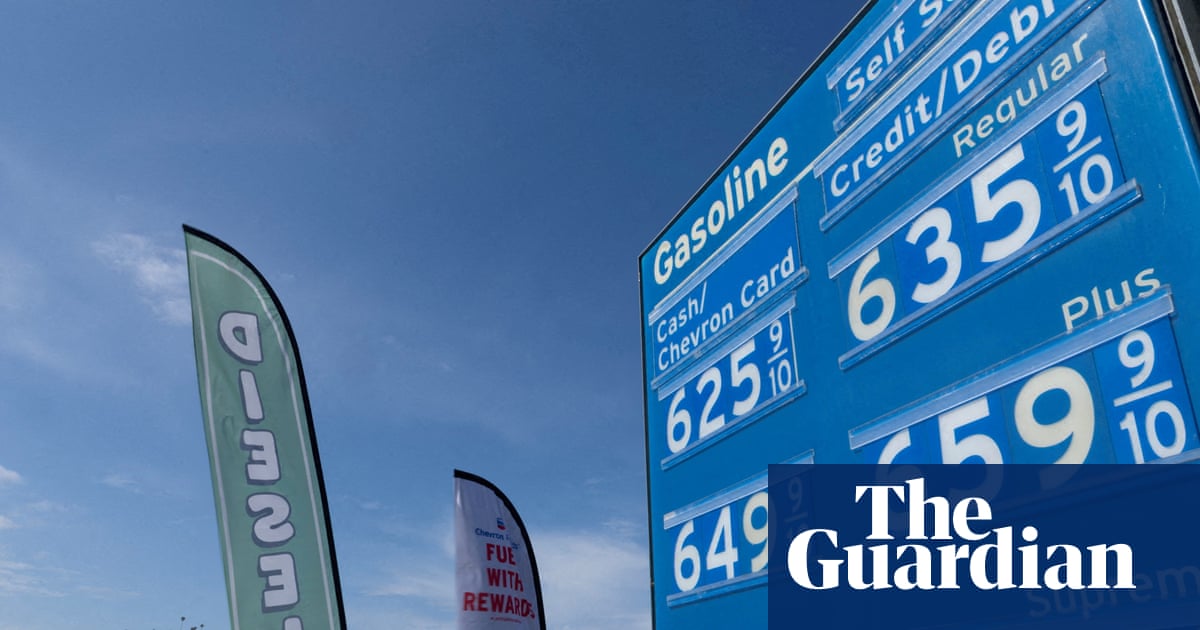
On 2 May 2026, the BBC reported that the British government was preparing legislation to allow airlines to cancel flights in advance over fuel supply concerns affecting Middle East routes. The planned regulations, described by ministers as a tool to prevent last-minute passenger disruption, reflect an underlying anxiety that persists even as headline restrictions lift: the energy infrastructure of the Gulf remains calibrated for a conflict footing, and the transition back to civilian-demand-normal requires more than a political announcement. Fuel commitment contracts, refinery capacity allocations, and aviation fuel logistics chains do not reverse on a regulator's timetable.
This is the structural tension at the heart of the recovery narrative. Diplomatic optimism — the fourteen-point plan, the 39-percent meeting probability — creates the political licence to reopen airspace and restore routes. But the operational reality of aviation fuel supply, particularly in the eastern Mediterranean and Gulf corridor, has not yet fully normalized. Airlines are being given permission to fly before the system is fully confident they will have fuel to do so. The ministerial reasoning, as reported by the BBC, frames advance-cancellation flexibility as a consumer-protection measure. What it also functions as is a managed acknowledgment of residual supply fragility.
Reading the Fourteen-Point Plan
What is known about Iran's proposal comes primarily from the TSN_ua Telegram source and corroborating signals in the diplomatic environment. The fourteen points are said to address: a phased sanctions-removal schedule tied to verified weapons-dismantlement benchmarks; a renewed IAEA inspection protocol covering declared and suspected sites; a Gulf-wide demilitarized zone mechanism with third-party monitoring; humanitarian carve-outs for civilian aviation and maritime traffic; and a formal ceasefire declaration subject to reciprocal American commitment.
The structure of the proposal reveals something important about the Iranian negotiating posture. It does not demand a single comprehensive deal — a model that has repeatedly failed in past rounds with the US and European powers — but instead sequences commitments in a way that allows for incremental verification and withdrawal of countermeasures if either side breaches its obligations. This is, in effect, a design that accounts for the collapse of trust rather than assuming its existence. Whether this reflects genuine Iranian flexibility or a tactical position designed to extract initial sanctions relief while preserving Weapons of Mass Destruction-related options remains a matter of sharp disagreement in Western policy circles.
The fourteen points have not been published in full. Iranian state media, through outlets such as PressTV and Tasnim, has acknowledged the submission without detail. American officials have neither confirmed nor denied the contents, a silence that carries its own signal — Washington is evidently still calibrating its response, weighing the domestic political costs of engaging with a Tehran it spent two years designating as an active adversary against the potential diplomatic prize of a managed ceasefire with regional implications.
The Gulf States' Calculated Normalization
What distinguishes the UAE's aviation announcement from a simple post-conflict recovery is its timing relative to the broader regional posture. Abu Dhabi and Riyadh have been engaged in a careful two-track strategy throughout the conflict: sustaining diplomatic and economic pressure on Iran through multilateral frameworks while preserving deconfliction channels that prevent the escalation of incidental military contact into broader hostilities. The full lifting of airspace restrictions signals that the Gulf states have made an internal determination that the conflict's active phase is, if not concluded, then at minimum no longer the operating assumption driving policy.
This is not a neutral signal. Gulf states are, in effect, betting on the outcome of the current diplomatic cycle — betting that the fourteen-point plan produces at minimum a ceasefire, and at maximum a structured framework for normalized relations. The risk is asymmetric: if negotiations collapse and hostilities resume, the Gulf carriers that have restored routes and fuel contracts will face immediate disruption again. But the cost of remaining in restriction posture — in terms of lost revenue, displaced passenger demand, and competitive disadvantage relative to carriers from less-conflict-exposed regions — has become unsustainable. The calculation has shifted from "what if we reopen?" to "what if we don't?"
Saudi Arabia and Bahrain have not yet matched the UAE's announcement with formal airspace reopenings, according to available signals. This could reflect genuine operational differences — Bahrain's airspace is more constrained, and Saudi civil aviation infrastructure requires its own clearance protocols — or it could reflect a deliberate sequencing choice, with Abu Dhabi taking the public lead while Riyadh calibrates its own timeline against the diplomatic outcome. Either interpretation is consistent with the historical division of labour between the two principal Gulf actors: the UAE moves first on normalization, Saudi Arabia follows once the conditions are verified.
The Fuel Question: Infrastructure Below the Diplomatic Headlines
The BBC's reporting on advance flight cancellation permissions exposes the infrastructure layer that diplomatic announcements tend to obscure. Aviation fuel — specifically Jet A-1 — is not a commodity that can be redirected at will. Refinery output in the Gulf region was reconfigured during the early months of the conflict to prioritize military logistics and inland supply chains. Civilian aviation fuel procurement shifted to longer-haul supply arrangements, with tankers rerouted through Omani and Jordanian ports to bypass conflict-adjacent infrastructure. This reconfiguration was expensive, slow, and operationally fragile: the moment a carrier needed to accelerate civilian scheduling, the supply chain that had been built for a reduced-demand environment would face immediate pressure.
The ministers cited by the BBC are attempting to pre-empt the worst version of this pressure by giving airlines a legal mechanism to cancel flights before the summer peak rather than after. This is reasonable consumer protection — but it is also a diagnostic signal. If airlines need advance cancellation rights to manage summer scheduling, the supply chain is not yet confident of its own capacity. The diplomatic headlines and the fuel infrastructure are moving at different speeds, and the gap between them will define how quickly the recovery translates into real route restoration versus paper permission to fly.
Stakes: Who Wins If This Holds
If the fourteen-point plan produces a ceasefire framework and the Gulf aviation recovery proceeds on its current trajectory, the beneficiaries are multiple and distinct. Gulf carriers — Emirates, Etihad, Qatar Airways, and Saudi Arabian Airlines — gain accelerated access to routes that have been constrained or suspended, capturing demand that has been forced onto alternative routing through Istanbul, Cairo, and Doha's competitors. The UAE economy, where aviation contributes an estimated 13 percent of GDP, sees its most critical sector resume structural growth rather than managed maintenance. Saudi Vision 2030's tourism and transport infrastructure targets, which require functioning airspace and fuel supply chains, become more credible as near-term goals.
For Washington, a successful diplomatic track — one that produces a ceasefire without requiring large-scale American ground commitment — offers a politically valuable exit from a conflict that has consumed significant diplomatic capital without producing decisive outcomes. The fourteen-point plan, if it results in verifiable weapons constraints and regional de-escalation, gives the Trump administration something it has lacked in the Middle East: a negotiated resolution that can be framed as strength rather than retreat.
For Iran, the stakes are more immediate and more existential. Sanctions relief, if delivered on the schedule proposed in the fourteen points, would unlock oil revenue that has been constrained since 2025 and provide the economic oxygen the regime needs to manage internal pressure. The alternative — continued conflict posture and sustained sanctions — leaves Iran in a position of increasing fragility, with military costs accumulating and economic deterioration accelerating. The proposal, regardless of its tactical calculus, reflects a regime that has determined it cannot sustain the current intensity indefinitely.
The counterpoint is real and must be acknowledged: there are factions within both Washington and Tehran for whom a negotiated ceasefire represents a strategic concession they are not prepared to accept. In the US, hardliners who view any engagement with Iran as capitulation will apply pressure against any ceasefire framework that does not include complete weapons dismantlement. In Iran, elements that benefited from the conflict economy — and from the nationalist mobilization it enabled — will resist terms that appear to concede leverage without securing reciprocal concessions from the Americans. The fourteen-point plan is not a finished deal. It is a negotiating position with a shelf life.
What the sources make clear is that the next thirty days will determine whether the current window closes or widens. The Polymarket odds reflect genuine uncertainty, but the infrastructure already moving — the UAE's airspace reopening, the BBC-documented fuel supply adjustments, the substance of the Iranian proposal — suggests that the diplomatic and commercial systems are not treating this as a hypothetical. They are treating it as an emerging reality, one that carries the usual hallmarks of such moments: coordinated action below the headline, calibrated public statements, and a growing sense that the alternative — continued conflict — has become the less-credible bet.
This desk covered the UAE announcement as a standalone aviation recovery story in the morning wire; the diplomatic dimension emerged as the Telegram and Polymarket signals were processed simultaneously. The framing here treats the two as a single linked narrative — a commercial normalization premised on, and in turn incentivizing, diplomatic progress.
Wire provenance
This editorial synthesis draws on the following public wire/social posts:
- https://t.me/TSN_ua/18432