Sweden's Eye on Russia: A Satellite That Rewrites European Defense Posture
Stockholm's launch of its first military reconnaissance satellite aboard a SpaceX rocket marks a quiet but decisive break with decades of studied ambiguity in European security policy.
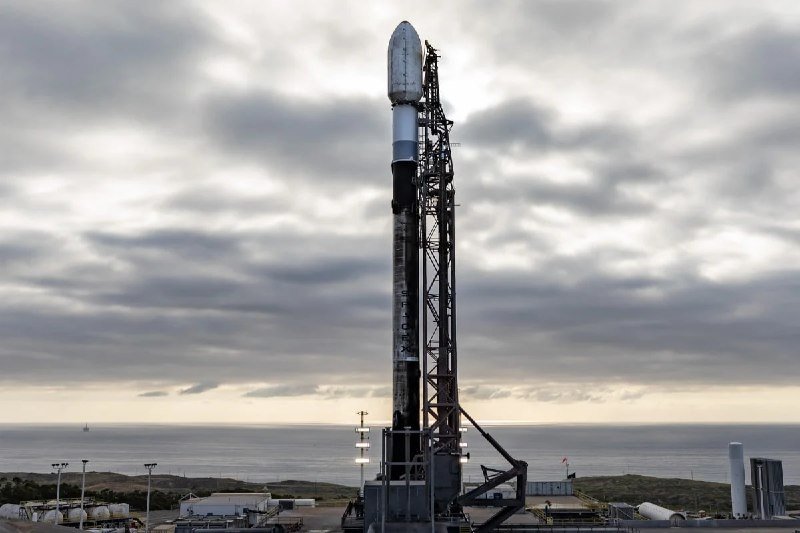
Sweden did something on 3 May 2026 that would have been unthinkable a decade ago. A SpaceX Falcon 9 rocket lifted off from a California launch pad carrying the country's first dedicated military reconnaissance satellite — a spacecraft designed, in plain terms, to look at Russian military installations. Swedish public broadcaster SVT reported the satellite will form part of a surveillance architecture aimed directly at targets inside Russia. No hedging. No diplomatic softening of language. Stockholm just told the world it is buying ISR (intelligence, surveillance, and reconnaissance) capability with Russia in its sights.
This is not a routine procurement. It is a statement of strategic identity.
For most of the post-Cold War period, Sweden maintained what analysts politely called "military neutrality" and what critics more bluntly described as strategic ambiguity — a posture that kept the country close enough to Western intelligence-sharing networks to benefit from their output, while avoiding the political cost of formal alignment. The Gripen fighter programme, the famous Home Guard, the refusal to join NATO until 2024: these were the architecture of a self-image built on staying out of other people's wars. Swedish officials would routinely insist they had no need for independent satellite reconnaissance because they could rely on allies. That argument dissolved the moment Finland crossed the same threshold and public opinion in Stockholm followed.
The SpaceX dependency no one wants to discuss
Here is the inconvenient detail buried inside the announcement: Sweden did not launch this satellite on an Ariane rocket, or a Vega, or any European vehicle. The payload rode a Falcon 9. Which means a US commercial launch provider placed a European nation's first military spy satellite in orbit. The political optics of that arrangement deserve more scrutiny than they are getting.
European defense planners have spent years articulating a desire for strategic autonomy — the ability to field military capabilities without dependence on American industrial capacity. The EU's space programme, the push for homegrown launch capacity, the recent funding rounds for next-generation European launch vehicles: all of it points toward a stated goal of reducing exactly this kind of dependency. Then a NATO-adjacent country with a serious defense budget decides its first military satellite goes up on a Falcon 9. One might charitably read this as a pragmatic commercial decision — SpaceX offers the most reliable and cost-effective rides to orbit, full stop. That is likely true. But it also reveals how far European launch autonomy remains from meeting even the basic operational needs of a continent that has just watched what dependency on a single supplier can mean when geopolitical circumstances shift.
What this satellite actually changes
SVT reported that the spacecraft will conduct reconnaissance of military targets inside Russia. That language is precise. It does not say "maritime domain awareness over the Baltic," or "border monitoring," or any of the softer surveillance tasks that a neutral or semi-aligned country might justify. It says Russian military targets. Sweden is now explicitly in the business of collecting intelligence on Russian military infrastructure using its own national asset, rather than relying on imagery shared through NATO channels.
That matters for several reasons. First, it signals that Stockholm considers the threat picture sufficiently acute to justify the expense and political visibility of an independent capability. Satellites are not cheap; a dedicated military reconnaissance bird represents a multi-year commitment of defence spending. Second, it changes Sweden's role in the alliance. A country that collects its own intelligence and contributes it to shared assessments is a more active security partner than one that simply receives processed product. Third — and this is the uncomfortable bit — it normalises direct, overt surveillance of Russian territory by yet another European state. Sweden was not a NATO member in 2022. It is now a country that has announced it will photograph Russian military facilities from orbit. The distance traveled in four years is considerable.
The signal to Moscow, the signal to the alliance
Moscow will note this launch. Russian state media, which monitors every Western defence procurement announcement with the obsessive attention of a inbox-checking bureaucrat, will frame it as further NATO encroachment — and they will not be entirely wrong about the trajectory, even if they are wrong about the causation. The causation runs the other direction: Russia's full-scale invasion of Ukraine convinced Sweden and Finland that the neighbourhood had changed permanently, and the logical response was to join the only alliance with credible Article 5 commitments. This satellite is a downstream consequence of that decision.
To the alliance itself, the launch is a contribution. NATO's intelligence architecture depends on national inputs. The more members that bring independent collection capability to the table — signals, imagery, human intelligence — the richer the shared picture. Sweden, historically a major contributor to Western security cooperation through its position in the Nordic defence ecosystem, is now adding an orbital layer to that contribution. That is genuinely useful for alliance planners who have spent the past four years filling intelligence gaps exposed by the war in Ukraine.
But useful for the alliance is not the same as uncomplicated for Europe. Sweden's satellite programme raises the question that every European defence ministry will eventually have to answer: what does strategic autonomy actually mean in practice, and are we willing to pay for it? Launching on Falcon 9 because it is cheaper and more reliable is a rational short-term decision. It is also a decision that leaves European defence space infrastructure one commercial contract renegotiation, one ITAR complication, or one geopolitical mood swing away from a supply chain it cannot control. The satellite itself is a capability. The launch vehicle is a vulnerability wearing the mask of convenience.
Stockholm made a defensible choice on 3 May 2026. It also illustrated a problem that will not resolve itself quietly.
Wire provenance
This editorial synthesis draws on the following public wire/social posts:
- https://t.me/myLordBebo
- https://t.me/euronews