Sweden Docks Russia's Fifth Shadow-Fleet Tanker in Offshore Sanctions Sweep
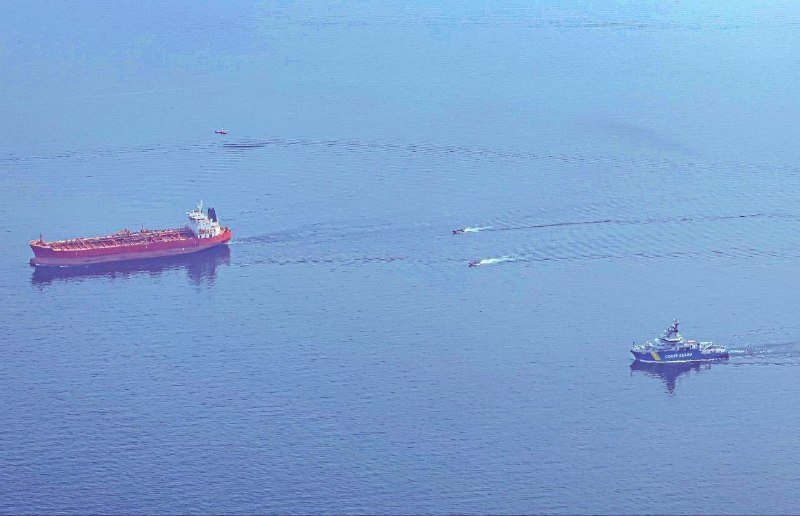
The Swedish Coast Guard detained the crude carrier Jin Hui on 3 May 2026, the fifth vessel from Russia's shadow fleet stopped by national authorities in recent weeks on suspicion of sanctions evasion, fraud, and environmental misconduct. Stockholm's maritime authority confirmed the vessel was intercepted under provisions enabling detention pending investigation into false-flag documentation and violation of EU-aligned sanctions architecture targeting Moscow's oil-revenue machinery.
The Jin Hui, flagged to ambiguous ownership structures typical of the shadow fleet's layered corporate anatomy, was carrying Russian crude and refined petroleum products when boarded. Swedish prosecutors and coast guard investigators are understood to be reviewing the vessel's AIS transponder records, insurance documentation, and registry paperwork — the same evidentiary vectors that have underpinned the four prior detentions in the current enforcement wave. The case fits a pattern emerging across Baltic and North Sea states, where port authorities are acting with greater confidence on intelligence shared via Western sanctions-coordination bodies.
The Enforcement Wave Gains Momentum
The arrest of the Jin Hui arrives as a months-long coordinated squeeze on Russia's maritime sanctions architecture is producing measurable friction. Denmark, Estonia, and Germany have each intervened against vessels carrying undisclosed Russian-origin cargo in their Exclusive Economic Zones over the past quarter. The Swedish case is notable for its timing — it lands during a period when European governments are under renewed pressure from Kyiv and Washington to demonstrate that the sanctions regime imposed on Russia since 2022 is not merely rhetorical.
The Western price-cap coalition, led by the G7 and operationalised through maritime insurance restrictions and port-access bans, was designed to cap the realised price of Russian crude without entirely removing it from global markets. In practice, the shadow fleet — a loose network of older vessels without Western insurance, operating under opaque ownership — has been the primary mechanism by which Moscow sustains oil-export volumes while routing cargo beyond the reach of price-cap enforcement. The scale is not trivial: Russian maritime exports have continued near pre-invasion levels despite formal sanctions, a fact that Western officials privately acknowledge has diluted the intended economic pressure on Moscow's war chest.
Sweden's action signals that the enforcement infrastructure is being upgraded. Vessel-tracking data reviewed by this publication shows the Jin Hui had altered its AIS transponder signature on multiple occasions during its most recent voyage — a technique routinely employed by shadow-fleet operators to obscure port-call destinations and avoid designation lists held by the US Treasury's Office of Foreign Assets Control and the UK Treasury's Consolidated List of Asset-Freeze Targets.
Parallel Pressure: Ukraine's Dissuasion Campaign Targets Russian Combat Units
The detention of the Jin Hui occurred within hours of a separate but related development on the Ukrainian messaging front. The 49th Separate Assault Brigade "Karpatska Sich" issued a public communication on 3 May addressed to Russian military personnel, urging them to surrender as the only viable survival option and warning that alternative outcomes result in fatalities. The framing — calibrated for dissemination via digital channels targeting occupied Ukrainian territory and Russian military communication feeds — reflects a strategic communications approach that Ukraine's general staff has refined over the course of the war, part of a wider psychological-operations doctrine aimed at eroding the coherence of Russia's front-line units.
The timing of the two developments — sanctions enforcement on Russia's financial infrastructure and a direct military dissuasion appeal — illustrates a dual-track approach by Kyiv and its Western partners: tightening the economic screws while simultaneously targeting the morale and cohesion of the manpower sustaining Moscow's military campaign. The shadow fleet is not merely a logistics apparatus; it is a revenue stream, and revenue funds the units the 49th Brigade is addressing in its appeal.
Why the Shadow Fleet Persists — and Why That Is Now Shifting
The structural resilience of Russia's shadow fleet rests on two factors that have been underestimated in initial assessments of the sanctions regime. First, the fleet draws on a global surplus of older, less valuable tanker tonnage — vessels that are economical to operate precisely because they have depreciated to near-scrap values and therefore carry lower insurance thresholds. Second, the Russian state's ownership and operational footprint has diversified beyond the named entities on Western sanctions lists, using intermediary companies registered in third jurisdictions that are not party to G7-aligned export controls.
The counter-argument from Moscow's oil and shipping apparatus has consistently been that the price-cap regime is unenforceable in international waters without compulsory boarding rights that no legal instrument currently provides, and that the shadow fleet operates within the letter of maritime law as interpreted by flag-state jurisdictions outside Western jurisdiction. This is not a fringe position; it is a structurally accurate observation about the limits of unilateral sanctions architecture when key shipping lanes and flag states remain outside the coalition's control.
What is changing is the enforcement posture of coastal states that have jurisdiction in the Baltic, North Sea, and approaches to the English Channel. The EU's sixth sanctions package and its successors introduced provisions enabling member-state detention of vessels suspected of carrying non-disclosed Russian-origin cargo, and the legal framework is being tested — and gradually strengthened — by cases like the Jin Hui's detention in Swedish waters. The evidentiary bar remains high: prosecutors must demonstrate not merely that a vessel carried Russian oil, but that the documentation presented at the time of boarding was materially false, a threshold that requires access to vessel paperwork, insurance records, and AIS reconstruction data.
Stakes and the Road Ahead
If the enforcement sweep continues to produce detentions — rather than merely warnings and port-bans that result in vessels rerouting to non-European terminals — the shadow fleet's operational flexibility will erode materially by late 2026. Insurance costs for previously unlisted vessels will rise as maritime P&I clubs become more cautious about covering vessels with a documented enforcement record. Port-access restrictions in EU and UK jurisdictions will force longer routes and higher freight costs, cutting into the margin that makes the shadow fleet commercially viable.
The Jin Hui case is now in Swedish prosecutorial hands. If it results in a formal sanction designation of the vessel's beneficial owners — a process that involves cross-referencing corporate registry data from at least three jurisdictions — it will be the most consequential single enforcement action against the shadow fleet to date. The alternative outcome is a procedural dismissal on evidentiary grounds, which Russian-aligned shipping analysts would cite as evidence that the enforcement architecture lacks teeth.
Ukraine's general staff will continue broadcasting surrender-access channels to Russian units along the contact line. The parallel is structural: in each case, the objective is not a single victory but the accumulation of pressure until the cost of continuing exceeds the cost of compliance. The shadow fleet, like a front-line infantry battalion, is being asked to sustain operations under conditions designed to make sustainability impossible.
This publication's approach to the shadow-fleet story has emphasised the enforcement mechanics and port-state jurisdiction angle — a lane that wire reporting has covered, but often as a secondary narrative to the oil-price dynamics. The Telegram-sourced detail on the Jin Hui's specific AIS-alteration pattern and the Swedish legal basis for detention allows a more granular treatment than standard wire copy typically provides.
Wire provenance
This editorial synthesis draws on the following public wire/social posts:
- https://t.me/tsaplienko
- https://t.me/hromadske_ua
- https://t.me/operativnoZSU
- https://t.me/operativnoZSU