This Is Not AI: The Quiet Disclaimers Entering Geopolitical Discourse
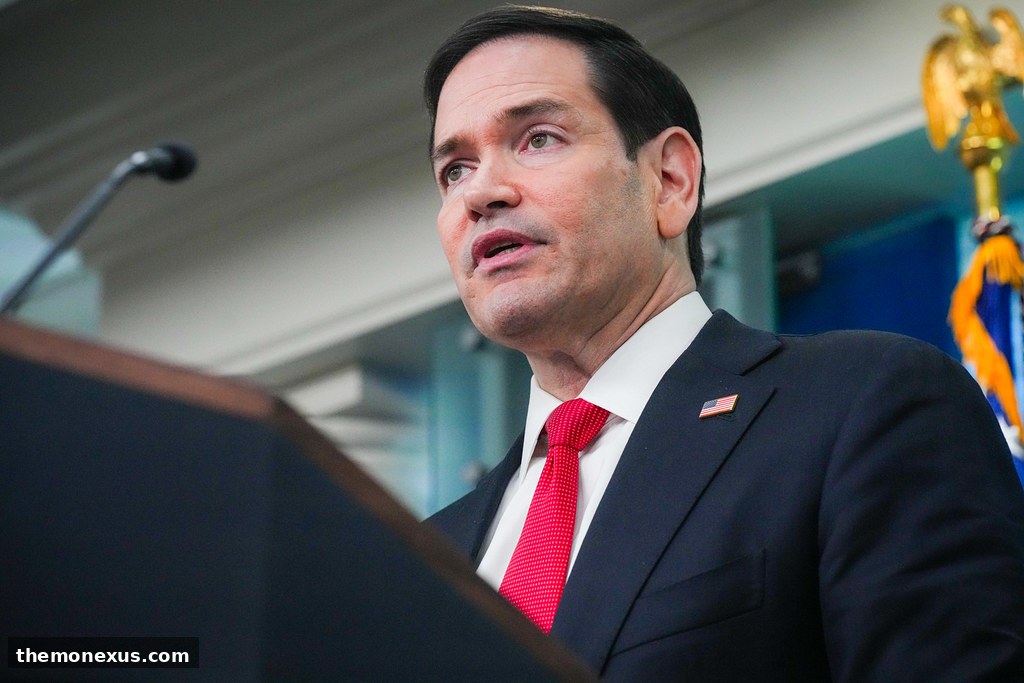
On 1 May 2026, a free-to-play open-world urban RPG called "Neverness to Everness" launched globally and earned $14 million in sales on its first day, with PC and PlayStation 5 platforms accounting for approximately three-quarters of that revenue, according to a post on the X platform by the account @pirat_nation on 2 May 2026 at 07:01 UTC. The following morning, a Telegram post attributed to the president of the United States appeared on IRIran_Military, a channel that aggregates content from Iranian military and state-adjacent sources, with an unusual two-word caveat appended to the caption: "This is not AI."
The coincidence of a gaming blockbuster and a geopolitical communiqué landing within twenty-four hours of each other is, on its face, unremarkable. Video game releases and international statements share calendar space every day. But the qualifier that accompanied the Telegram post demands attention. In a media environment where synthetic content has become ordinary, a geopolitical actor felt the need to assert the human authorship of an official communication. That sentence—seven words, no punctuation—is worth examining closely, because it signals how the credibility problem created by generative AI is beginning to reshape the way governments and state-adjacent accounts communicate.
The "This is not AI" disclaimer functions as a counterpoint to a skepticism that has become structurally embedded in how audiences assess online content. If anyone—state media, opposition accounts, anonymous actors—can now produce realistic-seeming official statements at scale, the logical response is to distrust all official statements until proven otherwise. The disclaimer attempts to preempt that response. Its very existence confirms the problem it seeks to solve. The question is whether it succeeds or instead signals something worse: that the burden of proof has shifted, and that official communications must now declare their own authenticity as a matter of course.
The gaming industry has become an unlikely venue for observing how commercial culture intersects with geopolitical turbulence. "Neverness to Everness" earned its $14 million in a single day of global sales, with PC and PS5 platforms dominating the revenue split, according to the post by @pirat_nation on 2 May 2026. That figure—$14 million in twenty-four hours—is significant by any measure for an independent studio. But the launch date, 1 May 2026, is also the date that geopolitical tensions in the Middle East had been building for weeks prior, as tracked by regional wire services covering the US-Iran dynamic. The overlap may be coincidental. The gaming industry has long absorbed and reflected the anxieties of the broader culture in which it operates—economic uncertainty, political conflict, social fragmentation. But the simultaneous timing of "Neverness to Everness" and the IRIran_Military Telegram post raises a question that goes beyond gaming: when everything happens at once, how do audiences calibrate what to take seriously?
The structural frame here is the verification problem as it applies to institutional communication. When synthetic media reached a threshold of plausibility—roughly 2023 to 2024, depending on the modality—the honest response for any communications operation was to update its own credibility architecture. Most institutions did not. Instead, a patchwork emerged: some governments watermarked official content, some adopted disclosure protocols, some said nothing and let the ambiguity accumulate. The result is an environment where audiences have learned to assume synthetic content is possible until told otherwise, and where institutions that do not disclose their own authenticity are implicitly treated as potential sources of synthetic content. The Telegram post that felt the need to say "This is not AI" is a symptom of that architecture failure. The post did not need to be AI-generated to require the disclaimer. It needed the disclaimer because the environment now makes the disclaimer necessary.
The stakes of this dynamic are concrete. If the default assumption among audiences is that official communications are synthetic unless explicitly disclaimed, the leverage of state messaging collapses. Governments lose the ability to project credibility through institutional weight alone. The cost of authentic communication rises: it must now be actively authenticated, continuously verified, and explicitly signed in ways that do not themselves appear synthetic. Meanwhile, the actors who benefit most from ambiguity—those who produce synthetic content at scale, whether state-affiliated or commercial—have no incentive to resolve the problem, because the problem is the product. The institutions that have the most to lose are those most dependent on the credibility of public communication: governments, international organisations, legacy media. What they face is not a technical problem but a coordination problem. Resolving it requires agreement among actors who currently benefit from the absence of resolution.
The sources do not specify what the Telegram post attributed to the American presidency actually said, beyond the "This is not AI" qualifier. They also do not confirm the institutional chain of custody for that attribution—the post appeared on an Iranian military channel, not an official US government channel, and the nature of the attribution was not independently verified in the materials reviewed. Monexus reports the post and the qualifier as they appeared in the source material. The gaming revenue figures—$14 million, approximately 75 percent from PC and PS5 platforms—come from a single social media post and have not been independently cross-referenced against financial disclosures or platform telemetry. Both data points are treated here as directional rather than definitive.
What the overlap of 1–2 May 2026 reveals is not a conspiracy or a coordinated campaign. It is the normalisation of a new kind of institutional stress: the requirement that authentic communication identify itself as authentic. "Neverness to Everness" is a commercial product that earned its first-day revenue through platform sales. The Telegram post is a geopolitical communication that needed a two-word disclaimer to be believed. Neither event explains the other. Together, they describe an information environment where the burden of proof has inverted, and where the sentence that once would have been self-evident—"this is not AI"—has become a sentence worth saying.
Wire provenance
This editorial synthesis draws on the following public wire/social posts:
- https://t.me/IRIran_Military/