Trump's German Troop Pullback Exposes the Myth of Atlantic Alliance Reciprocity
When Donald Trump announced on 3 May 2026 that the United States intends to withdraw far more than 5,000 military personnel from Germany, he did not merely alter a force posture. He delivered the most direct reckoning the Atlantic alliance has faced in decades — and for once, he was right about the structural problem even if his remedy is wrong.
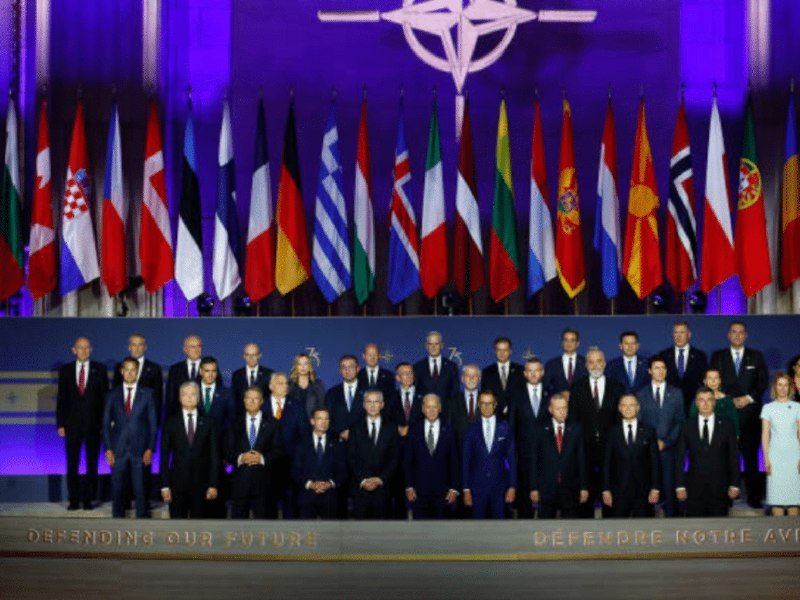
The announcement came without ceremony. On 3 May 2026, Donald Trump told reporters aboard Air Force One that the United States would pull far more than 5,000 military personnel from Germany — a figure that already represented the largest single reduction of American forces from European soil since the Cold War ended. No rollout document. No joint Pentagon-State Department briefing. Just a sentence dropped from 35,000 feet, carrying the weight of eight decades of alliance architecture.
That posture — the offhanded announcement, the absence of strategic rationale publicly articulated — is itself the story. It tells allies that American commitment to their security is no longer treated as settled business requiring explanation. It tells everyone else that the order underpinning NATO's deterrence calculus has a price tag and an expiration date.
The announcement was first reported via The Indian Express on 3 May 2026, citing Trump's direct statement aboard the presidential aircraft. The number that has since circulated — 5,000 personnel — appears to be a floor, not a ceiling. Much of the reporting since has centered on uncertainty over which installations would close, which rotational units would be recalled, and whether the announcement represented a negotiated outcome with Berlin or a unilateral diktat.
The Structural Problem Trump Is Describing Is Real
This publication has noted before that the transatlantic security arrangement has always contained a built-in asymmetry that European governments learned to manage rather than resolve. The United States stationed roughly 35,000 troops in Germany at the start of 2026 — not as charity, but as thehardware layer of American hegemony in Europe. Those forces served American interests in deterrence, in power projection into the Middle East and Africa, and in the logistics chains that kept American military dominance global rather than merely regional.
European capitals understood this trade-off well enough to keep their own defense spending comfortably below the two percent of GDP NATO guideline for years. Germany, the largest European economy, spent 1.5 percent of GDP on defense as recently as 2021 — lower than Norway, lower than Denmark, lower than the Baltic states that sit directly in the threat path from Moscow. The Americans funded European security; the Europeans funded social programs. That arrangement held as long as the political consensus in Washington tolerated it.
Trump broke that consensus. His pressure on NATO members to increase defense spending — backed by the bureaucratic apparatus of the Pentagon and State Department in ways his predecessors' rhetorical nudges never were — produced measurable movement. Germany committed to raising defense spending to more than two percent of GDP by 2025. Poland signed a defense cooperation agreement that effectively made it the new forward staging ground for American forces on NATO's eastern flank. The structural complaint that prompted the troop withdrawal demand had been partially addressed.
But the Remedy Is the Wrong Answer to the Right Question
The problem with pulling American forces out of Germany is not that Europe deserves them. It is that the withdrawal as announced serves no coherent American strategic interest. If the goal is to punish Germany for underinvestment, that goal has already been achieved — Berlin is now spending at NATO's target rate. If the goal is to reduce American overseas exposure, the calculus ignores the opportunity costs of ceding influence in the continent that houses the institutions, the financial networks, and the political alignment the United States has spent eighty years building.
Germany is not Poland. Warsaw has made itself indispensable to the American forward posture by courting the base presence openly and paying for infrastructure upgrades upfront. Berlin's relationship with American forces has been more transactional — tolerating the footprint because the alternative was worse and because the costs were bearable as long as no one made a fuss. A dramatic, announced-without-consultation withdrawal validates the transactional reading and punishes the one European power with the economic weight to build an independent deterrent capability if it chose to.
The more likely consequence, if the withdrawal proceeds at scale, is not a more equitably分担 burden on the alliance. It is a security vacuum in Central Europe that Germany — now freed from the political cover of American troop presence — will feel compelled to fill by developing its own nuclear deterrent or by negotiating a bilateral security arrangement with France that sidelines Washington entirely. Either outcome reduces American influence in European security architecture rather than restocking it.
The Alliance Has Always Been a Tool, Not a Vow
What the Trump announcement exposes is the pretense that the Atlantic alliance operates as a solidarity arrangement. It does not. It operates as a collection of interests — American, European, and increasingly Central European — that have converged sufficiently to justify the costs of cooperation. When the convergence weakens, the arrangement strains. When it reverses, the strains become structural.
The American interest in the alliance has always been partly about the basing infrastructure and logistics networks, partly about the diplomatic support in multilateral institutions, and partly about keeping a prosperous and stable Europe within an American-ordered economic system rather than drifting toward the alternative — whatever form that alternative eventually takes.
European interests have been more varied. The eastern flank states — Poland, the Baltic republics, Romania — have treated NATO as existential insurance and have paid the political and economic costs accordingly. Western European states have treated it as a hedge against worst cases that they privately assessed as unlikely enough to justify underinvestment. That asymmetry was manageable as long as American domestic politics produced a consistent foreign policy establishment that absorbed the cost difference without making it a headline issue.
Trump's announcement suggests that absorption has limits. The alliance is not a mutual fund. When one party stops believing the returns justify the input, it redeems its shares.
What the Withdrawal Actually Signals About American Intentions
The deeper reading of the 3 May announcement is that the current American administration does not believe the existing alliance architecture serves American interests as currently configured. This is not a burden-sharing grievance — those are negotiable. It is a structural disagreement about whether the American presence in Europe is worth the diplomatic costs it entails.
European capitals will spend the next several months attempting to determine whether the withdrawal is a negotiating posture or a settled policy direction. If it is the former, Berlin and the other NATO capitals have leverage: additional defense spending commitments, expanded basing agreements in Poland, bilateral security frameworks that give Washington visible returns on its continued commitment. If it is the latter, the alliance enters a transition period whose endpoint no one has defined — not because the stakes are unclear, but because the American side has not articulated what it wants the post-alliance order to look like.
The uncertainty itself is the strategic threat. Deterrence depends on predictability. An adversary calculating whether to test NATO's Article 5 commitments now has to factor in the possibility that the United States will reduce its exposure in Europe while maintaining its posture in the Indo-Pacific. That calculation is not impossible, but it is more favorable to the adversary than it was six months ago.
The alliance that survives this episode, if it does, will be smaller, more conditional, and more explicitly transactional than the one that preceded it. Whether that is a worse outcome depends entirely on what replaces it — and on whether the replacement serves European security well enough to keep the continent aligned with American interests rather than searching for alternatives. The evidence currently available does not answer that question. It only sharpens it.
This publication covered the announcement as a force posture story; the wire services led with it as a bilateral diplomatic rupture. Both framings are accurate. The structural reality — that the Atlantic alliance is being renegotiated in public, without a clear American position on what the renegotiated terms should be — is what neither framing captures fully, and it is what matters most over the next eighteen months.
Wire provenance
This editorial synthesis draws on the following public wire/social posts:
- https://t.me/DDGeopolitics