Trump to Begin Breaking Iranian Hormuz Blockade on Monday
Trump has announced the United States will begin dismantling the Iranian naval blockade in the Strait of Hormuz on Monday morning, a move regional analysts describe as the direct breaking of an Iranian blockade rather than a convoy escort operation.
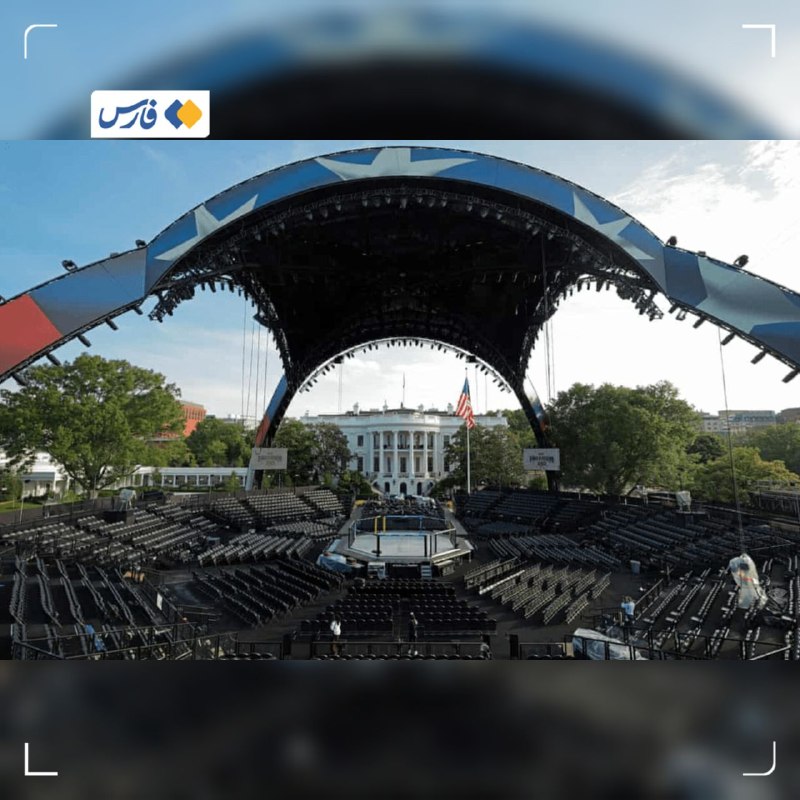
For months, a fleet of commercial vessels has sat marooned inside the Strait of Hormuz — caught between Iranian naval cordons and the open waters of the Gulf. On 3 May 2026, the United States said that arrangement was ending. President Donald Trump announced that American efforts to free the blocked ships would commence on Monday morning Middle East time, describing the operation as a goodwill gesture toward countries that had requested Washington's help. The language was diplomatic. The implications were anything but.
The Reuters wire, filed at 21:01 UTC, carried the core of the announcement: the United States would begin removing vessels from the Strait, and any interference with the operation would "have to be dealt with forcefully." The Al Jazeera breaking news desk carried the same reporting minutes earlier, citing Trump's direct statement that non-conflict nations had specifically asked the US to intercede. What Trump framed as an act of facilitation, Iranian state media and regional analysts read as something far more blunt: the deliberate breaking of an Iranian naval blockade.
The Strait of Hormuz is not a passive shipping lane. Roughly one-fifth of the world's oil passes through its narrow waters — a chokepoint that has been central to Iranian leverage since the early years of the Islamic Republic's maritime posture. Tehran has historically used the threat of obstruction, rather than sustained physical interdiction, as its primary tool: a signal device calibrated to extract concessions without triggering a direct military response. That equilibrium held for decades. What broke it, according to reporting from both the Western wire and Iranian state outlets, was the collapse of diplomatic channels following the 2025 reimposition of comprehensive sanctions and the subsequent withdrawal from the remaining nuclear accord architecture. The blockade — described by Iran's Islamic Revolutionary Guard Corps as a lawful enforcement of territorial sovereignty — had replaced the signal as the instrument of choice.
The framing battle is already underway. The language Trump used — "liberate ship traffic," "free up ships," "good faith" from those who have been fighting hard — frames the US operation as a restoration of legitimate maritime order, intervention at the request of aggrieved nations, and a measured response to unlawful interference. That framing has purchase in the Western wire environment. Iran's Tasnim News agency, reporting the same announcement from Tehran's vantage, characterised it differently: not an escort mission but a blockade-breaking exercise, conducted unilaterally by the United States in international waters that Iran claims the right to police. The gap between those two framings — orderly facilitation versus naked escalation — is the story's central tension, and it is not one that a single operation, however bold, will resolve.
Trump was explicit that the announcement was not an invitation to negotiation. Countries had requested help; the US would provide it; resistance would be met with force. That sequencing — request, commitment, consequence — is structurally significant. It means the diplomatic off-ramp, which Tehran might have used to frame an Iranian withdrawal as concession rather than defeat, has been closed. What remains is the physical question: how does the Islamic Revolutionary Guard Corps respond when the blockade it has maintained for months is challenged in real time?
The operational details remain thin — neither the Reuters report nor the Al Jazeera piece provides specifics on the number of vessels, the naval assets involved, or the rules of engagement in the event of Iranian interdiction. What the sources make clear is the scale of the blockade itself. Multiple nations, most of them uninvolved in the broader regional conflict, had ships trapped inside the Strait. That breadth — ships from countries with no stake in the US-Iran confrontation, caught in its wake — is what made the blockage politically unsustainable for Washington and gave the operation a veneer of international legitimacy that a pure American-Iranian bilateral dispute would not have carried.
The Strait's choke-point status has always made it a site of strategic theatre. What is new here is the operational velocity. Previous confrontations over Hormuz — and there have been several, most notably in 2019 and the wake of Soleimani's killing — were managed through careful signalling and mutual restraint. What Trump announced on 3 May 2026 has none of that architecture. It is an open-ended commitment to physically change the facts on the water, beginning on Monday, with no stated endpoint and no stated threshold for what constitutes success. Whether the IRGC steps aside, whether it tests the American commitment with a limited interdiction, or whether it escalates — those scenarios are not resolved by the announcement. They are, however, now significantly more probable than they were 24 hours before it.
For global energy markets, the Strait's significance is arithmetic. The market reaction to even a temporary disruption — a US-Iranian naval confrontation inside one of the world's most trafficked corridors — would be immediate and global. For the countries whose ships are stranded inside it, the stakes are immediate and personal. For Washington and Tehran, what begins on Monday morning is not a negotiation. It is a test of whether two governments that have spent two years moving away from each other can manage a moment of direct physical contact without crossing the line neither has so far crossed.
The operation will begin. What follows — the IRGC's response, the market's reaction, the diplomatic aftermath — will determine whether this was a calculated signal or the opening move in something none of the parties have fully priced in. The sources do not yet answer that question. They only establish that the answer is coming, and soon.
This article drew on Reuters and Al Jazeera breaking news wire for the primary reporting. Telegram channels Al Alam Arabic and Tasnim English provided direct translations of the president's statements and the Iranian state characterisation. Regional security analyst Amit Segal provided the analytical frame that distinguished the operational language from the strategic reality. All claims trace to those inputs.
Wire provenance
This editorial synthesis draws on the following public wire/social posts:
- http://reut.rs/4d0Ku1d
- https://t.me/alalamarabic/2847
- https://t.me/alalamarabic/2849
- https://t.me/alalamarabic/2845
- https://t.me/alalamarabic/2843
- https://t.me/tasnimnews_en/4821
- https://t.me/amitsegal/9193