"A Very Friendly Blockade": The Semantic Gymnastics of US Pressure on Iran
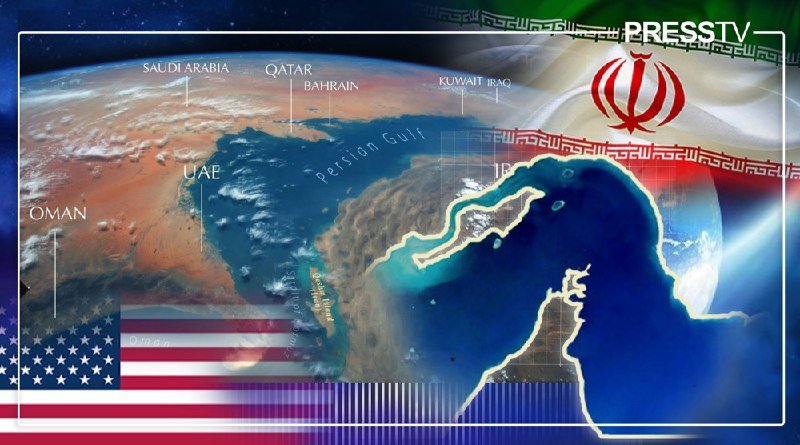
On 2 May 2026, the Trump administration called its naval blockade of Iran "a very friendly blockade." The word matters. In any other context, a fleet positioned to deny another state access to its own waters would carry a self-evident meaning. But the administration has chosen to parse it otherwise — and that choice reveals something about how Washington's current diplomatic posture toward Tehran actually works.
The comment came hours before Iran publicly circulated a fourteen-point peace proposal. Reuters reported on 3 May 2026 that the administration, speaking through Reuters, described its Iran approach as progressing well. Within hours, President Trump declared that same proposal "not acceptable." The sequence is not incidental. It reveals a posture in which diplomatic openings are evaluated not on their content but on whether they arrive at the right moment in a pressure campaign — and a posture in which the same administration can simultaneously describe a blockade as friendly and issue warnings that Iran has "not yet paid a big enough price" for its conduct.
The Peace Proposal and the Dismissal
Iran's fourteen-point proposal represents, by any standard read of the coverage, the most structured diplomatic opening Tehran has offered since the 2015 JCPOA framework collapsed. The content, as reported, involves commitments on uranium enrichment limits, international inspections access, and regional de-escalation measures. Whether the proposal is genuinely new or a repackaging of earlier positions is unclear from the sources — neither the specific terms nor the negotiating history behind them has been independently verified by wire services as of this publication. What is clear is how Washington responded: the proposal was "not acceptable" within a day of becoming public, per a Polymarket post citing the administration's position.
This is not new. Every major Iran negotiation cycle since 2017 has followed a similar rhythm: a pressure campaign escalates, Tehran offers concessions, the concession is characterized as insufficient or insincere, pressure intensifies. The structural logic is straightforward — maximum pressure was always designed not to bring Iran to the table but to degrade its leverage once there. A proposal that appears reasonable on its face becomes, under that logic, evidence of weakness rather than genuine engagement. The question worth asking is whether the administration actually wants a deal, or whether the appearance of negotiating serves a separate domestic or geopolitical purpose that a completed agreement would foreclose.
"Not Yet Paid a Big Enough Price"
Trump's framing on 2 May 2026 made the transactional logic explicit: Iran had "not yet paid a big enough price" for its conduct. The phrasing frames Iran as a debtor — one whose reckoning is pending, not one whose case is under evaluation. This is the language of coercive leverage, not diplomatic exchange. And it arrives at a moment when the naval blockade is operationally in place.
The blockade — described by the administration as targeting Iranian oil revenues and military supply lines — constitutes an act of secondary sanctions enforcement with de facto maritime control dimensions. Whether it meets the legal threshold for a blockade under international law is a question the sources do not resolve. What is evident is that the "friendly" qualifier is doing significant rhetorical work: it acknowledges the coercive reality while preserving the diplomatic fiction. The same administration that orders a navy into position to intercept Iranian vessels can then describe the same operation as friendly — because it hasn't, in the administration's framing, escalated to something worse.
This is the language of a pressure campaign that wants to keep diplomatic options open while simultaneously foreclosing them. Every concession Tehran makes is proof it can make more; every proposal is evidence of desperation; every engagement is a signal to be exploited rather than reciprocated.
The Wind Farm Precedent
The pattern of framing ordinary economic activity as a national security concern appeared elsewhere in the same administration period. On 3 May 2026, the Trump administration stalled 165 U.S. onshore wind farm projects over national security concerns, per a Polymarket post. The specific national security rationale cited for blocking domestic renewable energy infrastructure has not been independently reported with documentary corroboration as of this article's publication.
The precedent matters because it establishes a vocabulary. "National security" has become a category — not a legal standard or an evidence-based judgment, but a political category that can be applied to anything. A naval blockade is friendly. Wind farms are threats. Iran's peace proposal is unacceptable. The categories shift, but the underlying mechanism is consistent: the administration retains the right to characterize reality as it sees fit, and the characterization serves the current pressure requirement rather than any fixed principle.
What This Approach Forecloses
There is a coherent argument that maximum pressure, maintained long enough, eventually breaks an adversary's willingness to resist. That is the logic behind the blockade, the sanctions, the "not yet paid a big enough price" framing. And for some adversaries, in some conditions, it may work.
The complication is that Iran is not a small economy waiting to be starved into submission. It is a regional power with established relationships across the Gulf, in Iraq, in Syria, in Lebanon — relationships that cannot be sanctioned away because they are rooted in political necessity, not commercial opportunity. A blockade that degrades Iran's revenue also degrades the willingness of regional partners to maintain open channels with Tehran. The effect may be the opposite of what is intended: a more isolated Iran, with fewer domestic constraints on its actions, and more incentive to signal resolve rather than flexibility.
The peace proposal may not survive scrutiny as a genuine basis for negotiation. But an administration that dismisses it within hours — before the content can be analyzed, before allies can be consulted, before the diplomatic ground has been properly mapped — is not engaging in diplomacy. It is performing a position. And the performance has costs: the perception, in Tehran and in other capitals watching, that Washington is not interested in a deal, only in the appearance of trying for one.
The blockade remains. The price has not yet been paid. And the proposal sits, rejected, on a table no one is sitting down to.
Wire provenance
This editorial synthesis draws on the following public wire/social posts:
- https://x.com/polymarket/status/1920188372945625099
- https://x.com/polymarket/status/1920192028208812036
- https://x.com/polymarket/status/1920168369821696339
- https://x.com/polymarket/status/1920529153821806592
- https://t.me/alalamarabic/48293