Trump calls Iran's blockade 'friendly' — but the war of narratives has only begun
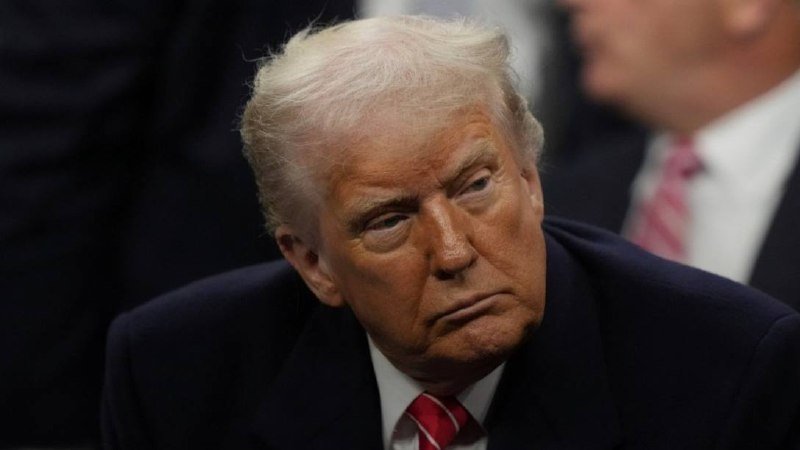
Describing a naval blockade as "friendly" is not diplomatic language. It is a signal — and Iran has heard it loud and clear.
On May 2, 2026, speaking to reporters outside the White House, Donald Trump said he had been briefed on the "frameworks and concepts" of an agreement with Iran, and that he would soon review Tehran's 14-point response to ending the broader conflict. The blockade strangling Iranian ports, he added, was "very friendly." Reuters reported the characterisation directly from the exchange. Fars News International carried the Farsi-language confirmation from Iranian state media.
No formal accord exists yet. The precise text has not been released. But the vocabulary coming out of Washington — "friendly" blockade, "lenient" enforcement, "frameworks" rather than binding commitments — suggests the administration is already managing expectations downward before the deal is even tabled. That is a pattern worth reading carefully.
What Tehran actually sent
The 14-point plan Iran submitted is the substantive core of what is being negotiated. Iranian state media — Fars News International among them — has carried the broad contours: some form of sanctions relief in exchange for verifiable caps on nuclear enrichment, coupled with a framework for de-escalation across the wider region. The specifics remain contested, and the sources Monexus reviewed do not provide a full text.
What matters structurally is that Iran is not capitulating. It submitted a counter-proposal, not a surrender note. The language of "mutual obligation" implies Tehran sees itself as a negotiating peer, not a party under duress. That framing is deliberate. Iran withdrew from the 2015 JCPOA in 2018 under maximum pressure; it has no particular reason to treat the current round as a rescue operation for a collapsing economy. It is negotiating from a position of demonstrated resilience.
The question the 14-point plan raises is whether Washington is prepared to accept a deal that does not read as unconditional surrender — and whether Trump, who withdrew from the JCPOA in the first place, has the political architecture to sell a negotiated outcome to allies who have spent seven years treating Iran as an existential threat.
The allies were not consulted
Israel, Saudi Arabia, and the UAE have all built their regional security architectures around a maximally isolated Iran. A deal that delivers sanctions relief — even partial, even temporary — is a structural threat to those arrangements. Saudi Arabia has maintained its own blockade-adjacent posture on Yemen. Israel has conducted operations across the region premised on the notion that Iran is the central axis of threat. The UAE has normalised relations with Tehran, but quietly, and with significant hedging.
None of these capitals were consulted in any fashion that would suggest their concerns are structural to the negotiating framework. Trump's description of the blockade as friendly suggests a bilateral logic: Washington and Tehran, working out terms, with regional consequences to be managed after the fact. That is not how the region's powers understand their own security postures.
The sources reviewed for this article do not contain direct statements from Israeli, Saudi, or Emirati officials responding to the specific "friendly" characterisation. That absence is itself notable. When key allies have no public position on a significant shift in US posture toward Iran, it typically means one of two things: either they are privately briefed and privately content, or they are privately briefed and privately furious but have been asked to hold fire. The historical record on similar moments — Saudi Arabia's response to the 2015 JCPOA, for instance — suggests the latter is more common than the former.
What the blockade actually is
The "friendly" characterisation requires context. The port blockade has been in place for two years. It has cut Iranian oil exports to a fraction of their pre-2018 levels. It has compressed the Iranian banking system, constrained pharmaceutical imports, and imposed measurable civilian costs. Describing that mechanism as "friendly" is a rhetorical choice — one that signals to the Iranian public that the coercive apparatus is not designed to crush them, only to extract concessions. It is a message aimed partly at Tehran and partly at the global south, where the narrative of American overreach remains politically potent.
Iranian state media has consistently framed the blockade as an act of economic warfare. The "friendly" framing is an explicit counter to that. It is an attempt to disaggregate the instrument from the intent — to say that the walls are high but the guard is lenient. Whether that distinction is meaningful to the Iranian public, to the Iranian negotiating team, or to third-party observers in the developing world is a separate question. But the choice of language reveals where the administration believes its audience sits.
The deal, if it survives its announcement
Trump needs a win. He has signalled deal-making as the centrepiece of his second-term foreign policy posture, and Iran — given its geopolitical weight, its nuclear programme, and its central role in every active conflict zone from Yemen to Syria to Lebanon — is the largest possible prize. Announcing a framework, even an incomplete one, serves an immediate political function regardless of whether the substance holds.
But the history of Iran diplomacy is a history of announcements that could not survive scrutiny. The JCPOA was declared transformative in 2015. It collapsed in 2018. The Sources section does not contain material on the current proposal's durability. What is observable is the texture of the signals: softening language, forward-leaning optimism, bilateral framing that bypasses the institutional checks that have historically constrained US-Iranian negotiation.
What this publication finds is that the "friendly blockade" framing is not incidental. It is the administration's preferred solution to a genuine contradiction: it wants a deal that can be announced as a victory while maintaining enough coercive pressure to keep Iran at the table. The two goals are in tension. Deals made under continuous duress are either not real deals or not durable ones. The 14-point plan suggests Iran knows this. The question is whether Washington does.
What remains genuinely unclear, and the available sources do not resolve: whether the 14-point plan represents a substantive Iranian concession on the nuclear file or a negotiating tactic buying time, and whether Israel and Saudi Arabia have been given sufficient advance warning to make their opposition felt before a framework is announced.
This publication will continue monitoring for official responses from Tehran, Jerusalem, and Riyadh as the review process moves forward.
Wire provenance
This editorial synthesis draws on the following public wire/social posts:
- https://t.me/FarsNewsInt/8478
- https://t.me/FarsNewsInt/8477
- https://t.me/gazaalanpa/8479