Trump's Iran 'Piracy' Dictum and the Hollow Language of Accountability
President Trump's declaration that Iran has not yet 'paid a high enough price' for its conduct exposes a sanctions framework that has calcified into punitive theater rather than strategic outcome.
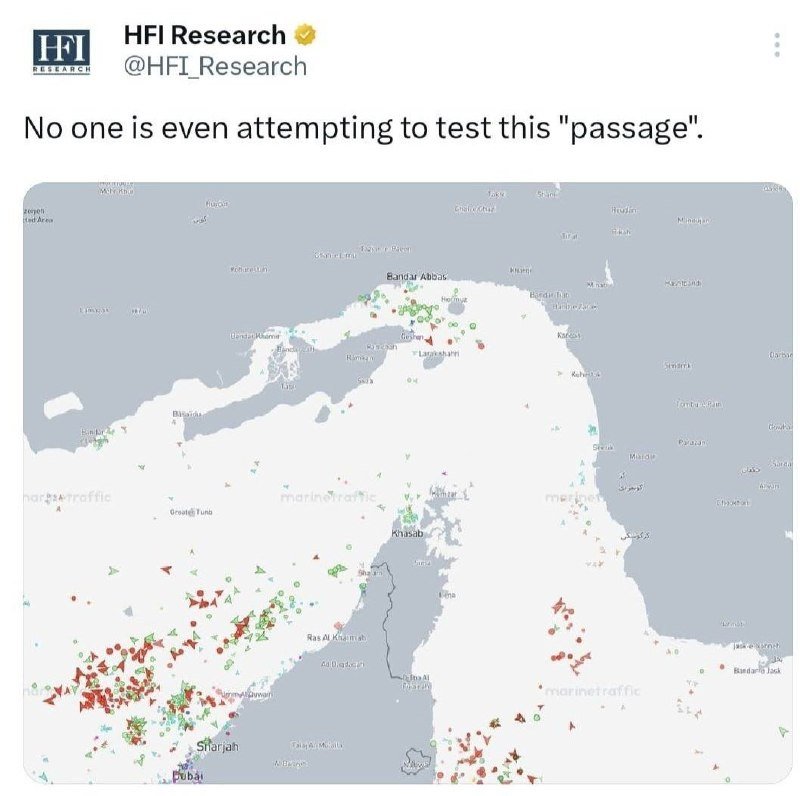
On the morning of 3 May 2026, President Donald Trump told reporters he intends to destroy Iran's missile capability and that a proposal Tehran recently submitted will almost certainly be rejected because, in his words, Iran has not yet 'paid a high enough price for what they have done to humanity and the world.' He declined to define what price would suffice. The same day, questioning why the United States was withdrawing troops from Germany, Trump said the drawdown would be 'much more than 5,000' personnel — a figure apparently chosen for its rhetorical symmetry with a proposed European contingent, rather than any stated strategic rationale.
The Iran statements carry the familiar cadence of a negotiating ultimatum: demand escalation, leave the floor blank, and let the target fill in the worst-case scenario. The problem is not the tactic's familiarity. The problem is that four decades of ratcheting maximum pressure have demonstrably failed to achieve the stated objective — regime change, nuclear rollback, or behavioral modification — while simultaneously entrenching the very capabilities Washington now vows to eliminate by force.
The Arithmetic of Maximum Pressure
Iran's nuclear programme advanced under every round of sanctions. Its missile arsenal grew. Its regional influence expanded. This is not a fringe analysis; it is the documented trajectory across administrations of both parties. The logic is not obscure: suffocating an economy concentrates minds on survival, not compliance. When the cost of defection is existential, the rational actor chooses persistence. Iran has survived — its economy contracted, its currency weakened, its population impoverished — but it has not capitulated. The premise that a final rung on the pressure ladder will produce what the first thirty did not requires a tolerance for cognitive dissonance that exceeds even the forgiving standards of great-power messaging.
The naval blockade dimension adds a legal and operational layer that Tehran has not missed. Iranian state media, on 3 May 2026, circulated a cartoon depicting the American president himself describing the posture as 'like pirates.' Whether or not Trump actually used those words — and the framing appeared in commentary rather than direct quotation — the characterisation lands with force because it maps onto a genuine ambiguity in how American financial and physical power operates outside established treaty frameworks. A blockade is an act of war under international law unless authorised by the UN Security Council. dollar-denominated sanctions enforced by third-country banks operating under American regulatory threat occupy adjacent legal territory, which is why the comparison, however undiplomatic, is not entirely fanciful.
What Tehran Sent
The contents of Iran's proposal have not been made public in full. The reporting indicates it was a document — presumably covering nuclear constraints, regional behavior, and sanctions relief — submitted through diplomatic channels in recent days. Trump's immediate dismissal before review is unusual even by the standards of transactional diplomacy. The normal sequencing — receive, analyse, respond with counter-proposal — was compressed into a predetermined verdict. This suggests the proposal was not the object of the exercise. The exercise was the performance.
Iranian officials have argued, in prior diplomatic exchanges, that their missile programme is defensive in nature and non-negotiable under any circumstances. That position has its own internal coherence: surrounded by American military infrastructure across the Persian Gulf and Gulf of Oman, subject to a decades-old arms embargo, with two American wars fought in adjacent states within living memory, Tehran reads its deterrence requirements differently than Washington does. Neither reading is irrational. Both are shaped by the security environment each party has spent decades constructing.
The Germany Footnote
The troop withdrawal announcement deserves separate attention. Reducing American forces in Germany by 'much more than 5,000' while simultaneously escalating bellicose rhetoric toward Iran is not obviously consistent as strategy. Germany hosts the largest concentration of American military personnel in Europe — roughly 35,000 before any reduction. A drawdown of several thousand, announced without corresponding redeployment details, reads as leverage against a NATO ally rather than force repositioning. Whether the goal is extracting higher defense spending commitments from Berlin or signaling displeasure at European mediation efforts on Iran remains unspecified. The ambiguity appears deliberate.
The Price That Cannot Be Named
The central question Trump's statement leaves unanswered is also the one that matters most: what outcome does the administration actually seek? Destruction of Iran's missile capability, as a terminal objective, would require a sustained military campaign with no guarantee of success and significant risk of escalation across a region where American forces, contractors, and allies are present in quantity. It would almost certainly trigger a response against Gulf shipping, American bases, and regional partners that would dwarf the disruption of any sanctions regime. The human and economic costs would be borne primarily by actors other than the United States — a pattern that tends to compress the coalition available for such operations.
Iran has survived sanctions that would have reduced most economies to subsistence. It has continued nuclear research under conditions of international isolation. It has maintained a regional posture that successive American administrations have described as threatening while declining to pay the costs of reversing it by force. Whatever price Tehran has not yet paid, the evidence suggests it is not the price of compliance. It may instead be the price of continued resistance — a price Washington appears willing to escalate further, on terms that privilege the appearance of pressure over the mechanics of resolution.
The cartoon by Yemeni artist Kamal Sharf, circulated via Iranian state media on the morning of 3 May 2026, captures something the official framing struggles to acknowledge: the optics of dominant-power enforcement, viewed from below the equator, rarely align with the language of accountability in which that enforcement is dressed.