Trump's Iran Ultimatum Collides With Military Reality
As the White House publicly dismisses Iranian diplomatic overtures, the machinery of war continues to move in the opposite direction — raising questions about whether the current approach is a coherent strategy or a pressure campaign that has slipped its intended bounds.
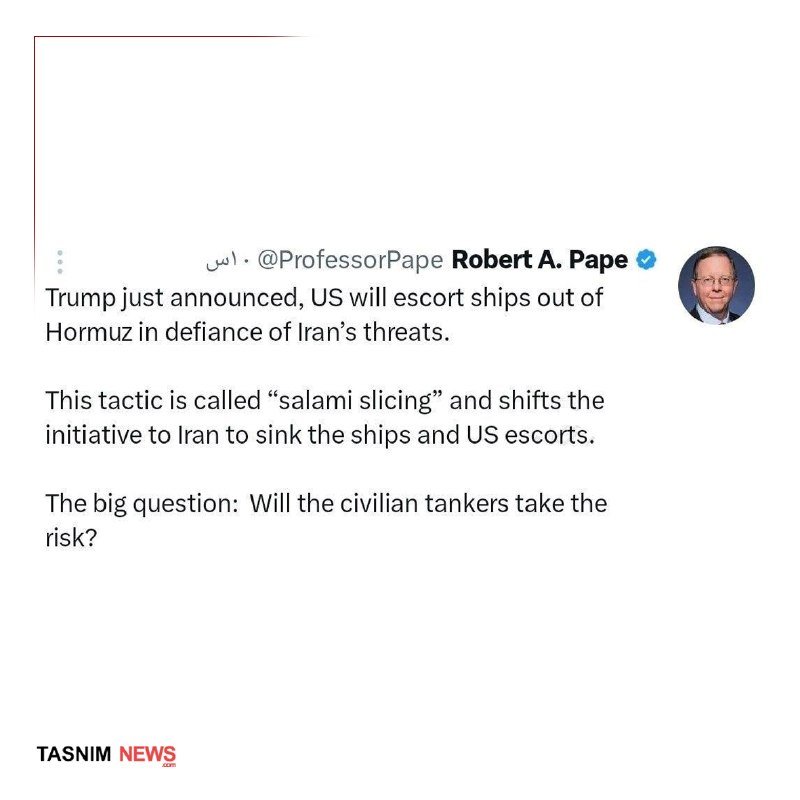
On 3 May 2026, the Trump administration rejected Iran's latest diplomatic overture as "unacceptable" — and within hours, the United States was accelerating the flow of military hardware into the region. The juxtaposition is not incidental. It defines the administration's current posture: a simultaneous posture of diplomatic refusal and kinetic buildup that leaves allied governments, regional analysts, and markets calculating two simultaneous timelines — one for a negotiated outcome, one for a wider conflict.
The dissonance is the story. And it deserves more scrutiny than the available wire copy has given it so far.
The Proposal and the Rejection
The sequence matters. Iranian officials put forward what they described as a proposal — the precise terms of which remain contested across wire services — that the White House moved quickly to dismiss. Speaking on 3 May 2026, President Trump declared the offer "unacceptable" to him, without elaborating on which specific provisions his administration found intolerable. The brevity of the rejection, combined with the absence of a counter-offer, has left diplomatic channels in several regional capitals searching for meaning.
What is clear is the pattern: this administration has found Iranian diplomatic communications consistently insufficient, stretching back to the pre-negotiation period before the collapse of the Joint Comprehensive Plan of Action. The language has hardened in increments — from "maximum pressure" to the stated goal, as reported on 3 May, of eliminating Iran's missile production capacity entirely. That is not a negotiating position. It is a war aim dressed in diplomatic clothing.
The Military Buildup Doesn't Pause for Diplomacy
Simultaneous with the rejection, multiple sources documented continued large-scale US arms shipments into West Asia. The pace has not slowed; if anything, the accelerated flow of military equipment into the theatre in the hours following the diplomatic refusal signals that the military planning clock is running independently of whatever diplomatic process remains.
The structure of this buildup mirrors the pattern established during the early phases of the Ukraine conflict and the earlier Iraq deployments: the United States moves hardware first, explains it second. The institutional logic runs in one direction — towards deterrence through presence — even as the political communications run in a different register.
This is not unusual in crisis management. But the gap between diplomatic signal and hardware movement has consequences. Regional actors — from Gulf states with their own complicated relationships with Tehran to Israel, which has its own strategic calculations in any Iran conflict scenario — are being asked to read two signals at once and to position accordingly. That is a significant ask of allies who have, in previous crises, been left absorbing mismatches between stated US policy and actual deployment.
The Diplomatic Architecture in Ruins — Or Never Assembled
The problem at the core of this moment is not simply that negotiations have stalled. It is that the preconditions for a credible negotiation have not been established. Eliminating an adversary's missile production capacity is not a demand that opens space for compromise; it is a demand that forecloses it. For Iran to accept such a condition would require surrendering a core component of its deterrence architecture — one that, from Tehran's perspective, exists not as an aggressive capability but as the minimum credible response to a region where the United States maintains overwhelming conventional superiority and where Iran is surrounded by US-aligned military infrastructure.
That structural asymmetry does not excuse Iranian behaviour in the region, which includes support for armed proxies, missile transfers to non-state actors, and nuclear programme advancement. Those are facts that Western analysts and regional governments take seriously. But it does explain why Iran's diplomatic overtures consistently arrive with conditions attached — and why a refusal that does not offer a revised framework leaves those conditions on the table, unchanged.
The observable result is that both sides are converging on a logic of escalation dominance rather than diplomatic resolution. The United States builds up military hardware and issues maximalist demands. Iran upgrades its own posture in response. Each side's defensive moves are read as offensive preparations by the other.
What the Region Is Actually Calculating
The governments most directly exposed to this trajectory are not the principals. They are the states in the crossfire — Gulf monarchies with their own domestic pressures and their own doubts about US staying power; Turkey, which has sought to maintain channels to both Washington and Tehran; and the broader arc of states from the Levant to the Horn of Africa that will absorb economic and security spillover from any sustained conflict.
For those governments, the question is not whether the United States can win a war with Iran. The question is what winning costs, and who pays the bills. American forces are deployed forward; regional states absorb the consequences of miscalculation. That asymmetry is not new, but the scale of the current buildup makes it newly acute.
What this publication finds is that the dismissal of Iran's proposal on 3 May 2026 is not, in itself, a failure of diplomacy. It may be the logical endpoint of an approach that was never structured to achieve one. A credible diplomatic off-ramp requires both sides to have something to gain from stepping back. The current US posture — maximalist demands paired with accelerating military hardware — offers Tehran nothing of the sort. And absent that offer, the diplomatic language becomes cover for a trajectory that both parties may be on, regardless of stated intentions.
The military equipment will keep moving. That much, at least, is not ambiguous.
Wire provenance
This editorial synthesis draws on the following public wire/social posts:
- https://x.com/sprinterpress/status/1929487715089129487
- https://x.com/sprinterpress/status/1929487715089129487
- https://t.me/tasnimplus/4823