Trump Leaves Door Open to Military Action as Iran Submits 14-Point Ceasefire Proposal
On the evening of 2 May 2026, Iranian state media confirmed what negotiators had hinted at for days: Tehran had formally delivered a 14-point response to the U.S. framework for ending hostilities. Within hours, President Trump addressed reporters at the White House, delivering a verdict that underscored how wide the gap between the two governments remains. He would review Iran's proposal, he said, but he could not imagine accepting it — a framing rooted in a single assertion: that Iran had not yet paid what he called a sufficient price for its conduct.
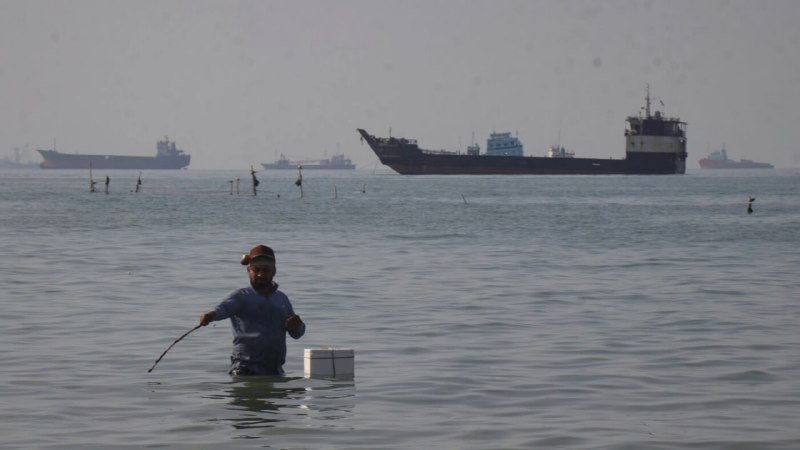
The juxtaposition captures the central problem of the current diplomatic moment. Both sides have signalled a willingness to talk. Neither has demonstrated a willingness to accept the other's terms for stopping. The naval blockade that U.S. forces have maintained in the Persian Gulf remains in place. The strikes that preceded the current pause have not been formally reversed. And on the question that lies at the heart of any durable agreement — Iran's nuclear programme — Iranian officials have drawn a clear line: that discussion is for a later phase, and only after a permanent ceasefire is secured.
The Proposal on the Table
What Tehran actually proposed, in substance, remains partially obscured. Iranian state media described it as a 14-point response to the U.S. framework, but the specific contents have not been published in full by any outlet cited in the thread context. That opacity itself is informative: Tehran is signaling willingness to engage while preserving internal coherence with its own public positions. Iranian officials, speaking through state-aligned channels, have made clear that the nuclear question is not negotiable at this stage. That language is consistent with the position Iranian representatives have held throughout the current round of indirect talks — that any discussion of atomic infrastructure is a sovereign matter, not a bargaining chip.
The New York Times, citing Iranian officials directly, reported on 3 May 2026 that the nuclear programme would not be addressed until a later phase of negotiations, and only after a permanent ceasefire had taken effect. That framing is significant. It separates the immediate question of hostilities from the longer-term architecture of the relationship — a distinction Washington may find convenient or infuriating, depending on how the next phase unfolds.
The White House Response
Trump's remarks from the White House on 2 May were blunt in their rejection of the premise that Iran had made sufficient concessions. "I will soon be reviewing the plan that Iran has just sent to us, but can't imagine that it would be acceptable in that they have not yet paid a big enough price for what they have done to Humanity," he told reporters, according to multiple independent transcripts captured from the briefing that evening.
Pressed on whether military force remained on the table, Trump declined to specify the conditions under which he would restart strikes. "There is a possibility the U.S. could restart strikes on Iran," Reuters reported him saying, without elaborating on triggering criteria or scope. The ambiguity is deliberate — or at minimum, it has not been corrected. That silence itself functions as a pressure instrument.
The question of the naval blockade introduced an apparent contradiction into the record. In a letter to Congress, Trump stated that hostilities with Iran had been terminated. A reporter at the briefing noted that the naval blockade remained in place and pressed him on the logical consistency of claiming hostilities had ended while maintaining a military encirclement of the country. The transcript of his response to that challenge was captured by open-source monitors, though the full exchange was not included verbatim in the sources reviewed.
What Tehran Wants and What Washington Will Accept
The structural divergence between the two positions is not merely tactical. Tehran has consistently framed any permanent agreement as requiring recognition of Iran's right to a civilian nuclear programme — a programme it insists is entirely peaceful. That position has wide domestic support inside Iran and reflects the assessments of most international inspectors who have worked inside the country's facilities. The International Atomic Energy Agency has, across successive director-general reports, found no definitive evidence of a weapons programme, though it has raised concerns about declared activities and access issues at specific sites.
Washington's stated objective, as articulated by the Trump administration across multiple outlets, is a deal that constrains enrichment to levels far below what Tehran considers its sovereign right, accompanied by inspections regimes Iran has historically characterised as intrusive beyond justification. The gap between those positions has collapsed previous negotiating rounds, including the Joint Comprehensive Plan of Action that preceded the U.S. withdrawal in 2018.
What is different this time is the context of pressure. The strikes that preceded the current pause — and the sustained naval presence in the Gulf — have imposed real costs on Iran's economy and its population. Iranian officials have not publicly acknowledged that pressure as a negotiating input, but the timing of the 14-point response, arriving after weeks of intensified operations, suggests the calculus inside Tehran has shifted.
The Forward View
Whether this moment constitutes the opening of a genuine negotiation or the next phase of coercive bargaining depends entirely on what happens next. The sources do not indicate whether indirect talks are continuing, whether a further round of proposals is planned, or whether the administration has internally assessed Iran's submission as a basis for continued engagement or a pretext for escalation.
What is clear is that both sides are performing a version of flexibility. Tehran talks of phases and sequences. Washington talks of review while keeping the strike option open. Neither is willing to absorb the political cost of being seen as the party that refused to negotiate.
The stakes are substantial. A breakdown risks resumed strikes and further economic deterioration inside Iran, with ripple effects across energy markets that are already factoring in Gulf instability. A narrow deal — one that pauses hostilities without resolving the nuclear question — buys time but not stability. A broader agreement would require both governments to make concessions that their domestic political bases have been primed to reject.
The next phase of reporting will determine whether the gap between those positions has genuinely narrowed, or whether the current exchange of proposals is the diplomatic equivalent of two sides talking past each other while the guns remain loaded.
This publication's reporting on Iran has consistently foregrounded the distinction between ceasefire as a pause in hostilities and resolution as a structural agreement. The wire framing as of 3 May 2026 remains event-driven — Trump's remarks and Iran's submission treated as parallel moves. This piece attempts to make the dependency between the two positions visible.
Wire provenance
This editorial synthesis draws on the following public wire/social posts:
- https://t.me/intelslava/20471
- https://t.me/osintlive/58492
- https://t.me/osintlive/58489
- https://t.me/Middle_East_Spectator/12841
- https://t.me/rnintel/31407
- https://t.me/wfwitness/20984