Trump Rejects Iran Peace Plan, Warns Strikes May Resume
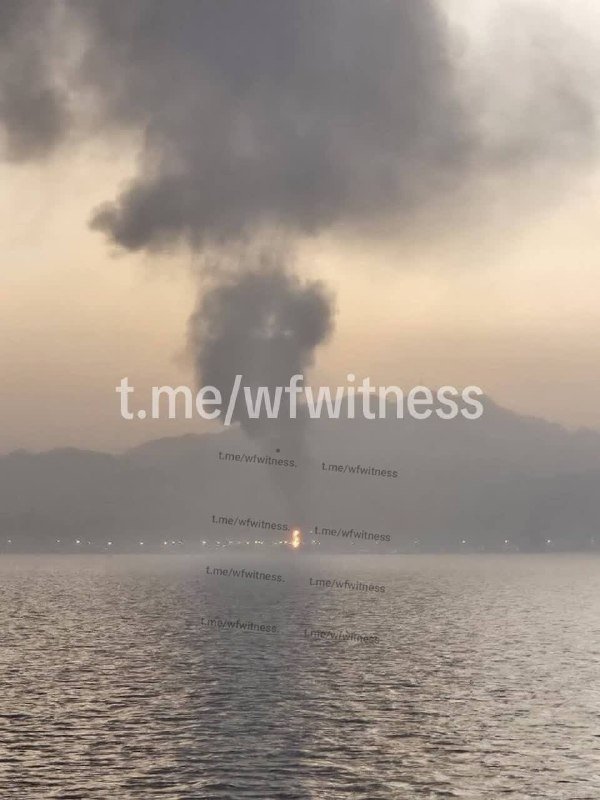
Iran sent a 14-point ceasefire proposal to Washington. By late evening on 2 May 2026, President Donald Trump had reviewed it — and found it wanting. Speaking to reporters outside the White House, the president said he "can't imagine" the proposal is acceptable, and that Iran has not offered sufficient concessions to justify easing the economic pressure that has defined the US maximum-pressure campaign since March. The strikes that struck deep into Iranian nuclear infrastructure two months ago will not be lifted until a deal, if one comes, is struck. If talks fail, the White House has not ruled out resuming them.
Iran's foreign minister, Abbas Araghchi, said the same day that the "ball is in the US' court" — framing the proposal as a genuine diplomatic opening that Washington was refusing to engage with on its merits. Tehran's version of the offer includes a conditional ceasefire contingent on permanent sanctions relief, written guarantees against future US military action, and the formal removal of Iran's Revolutionary Guard from US terrorist blacklists. The nuclear question — the central concern of the March strikes — is not addressed in the initial framework. Iran wants to defer that discussion to later stages of any agreement, with the logic that economic normalisation must precede weapons-related concessions.
The concessions Iran is — and is not — offering
The 14-point proposal is not a capitulation. Iran has agreed to stop enriching uranium above 3.67 percent at declared sites — below weapons-grade — and to cap its stockpile at levels consistent with the 2015 nuclear deal. It has offered international inspectors access to two named sites under IAEA supervision, and has proposed a mutual suspension of offensive military operations across the region. What it has not offered is the immediate, verifiable dismantling of its enrichment infrastructure that the United States — and Israel — have publicly demanded.
The sticking point is sequencing. Iran wants sanctions lifted first and nuclear commitments delivered second. The United States, per reporting from the New York Times on 2 May 2026, has treated this as a non-starter. Iranian negotiators are reportedly refusing to address their nuclear program in the initial phase of talks, pushing those discussions to later stages of any agreement — precisely the architecture that collapsed under the Trump administration's unilateral withdrawal from the JCPOA in 2018. Western officials have noted that no US administration has agreed to permanently lift sanctions without receiving verifiable, irreversible nuclear concessions in return — a bar that Tehran appears unwilling to meet in the first phase of any deal.
What Tehran's counter-framing reveals
Iran's framing of the proposal is designed for multiple audiences simultaneously. Domestically, the concessions on enrichment levels allow Tehran to present the offer as a display of good faith without appearing to capitulate. Regionally, the mutual suspension clause is addressed to Iran's proxy network and to Saudi Arabia and the Gulf states, who have watched the escalation with acute anxiety about what comes next if strikes resume. And to European mediators, Iran is presenting itself as the party willing to negotiate while the United States issues ultimatums.
That last calculation matters. France, Germany, and the United Kingdom have publicly urged Washington to give the diplomatic track more time. The European position is not neutral — the EU has its own strategic interest in avoiding a second cycle of regional war that would further destabilise energy markets and accelerate refugee flows — but it does represent a real pressure point on the White House. Trump's decision to reject the proposal rather than send it back for revision suggests the administration has calculated that a firm public rejection is more useful at the negotiating table than a conditional acceptance that Iran could exploit.
The structural logic of maximum pressure
The breakdown is not primarily about the 14 points. It is about the question of what maximum pressure is supposed to achieve. The March strikes were framed as a response to Iran's advancing nuclear programme — an emergency measure to prevent Iran from acquiring a weapons capability within a defined timeline. If that was the objective, the question becomes what a sustainable agreement looks like that does not require permanent military presence or periodic strikes to enforce. The answer is either a verified deal with intrusive inspections and enforceable snapback provisions — which Iran has consistently refused — or a tacit acceptance of a limited enrichment capability, which the March strikes were explicitly designed to foreclose.
There is no clean exit. The sequencing dispute is not merely tactical — it reflects a genuine disagreement about what a deal looks like and who verifies it. Iran wants a JCPOA 2.0 with a faster sanctions timeline. The United States wants something it has not yet defined publicly. Until those terms are specified, the distance between the two positions cannot be bridged by a 14-point document.
What happens if the talks fail
The stakes are immediate and regional. If the diplomatic channel closes, the options on the table narrow to two: another round of strikes targeting Iranian enrichment and military infrastructure, or an acceptance that the current military posture — periodic Israeli strikes with US intelligence support — is the durable arrangement. Neither is stable. Another round of strikes would likely accelerate Iran's decision to withdraw from the Nuclear Non-Proliferation Treaty, a step Tehran has so far avoided but has signalled it will take if pushed far enough. The tacit acceptance model allows Iran to continue low-level enrichment while the US accepts the fact of it — which is not a resolution, but a managed problem.
The region is watching. Saudi Arabia, the UAE, and Qatar have all made quiet representations to Washington warning against a collapse that would destabilise their own economic planning. Israel has made no secret of its preference for a military rather than diplomatic outcome. The administration is navigating between those pressures while managing the domestic political calculation that a deal — any deal — with Iran carries political risk in an election cycle.
The proposal is on the table. The president has rejected it. What comes next will be decided in the next two weeks, not in the framing of a 14-point document.
This publication's wire coverage centred on the presidential statement and the Iranian foreign minister's response, versus the international wire emphasis on the 14-point proposal's contents and the sequencing dispute as the primary obstacle.
Wire provenance
This editorial synthesis draws on the following public wire/social posts:
- https://news.cgtn.com/news/2026-05-03/news-1MPO7yRHv1e/p.html
- https://t.me/wfwitness/14231
- https://t.me/wfwitness/14230