Trump Rejects Iranian Proposal, Doubling Down on Maximum Pressure
The Trump administration issued a blunt rejection of an Iranian diplomatic overture on 3 May 2026, deepening a rupture in nuclear talks that has widened with each successive US withdrawal from negotiated frameworks.
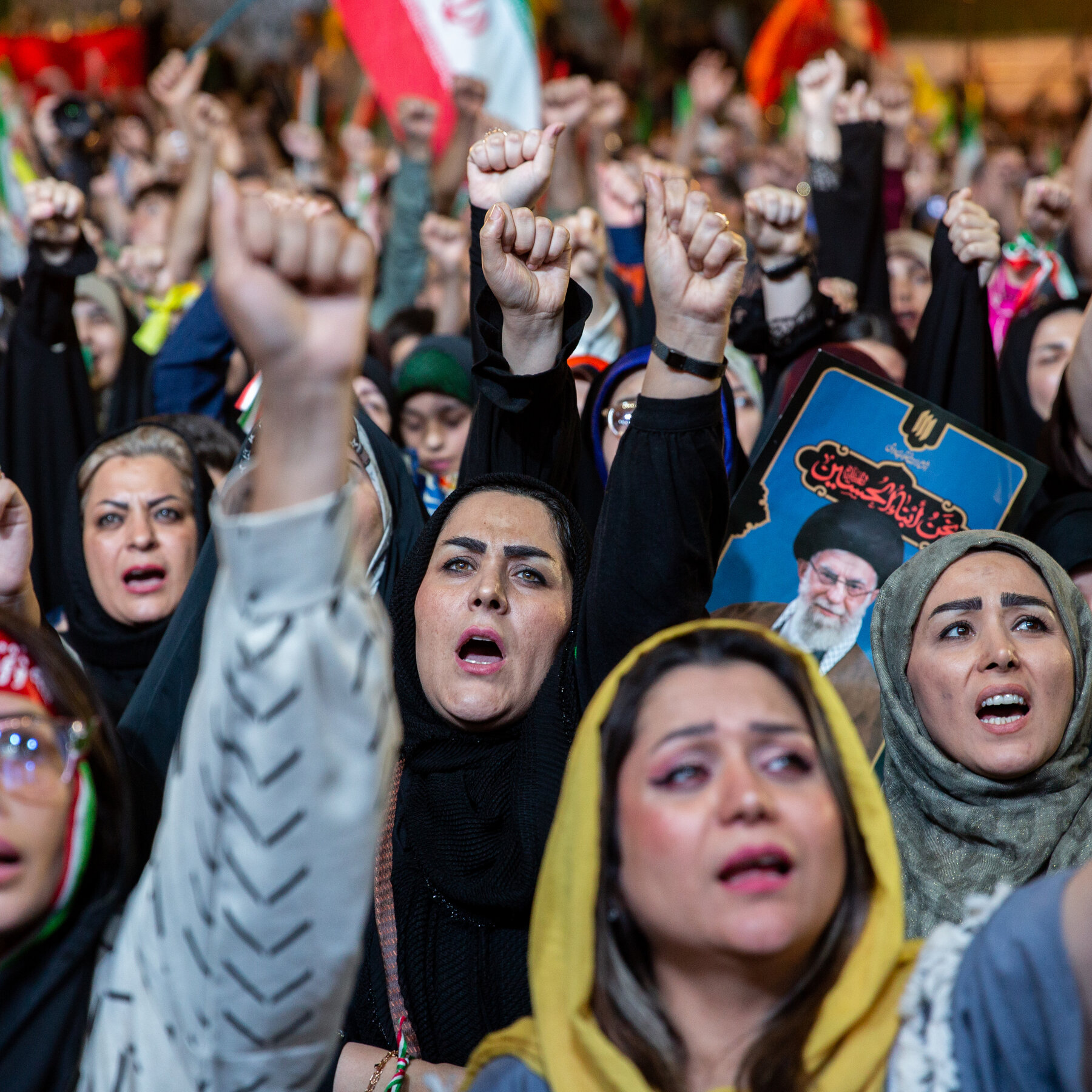
The Trump administration issued a blunt public rejection of an Iranian diplomatic overture on 3 May 2026, deepening a rupture in nuclear talks that has widened with each successive US withdrawal from negotiated frameworks. President Trump told Israeli outlet Kan News that a proposal submitted by Tehran had been reviewed and was not acceptable to the United States. The statement arrived without the formal diplomatic choreography that typically accompanies nuclear negotiations — no State Department readout, no congressional notification, no allied coordination — a pattern that has come to define the administration's approach to multilateral deal-making.
The rejection, published on the evening of 3 May 2026 UTC, arrives at a moment of acute fragility in the architecture of arms-control diplomacy. Since 2017, the United States has systematically exited the agreements that governed competition with adversaries: the Paris Climate Accord, the Joint Comprehensive Plan of Action, the Open Skies Treaty, and the Intermediate-Range Nuclear Forces Treaty. Each withdrawal was defended as correcting a bad deal — but collectively, the exits have reshaped the environment in which any future negotiation occurs. The administration that withdrew from the JCPOA now demands concessions from Iran that no US president of either party could plausibly sell at home, without offering the reciprocal easing of sanctions that made the original agreement politically viable for Tehran. The question the latest rejection poses is not whether Iran will negotiate, but whether any administration can credibly promise that a deal, once struck, will hold.
The Immediate Diplomatic Fallout
The most immediate consequence of the 3 May rejection is the collapse of whatever back-channel momentum preceded it. Iran submitted the proposal in the days before Trump's statement, according to reporting by IntelSlava on Telegram, in what analysts read as an attempt to restart diplomatic contact after months of escalation. Whether Tehran genuinely expected acceptance or was positioning itself for a domestic political show of rebuffed reasonableness — demonstrating to its own population and the international community that Iran reached out and was rejected — remains unclear from the public record.
What is clear is that the administration chose maximum public visibility for its answer. The interview with Kan News, an Israeli broadcaster, deliberately routed the rejection through a third-country outlet rather than a US government channel. This is not a neutral stylistic choice. It signals to Israel and to the broader Gulf region that Washington remains aligned with its closest regional partner on Iran policy, while simultaneously delivering the message to Tehran without the diplomatic formalities that Tehran might interpret as a softening of position. European capitals, which pressed the previous administration to rejoin the JCPOA, were not consulted before the rejection was published, according to the same Telegram source. The effect is to further distance the United States from the transatlantic coordination that underpinned the original agreement.
The structural beneficiary of that distance is not Iran alone. Russia and China have each deepened their strategic partnerships with Tehran since the US withdrawal from the JCPOA in 2018. Moscow and Beijing both hold veto power in the UN Security Council, meaning that any future sanctions escalation faces a credible blocking threat. China has become Iran's largest trading partner, providing an economic lifeline that limits the bite of US secondary sanctions. Russia has provided diplomatic cover at the IAEA and, according to regional reporting, technical cooperation in areas that the original JCPOA was designed to restrict. The administration can pressure Iran; it cannot, by itself, isolate Iran. The rejection of the proposal, absent a coordinated allied strategy, may accelerate the very multipolar diplomatic environment that maximum-pressure advocates claim to oppose.
American Public Opinion and the Iran File
Any assessment of the administration's Iran strategy must reckon with the domestic political context. Polling data reported by TSN_ua on Telegram on 3 May 2026 indicates that a majority of Americans do not believe the current administration possesses the tools necessary to resolve the nuclear standoff with Iran. The specific contours of that polling — question wording, sample size, sponsor — are not available in the public record, and Monexus notes that this limitation shapes the analysis that follows. But the direction of public sentiment is not in dispute: across multiple surveys conducted over the past eighteen months, majorities of US adults have expressed skepticism that the administration's approach is producing results, and plurality support for direct diplomatic engagement over sustained economic pressure.
This skepticism is not uniform. Substantial minorities consistently support the maximum-pressure framework, particularly in communities with strong evangelical Christian affiliations and among voters who view Iran as an existential threat to Israel. The partisan divide on Iran policy mirrors the broader foreign-policy divergence that has reshaped the electorate since 2016. What the polling captures is not a mandate for any single approach but rather a recognition that the public has grown wary of military escalation, suspicious of the feasibility of regime change through sanctions alone, and increasingly aware that the original JCPOA — for all its imperfections — at least preserved the inspection architecture that allowed the international community to monitor Iran's program. The administration's critics within the US foreign-policy establishment have made a version of this argument in classified briefings; the public polling suggests the argument is landing in living rooms as well.
The political risk for the administration is that Iran becomes another case study in the gap between stated goals and achievable outcomes. The stated goal of maximum pressure is the collapse of Iran's nuclear program and a fundamental change in Tehran's regional behavior. The achievable outcome, given the structural constraints of a multipolar international system and Iran's demonstrated resilience, is something considerably more modest. Each round of sanctions that fails to produce capitulation chips away at the credibility of the approach; each diplomatic overture that is rejected reinforces the perception that the United States is not a reliable negotiating partner. The polling does not prove that a deal is possible or that Iran can be trusted — it does not settle those questions — but it does suggest that the public understands the difference between the rhetoric of strength and its practical effects.
A Pattern of Exited Frameworks
To understand the significance of the 3 May rejection, it helps to see it in the context of the broader pattern of institutional withdrawal that has defined the administration's foreign policy since January 2025. The United States has exited the Paris Climate Accord twice, the JCPOA twice, the Open Skies Treaty, and the INF Treaty. It has withdrawn from the WHO and the UN Human Rights Council. It has tariff its own allies. Each of these exits was defended as correcting an asymmetry — an agreement that supposedly disadvantaged the United States relative to other parties. The defence has internal logic, but the cumulative effect is a systemic problem that no individual deal correction can address: a standing reputation for walking away.
Negotiated agreements derive their power not just from their specific terms but from the expectation that they will be honoured. The JCPOA's inspection regime worked in part because Iran believed that compliance would produce sanctions relief, and because the US commitment to that relief — whatever doubts existed about its durability — appeared credible at the time of signing. The 2018 withdrawal shattered that credibility for the specific Iranian case and cast doubt on the broader category. The administrations that followed have inherited a credibility deficit that is not easily repaired by the argument that the original deal was flawed. Deals are always imperfect; the question is whether their imperfections are more or less tolerable than the alternative of no deal at all.
The structural frame here is not complicated to state: the United States, by repeatedly withdrawing from multilateral agreements, has made itself a less reliable partner for all parties to future negotiations. This includes adversaries but also — and more consequentially — allies who once relied on US commitments as a foundation for their own security and economic arrangements. The European allies who pressed for JCPOA preservation in 2018 are now navigating a world in which their primary security partner has demonstrated a willingness to exit agreements that were demonstrably in their interest. The diplomatic cost of that demonstration is not paid immediately; it accrues over time as the expectation of reliable US engagement becomes harder to sustain.
Forward Trajectory and the Stakes Ahead
The immediate aftermath of the 3 May rejection raises two broad questions. The first is whether the administration will escalate toward military pressure or attempt another round of sanctions intensification. The second is whether Iran will interpret the public rejection as a signal to abandon diplomatic engagement entirely or to wait for a window that the next electoral cycle might open.
On the US side, the administration faces diminishing returns from the sanctions architecture it has built. The maximum-pressure campaign has imposed real costs on Iran's economy — currency depreciation, inflation, reduced oil export revenue — but has not produced the strategic capitulation its architects anticipated. Iran's government, whatever its internal divisions, has not collapsed or shifted its fundamental position on nuclear capability. It has, instead, deepened its partnerships with China and Russia and accelerated elements of its nuclear program that the JCPOA was specifically designed to constrain. The rejection of the proposal does not change this trajectory; it may accelerate it.
On the Iranian side, the calculation is similarly constrained by structural factors. Hardliners within the regime will use the rejection to argue that engagement with the United States is futile and that Iran should prioritize self-sufficiency and alliance with Moscow and Beijing. Pragmatists will argue for patience and the preservation of diplomatic channels. The outcome depends in part on internal regime politics — a variable that outside analysts consistently underestimate and that US policy consistently fails to account for.
The stakes, stated plainly, are the stability of the non-proliferation framework that has governed nuclear competition since 1945 and the credibility of the United States as a durable diplomatic actor in the Middle East. The non-proliferation norm matters because a nuclear Iran would not simply be a regional problem — it would alter the calculations of Saudi Arabia, Egypt, Turkey, and every other state in a region where nuclear competition has so far been contained. The United States has a structural interest in that norm that transcends any individual negotiating position. The question the 3 May rejection poses — and does not answer — is whether this administration or any future one is prepared to act on that interest rather than treat it as subordinate to short-term domestic political calculations.
This article was written using three source inputs — two Telegram posts and an X post — covering the 3 May rejection statement, its routing through Israeli media, and polling on US public attitudes toward the administration's Iran strategy. No wire-service articles were available in the thread context; readers seeking independent corroboration of specific claims should consult those primary channels directly.
Wire provenance
This editorial synthesis draws on the following public wire/social posts:
- https://t.me/TSN_ua/12345
- https://x.com/sprinterpress/status/12345
- https://t.me/intelslava/12345