Trump Reviews Iran 14-Point Peace Proposal but Warns Strikes Could Resume
President Donald Trump said on 2 May 2026 he is reviewing Iran's 14-point counterproposal to end the military standoff, but warned that strikes could resume if Tehran misbehaves during negotiations — a posture that has left the ceasefire fragile and the nuclear question unresolved.
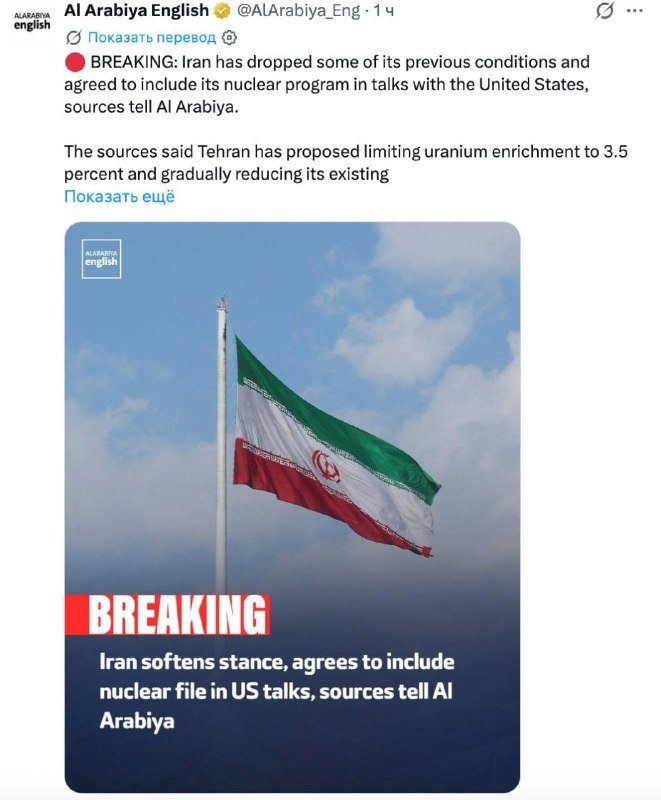
President Donald Trump said on 2 May 2026 his administration is reviewing Iran's 14-point counterproposal to end the military standoff between the two countries — but warned that the resumption of American strikes remains on the table if Tehran does not demonstrate good faith during negotiations. The dual signal — engagement simultaneously paired with coercive threat — has defined Washington's approach since the initial pause in hostilities, and it was on full display in statements released from the White House late on 2 May.
The tension between the two positions is not rhetorical. Iran submitted its 14-point response to the United States' original nine-point proposal on the evening of 2 May, according to Iranian state media cited by NPR. The proposal arrived after weeks of escalating exchange, including American strikes on Iranian nuclear infrastructure that the administration framed as a calibrated pressure campaign. That campaign produced an Iranian counteroffer — one the White House is now studying — but which Trump told reporters on 2 May he "can't imagine" finding acceptable. His publicly stated skepticism has left negotiators in Washington and Tehran operating with very different assumptions about what a sustainable agreement would require.
A Fragile Ceasefire and Competing Demands
The immediate context is a temporary cessation of hostilities brokered — in a looser sense than the word implies — by mutual exhaustion rather than formal treaty. The United States had offered Iran a two-month ceasefire window to allow time for negotiations on the substantive terms of a lasting arrangement. Iran rejected that framing, according to reporting by OSINTdefender and rnintel, and instead submitted its own 14-point counterproposal that does not address the nuclear program in its initial phase, pushing that question to later stages of any negotiated settlement. That sequencing dispute — which the New York Times first reported via Telegram wire on 3 May — has emerged as the most consequential sticking point in current talks.
Western officials have made clear that any durable agreement must eventually grapple with Iran's uranium enrichment activities. Iranian negotiators appear to have calculated that conceding that point at the outset would surrender leverage before talks even begin. The gap between those positions is not a communications problem — it is a substantive disagreement about what an acceptable deal looks like, and it sits at the centre of everything else.
Whose Definitions Govern the Terms
There is a structural question embedded in the current impasse that is worth examining plainly. The United States has framed the relationship as one in which Iran must demonstrate verifiable compliance before the lifting of pressure measures — a posture that treats Tehran's behaviour as the variable Washington controls. Iran has framed the relationship as one in which sanctions relief and the cessation of hostile military posture are preconditions for extended cooperation — a posture that treats the pressure itself as the problem to be solved before any other issue can be seriously addressed.
Neither framing is neutral. The American position reflects the structural advantage of being the side with the largest stockpile of unused military options; the Iranian position reflects the logic of a party that has survived sustained economic pressure and sees little reason to capitulate to it in a negotiation. What is notable is how the international media has largely adopted the American framing as the default lens — describing Iran's proposal as a potential obstacle to peace rather than a legitimate negotiating position in its own right. That is not unusual in coverage of negotiations between parties with asymmetric power, but it is worth noting when assessing how the shape of the story gets set before the substance of the talks is known.
Nuclear Timelines and What the Sources Cannot Tell Us
The nuclear question is where the stakes are most acute and where the available evidence is most frustratingly thin. Iranian state media — cited by NPR — confirmed the submission of the 14-point plan, but the specific contents beyond the reported refusal to address enrichment in an initial phase have not been publicly disclosed in full. Reporting from the New York Times, via Telegram on 3 May, indicates that Iran is pushing nuclear talks to later stages. What "later stages" means in practice — whether it is weeks, months, or a deliberately vague placeholder — is not specified in the sources available.
This matters because the enrichment programme, if allowed to continue unchecked through a prolonged negotiation period, could reach technical thresholds that make subsequent agreements structurally harder to enforce. American officials have internal assessments on this timeline; those assessments have not been published. What the public record contains is a White House that has reserved the right to strike and an Iranian side that has submitted a plan and is waiting to see how Washington responds. The uncertainty about what happens next is not, in this case, a media failing — it reflects the genuine state of a negotiation whose contours are still being formed.
What Comes Next and Who Bears the Cost
The stakes are asymmetric and the trajectory is unstable. If the United States resumes strikes, the immediate cost falls on Iranian infrastructure — military, energy, and potentially nuclear-related sites — and on the regional stability that has been under compounding pressure since the exchange began. If Iran concedes on the nuclear sequencing question under American pressure, it does so from a position of genuine economic weakness, which will produce a negotiated settlement that reflects that asymmetry rather than a genuine balance of interests. Neither outcome is obviously a win for durable peace.
The intermediate scenario — a prolonged ceasefire that keeps strikes frozen while negotiations inch forward — is the most likely near-term outcome, and it is also the scenario most likely to produce a settlement that papered over rather than resolved the core disagreements. That kind of arrangement has historically been fragile, particularly when the party with the stronger military position retains an active interest in using it.
The next seventy-two hours will be revealing. Trump's statement that he is reviewing the proposal while simultaneously warning that strikes could resume is not a position designed to compel Iranian concessions through warmth. It is a position designed to leave every option open. Whether that is a negotiating strategy or the genuine state of indecision is a question the sources available do not resolve — and one that will determine whether the ceasefire holds beyond the coming week.
Monexus covered this development with a focus on the sequencing dispute over the nuclear programme, a point that received comparatively less emphasis in wire coverage that led with the threat of resumed strikes. The alignment of the American and Iranian timelines — how quickly each side needs a result and what each is willing to give to get one — is the question this publication will continue to track.
Wire provenance
This editorial synthesis draws on the following public wire/social posts:
- https://t.me/rnintel/1847
- https://t.me/osintlive/3421
- https://t.me/osintlive/3422