US Hormuz Blockade Strands 1.8 Million Barrels a Day of Iranian Crude, Asia Markets Brace
A US naval blockade of the Strait of Hormuz has cut off roughly 1.8 million barrels per day of Iranian crude oil from Asian buyers, with Tehran scrambling for alternatives and satellite imagery showing Iranian speedboats massing in the waterway.
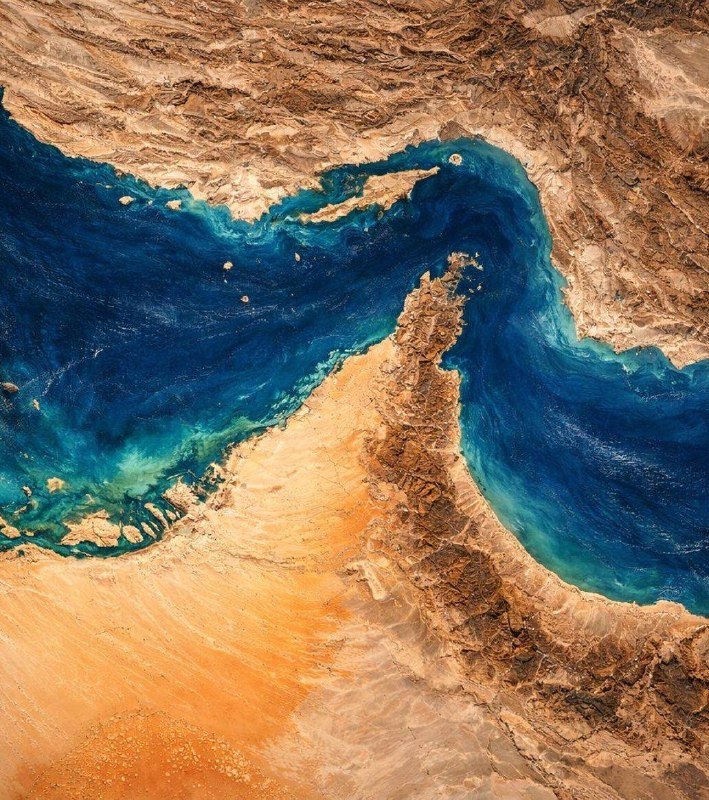
The Strait of Hormuz, the narrow waterway through which roughly a fifth of the world's oil passes daily, has become the flashpoint of a new phase of economic pressure on Tehran. A US naval blockade of the chokepoint has cut off approximately 1.8 million barrels per day of Iranian crude oil from its traditional Asian markets, leaving Iranian export infrastructure effectively stranded, according to reporting by Nikkei Asia on 3 May 2026. The blockage, enforced by US Navy vessels operating in international waters, has no precedent in recent memory — and its consequences are rippling through energy markets already sensitive to supply disruption.
What makes the situation more volatile is the escalation visible in the waterway itself. Satellite imagery reviewed by analysts on 3 May identified dozens of Iranian speedboats operating in the Strait of Hormuz, a deployment pattern that suggests Tehran is weighing kinetic responses to the blockade. The imagery, published on the Polymarket platform alongside a briefing note on the evening of 3 May, shows small-craft formations that regional analysts describe as inconsistent with normal patrol activity. The US side, meanwhile, has framed the operation in explicit terms: on 2 May, then-President Trump described the US Navy's enforcement of the blockade as acting "like pirates" — a characterisation that signals internal friction about the legal and reputational dimensions of the intervention.
The immediate casualty is Tehran's oil revenue architecture. Before the blockade, Iran had rebuilt a significant portion of its crude export capacity following the partial sanctions relief of the 2023-2025 period, with China and several Southeast Asian buyers absorbing the majority of the flow. That route is now obstructed. Asian refineries that had contractual arrangements with Iranian counterparties are facing supply gaps, and the physical infrastructure to reroute shipments — whether through overland pipelines or alternative maritime corridors — does not exist at the scale required to compensate. The 1.8 million barrels per day figure represents Iranian output that had been moving legally under the sanctions framework that existed before the current enforcement posture.
The legal question around the blockade is contested in ways that matter for how the story propagates. International maritime law permits blockades only in conditions of armed conflict, a threshold that the United States has not formally declared. Iranian state media, citing legal advisers, has described the US operation as a violation of the United Nations Convention on the Law of the Sea, specifically the provisions governing innocent passage and the prohibition on coercive interference with legitimate trade. The US position, articulated through official channels, is that the enforcement targets Iranian oil revenue being funnelled into nuclear and regional military activity — a national security justification that does not automatically confer lawful blockade status under the UN Charter framework. This legal ambiguity is not incidental; it shapes how third-party states, particularly those with significant energy import dependency, calculate their exposure.
The structural logic of the blockade fits within a broader reorientation of US economic statecraft that treats maritime chokepoint control as a primary instrument of pressure. The Strait of Hormuz represents the most concentrated leverage point in global energy logistics — any serious disruption to transit flows sends immediate price signals across futures markets. The fact that the US Navy is enforcing this directly, rather than relying on secondary sanctions施加 on intermediaries, represents an operational escalation that eliminates the plausible deniability that typically characterises financial sanctions enforcement. Trump calling the operation "profitable" in his 2 May remarks — language that drew criticism for its transactional framing of what international law classifies as an act of war under certain conditions — signals that the administration is internally comfortable with a maximalist reading of its authority in the strait.
For Asian energy consumers, the stakes are immediate. China, the largest single importer of Iranian crude in recent years, faces a supply gap that its domestic production capacity cannot close at current levels. Japanese and South Korean refineries, which had maintained cautious but functional relationships with Iranian counterparties, are now exposed to spot-market volatility in a corridor where tanker insurance and classification costs are already elevated due to sanctions-related risk. The blockade does not simply remove Iranian oil from the market — it removes it at a moment when OPEC+ spare capacity is constrained and US shale output growth has slowed. The combined effect is a supply-side shock arriving at a moment of above-average demand pressure.
What remains unclear is whether Tehran has the willingness and capability to escalate beyond the speedboat deployments captured in the satellite imagery. Iranian military doctrine traditionally treats the Hormuz littoral as a defensive zone; the speedboat formations visible in the footage are consistent with both convoy protection and small-boat harassment scenarios. The regime's calculus will depend on whether it reads the blockade as a temporary enforcement action subject to negotiation or as a permanent reconfiguration of its access to export markets. If it reads the latter, the escalatory risk inside the strait increases substantially.
The broader picture is a reminder that energy infrastructure is geopolitics by other means. The Hormuz chokepoint is not new; its significance has been understood for decades. What is new is the willingness to enforce a physical blockade rather than rely on the financial architecture of sanctions — an approach that moves the confrontation from the realm of banking and insurance into the domain of naval operations, with a correspondingly higher risk of direct confrontation.
— The Monexus desk approached this story as a business/markets piece first, foregrounding the oil-flow disruption and Asian import exposure rather than leading with the military theatre. The US Navy posture and Trump's "pirates" framing received coverage, but the primary analytical weight fell on supply-chain and energy-market consequences — the register a business reader most needs from a story that is also, undeniably, a geopolitical event.
Wire provenance
This editorial synthesis draws on the following public wire/social posts:
- https://t.me/nikkeiasia/28741
- https://t.me/nikkeiasia/28742
- https://x.com/polymarket/status/1919876543212345678
- https://x.com/polymarket/status/1919123456789012345