US Submits Revised Draft to Iran as Nuclear Talks Enter Critical Phase
The Biden administration has transmitted a fresh negotiating text to Tehran, according to sources cited by Axios, marking what could be the final round of indirect talks aimed at curbing Iran's nuclear programme and reducing regional tensions.
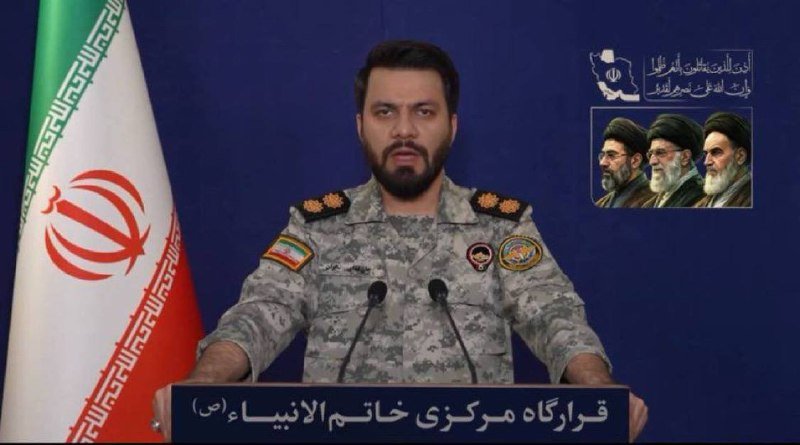
The United States sent another revised draft agreement to Iran on Sunday, according to informed sources cited by Axios on 3 May 2026. The development represents the latest in a prolonged series of written exchanges between the two sides, mediated through intermediaries after direct diplomatic relations were severed following the 2019 withdrawal from the Joint Comprehensive Plan of Action (JCPOA). The timing of the exchange coincides with escalating tensions across the broader Middle East, where regional proxy conflicts have tested the limits of existing ceasefire arrangements.
The renewed push comes after Iran submitted its own written proposal to Washington, outlining what Tehran described as a framework for resolving the nuclear standoff. The Axios report, which cited unnamed officials familiar with the matter, did not disclose the specific contents of either document, though the report suggests both sides have moved closer to positions that were previously considered incompatible. The precise degree of convergence remains unclear, and Iranian state-linked media outlets have been measured in their public commentary, reflecting the sensitivity of negotiations that involve competing domestic political constraints on both sides.
The Mechanics of Indirect Diplomacy
The Channel structure — whereby Washington and Tehran communicate through intermediaries such as Oman, Switzerland, or Qatar — has become the standard mechanism for US-Iran negotiations since the breakdown of direct talks in 2018. This arrangement imposes inherent limitations on the speed and transparency of negotiations. Each draft must pass through diplomatic couriers, be translated, interpreted, and then returned with responses that may themselves require consultation with leadership in both capitals. Officials familiar with the process describe a rhythm of submissions and counter-submissions that can stretch across weeks, with the final text often bearing only passing resemblance to early drafts.
What distinguishes this round, according to sources familiar with the discussions, is the degree to which both administrations appear to have internalized the costs of failure. The Trump administration — now in its second term — has prioritised a negotiated solution over the maximum-pressure campaign of its first term, recognising that military options carry prohibitive regional risks. Iran's pragmatic faction, for its part, has calculated that continued escalation invites further international isolation and economic deterioration. The convergence of those two calculations does not guarantee an agreement, but it creates conditions in which both sides have incentives to close gaps rather than widen them.
What Each Side Needs
For Washington, the minimum acceptable outcome involves verified constraints on Iran's enrichment programme that extend well beyond the original JCPOA timelines, coupled with expanded International Atomic Energy Agency (IAEA) inspection access. The administration has also signalled that it expects Iran's regional proxy network — particularly its support for groups operating in Iraq, Syria, and Yemen — to be addressed, even if those issues are formally decoupled from the nuclear file. This framing represents a deliberate effort to avoid the criticism that plagued the original 2015 deal: that it focused narrowly on enrichment while leaving broader concerns unaddressed.
Tehran, meanwhile, has consistently demanded relief from sanctions as a precondition for any binding nuclear commitments. Iranian officials have argued that the United States reneged on its JCPOA obligations by withdrawing in 2018, and that any new agreement must include credible guarantees against future US withdrawal. The Iranian position also requires recognition of the country's right to a peaceful nuclear programme under the Nuclear Non-Proliferation Treaty (NPT), a provision that Western analysts view as a ceiling on enrichment levels rather than an open-ended entitlement.
The gap between those positions remains substantive. Whether the revised draft transmitted on Sunday moves meaningfully toward closing it is a question the sources do not resolve. The Axios report provides confirmation that an exchange occurred; it does not provide the text, the specific concessions, or the Iranian response that would allow an assessment of likely outcome.
The Regional Dimension
The negotiations unfold against a backdrop of heightened activity across multiple Middle Eastern flashpoints. Iran's nuclear programme continues to advance at a pace that has alarmed Western intelligence assessments, which estimate Iran's breakout timeline at a fraction of what it was before the 2015 deal. Regional actors — most notably Israel and Saudi Arabia — have made clear their reservations about any arrangement that does not permanently cap enrichment at levels they regard as insufficient. Israel, in particular, has maintained a position of deliberate ambiguity about whether it would accept a US-brokered nuclear agreement or act unilaterally to disrupt Iran's programme.
Saudi Arabia, while more restrained in its public positioning, has pursued its own parallel track with Iran under the auspices of Chinese-mediated normalisation talks. Those discussions have produced an unexpected reduction in direct tensions between Riyadh and Tehran, but they have not resolved the underlying competition for regional influence that shapes both countries' behaviour in Iraq, Yemen, and Lebanon. The degree to which a US-Iran nuclear deal might alter those calculations — either by reducing tensions or by prompting Saudi Arabia to accelerate its own nuclear programme — remains a live question that negotiators have not fully addressed.
The Dollar Dimension
Any agreement that successfully eases sanctions will confront a structural issue that has not been prominently addressed in public discussions: the role of the dollar in the international financial system as a constraint on Iran's economic reintegration. Sanctions enforcement relies in part on the dollar's global dominance — transactions involving US dollars, even between non-American entities, fall under US jurisdiction. A sanctions relief agreement that does not include mechanisms for processing payments outside the dollar system would give Iran nominal relief while delivering limited practical benefit. Iranian officials have raised this issue in previous negotiating rounds, and it remains a point where technical and political constraints intersect.
The structural significance extends beyond the bilateral relationship. Countries across the Global South have taken note of the friction that dollar dominance creates for states subject to US sanctions. China's parallel financial infrastructure — the Cross-Border Interbank Payment System (CIPS) and expanded use of renminbi in trade settlement — has been developed partly in response to these constraints. An agreement that eases US-Iran tensions while leaving the dollar-dominance problem intact would be incomplete in the eyes of those who view the sanctions architecture as a tool of broader hegemonic management.
What Remains Uncertain
The sources consulted for this article do not provide sufficient detail to assess the substantive content of the revised draft, the specific concessions made by either side, or the timeline for a formal response. Iranian state-linked outlets have acknowledged that Tehran is reviewing the US text, but have offered no detail on Iranian reaction. The Axios report relies on unnamed sources whose identity and potential biases the reader cannot assess. It is possible that negotiations are substantially closer to resolution than the public record suggests; it is equally possible that this round produces the same pattern of near-agreements that have characterised US-Iran diplomacy for the better part of two decades.
The stakes, however, are not disputed. A successful agreement would reduce the risk of a new conflict in a region already under severe strain, create space for broader US engagement with both Iran and its regional rivals, and represent a rare example of diplomacy prevailing over pressure in a moment when that outcome is far from guaranteed. Failure would not necessarily produce immediate military action, but it would entrench the existing trajectory — continued nuclear advancement, deepening proxy conflicts, and the gradual erosion of whatever informal constraints currently limit escalation.
The next several weeks will reveal whether this revised draft represents a genuine narrowing of gaps or another entry in a long catalogue of diplomatic near-misses.
This publication covered the Axios scoop as a confirmed exchange of written proposals — consistent with wire reporting — while noting the significant gap between confirmed fact and verifiable detail that the sources present.
Wire provenance
This editorial synthesis draws on the following public wire/social posts:
- https://t.me/tasnimnews_en/37345
- https://t.me/JahanTasnim/28934
- https://t.me/alalamarabic/11892
- https://t.me/FarsNewsInt/44781
- https://t.me/tasnimnews_en/37340