Iran's Araghchi Briefs Parliament on Nuclear Talks as Khatamzadeh Named Nuke Envoy
Foreign Minister Araghchi appeared before Iran's parliamentary committee on May 4 to discuss Iran-US nuclear negotiations, claiming Tehran has emerged as a dominant regional and global actor. The briefing comes as Khatamzadeh is reportedly named to a senior nuclear negotiating role.
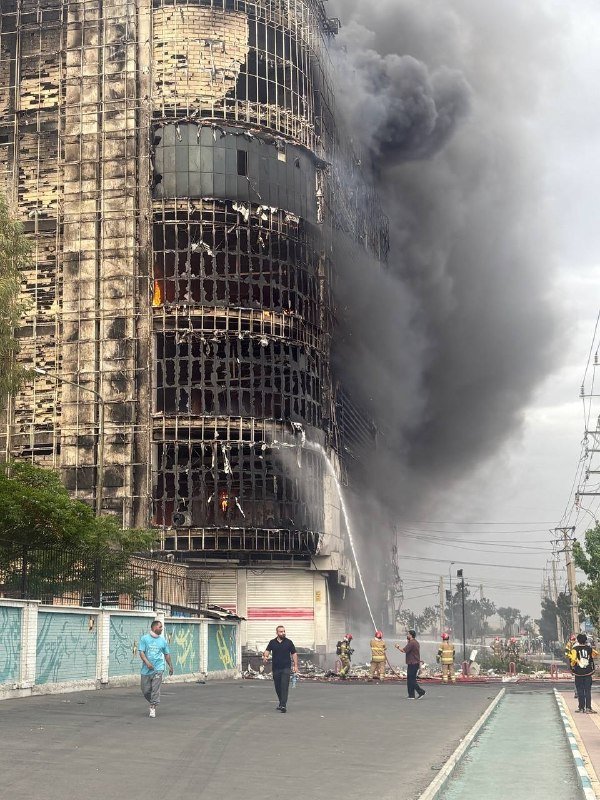
Iran's Foreign Minister Seyed Abbas Araghchi appeared before the National Security and Foreign Policy Committee of the Islamic Council on May 4, 2026, briefing lawmakers on the status of ongoing nuclear negotiations with the United States. The appearance, confirmed by multiple state-affiliated news agencies including Tasnim, Fars News International, and Mehr News, came as Iranian officials publicly stated that Tehran has emerged as a formidable actor on both the regional and global stage.
The briefing underscores the domestic political dimension of Iran's diplomatic push. As talks with Washington enter what observers describe as a sensitive phase, the Rouhani-era foreign minister is required to account for the substance and direction of negotiations before an institution that holds significant influence over Iran's foreign policy posture. The session signals that Supreme Leader Ayatollah Ali Khamenei's government is keen to project transparency and parliamentary engagement even as nuclear discussions proceed under conditions of considerable secrecy.
Araghchi's Assessment: Iran as a Formidable Power
Speaking at the committee session on May 4, Araghchi offered a characteristically confident assessment of Iran's standing. According to reporting by Fars News International, the foreign minister stated that Iran has appeared in the position of a very powerful actor. The phrasing is notable: it suggests not merely a restoration of pre-sanctions status but an elevation — a Tehran that has expanded its leverage through a combination of regional alliances, nuclear programme advancement, and diplomatic maneuvering between competing great powers.
That framing serves multiple purposes simultaneously. Domestically, it positions the current negotiating team as representing a strong hand rather than a desperate one seeking sanctions relief. Internationally, it communicates to Washington that any deal must account for Iran's expanded regional influence, particularly in Iraq, Syria, Yemen, and Lebanon, where Iranian-aligned forces have become structural features of the security landscape.
The Khatamzadeh Nomination and Negotiating Architecture
The May 4 parliamentary session reportedly addressed the appointment of a senior official to a key nuclear negotiating role. While the thread context references plans and proposals presented in the Iran-US context, the specific contours of Khatamzadeh's mandate and reporting lines remain incompletely specified in the available sourcing. What is clear is that the nuclear negotiating architecture is being reshuffled, with new personnel inserted ahead of what Iranian officials appear to regard as a consequential phase of diplomacy.
The involvement of the parliamentary committee in briefings about negotiating personnel suggests the Rouhani government is managing competing pressures. Hardline legislators have periodically criticized the nuclear talks as capitulation; centrist and reformist lawmakers have urged acceleration. Araghchi's appearance before the committee on May 4 appears calibrated to address both audiences — projecting strength in public statements while providing behind-closed-doors assurances to skeptics about the terms under which any agreement would be acceptable.
Regional Context and the Shadow of the Gaza War
The nuclear talks are being conducted against a backdrop of heightened regional tension. The ongoing conflict in Gaza, now in its second year, has reshaped the calculations of every actor in the Middle East. Tehran's calculations are no exception. While Iranian officials have consistently denied direct involvement in planning attacks on Israeli territory, Western intelligence assessments — which Tehran contests — allege Iranian provision of weapons, financing, and advisory support to Hamas and Hezbollah.
For the United States, the nuclear talks exist in parallel with efforts to contain Iran's regional footprint. Secretary of State Marco Rubio's recent statements emphasized that any nuclear agreement must include constraints on Iran's missile programme and regional activities — demands Tehran has rejected as exceeding the scope of any legitimate deal. Araghchi's May 4 testimony to parliament likely addressed these gaps and how Iran intends to manage them.
The structural tension is well-established: Washington seeks a comprehensive accord that limits Iran's nuclear potential permanently and constrains its regional behavior; Tehran seeks sanctions removal, recognition of its right to enrichment, and preservation of its regional alliances. Neither side has publicly indicated willingness to abandon its core positions, yet both have signalled through back-channel communications that a narrow agreement — focused on enrichment limits and verification in exchange for partial sanctions relief — remains possible.
Stakes and the Path Ahead
The stakes of the current negotiating phase are substantial. If Iran and the United States reach an agreement, it would represent the most significant diplomatic breakthrough between the two countries since the 2015 Joint Comprehensive Plan of Action. That deal, which lifted sanctions in exchange for curbs on Iran's nuclear programme, collapsed after the Trump administration withdrew in 2018, accusing Iran of deception about the scope of its atomic work.
Iran, for its part, has spent the years since 2018 advancing its programme significantly. International Atomic Energy Agency inspectors have reported that Iran now possesses enough enriched uranium at 60 percent purity — near weapons-grade — to produce several nuclear weapons within weeks if it chose to do so. Tehran insists its programme is entirely peaceful; Western governments insist the accumulating inventory demonstrates a latent weapons capability that any acceptable deal must eliminate.
What remains uncertain — and the available sourcing does not resolve — is whether Araghchi's May 4 briefing to the parliamentary committee signaled genuine movement toward a deal or a diplomatic posture designed to extract concessions while maintaining leverage. The committee session itself is not unusual: Iranian foreign ministers regularly appear before the body to discuss foreign policy. What varies is the substance disclosed, and on that point, the sourcing is sparse.
The clearest signal from May 4 is domestic: the Islamic Republic is managing the politics of negotiation with visible care, briefing parliament and projecting strength. Whether that domestic positioning reflects genuine progress or its absence remains to be seen.
This article draws on reporting from Tasnim News Agency, Fars News International, and Mehr News, all state-affiliated Iranian news agencies, on May 4, 2026. Monexus has sought to corroborate specific claims about the Khatamzadeh appointment through available public sources and will update this piece as additional verified reporting becomes available.
Wire provenance
This editorial synthesis draws on the following public wire/social posts:
- https://t.me/JahanTasnim/18432
- https://t.me/FarsNewsInt/15847
- https://t.me/Mehrnews_AE/21891
- https://t.me/tasnimnews_en/38912