Arsenal Title Charge Exposes Football's Shifting Power Fault Lines
With Manchester City dropping crucial points at the season's business end, Arsenal stand on the brink of ending a title drought that has haunted North London for two decades. The implications extend far beyond a single trophy.
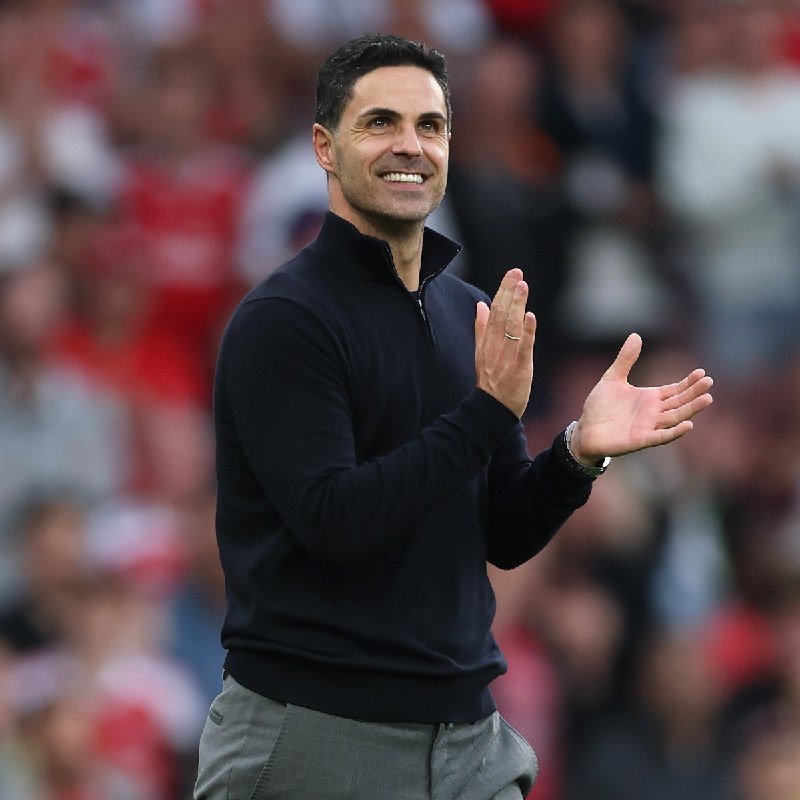
The mathematics are unforgiving. As Manchester City continue to stumble through their final fixtures, Arsenal find themselves with one hand on the Premier League trophy. The Gunners now control their own destiny—a position this club has rarely occupied in the modern era. But what does this mean for the broader landscape of English football's established hierarchy?
This is not merely a story about one club winning and another losing. This is about the shifting dynamics of power in the Premier League—how financial dominance, squad depth, and managerial psychology interact to determine champions. Arsenal's ascendancy, if it materializes, would represent something more than a sporting achievement. It would signal a potential realignment of English football's established order.
The Title Race in Black and White
The Telegram post from The Athletic on 4 May 2026 cut to the heart of the matter with characteristic precision: Manchester City had dropped points, and Arsenal were suddenly in the driving seat. The implications were stark. With two matches remaining, the Gunners needed four points from their final fixtures to secure a first league title in twenty years. They had seized the initiative not through luck, but through a relentless run of results that had exposed cracks in City's armour.
The numbers told a story of contrasting trajectories. Arsenal had won their previous five matches, keeping four clean sheets. City, by contrast, had won just two of their last four league games—a sequence that would have been unthinkable for a Pep Guardiola side fighting for silverware. The usually lethal Erling Haaland had gone quiet when it mattered most, his expected goals tally falling well short of his season average in the crucial run-in.
This was not a collapse in the traditional sense. City remained dangerous, their superior goal difference meaning they would retain the title if both clubs finished level on points. The margin between triumph and failure had narrowed to a razor's edge. But the momentum had shifted unmistakably toward North London.
The Counter-Narrative: Why the Established Order Remains Unbroken
It would be easy to frame this as a story of decline—of City finally succumbing to the weight of expectation that has defined their unprecedented run of success. The counter-argument deserves equal weight.
Guardiola's side have been in this position before. In 2011-12, they recovered from a late-season deficit to win the title on goal difference. In 2018-19, they overcame a Liverpool side that had accumulated 97 points. The City's machine is designed to grind out results when the pressure mounts, and their squad depth remains superior to Arsenal's in several key positions.
The dropped points against Wolves—the Telegram source references this setback—may prove to be an aberration rather than a trend. Kyle Walker, Ruben Dias, and Rodri had returned to fitness at precisely the right moment. If Kevin De Bruyne regained his best form for the final fixtures, City's attacking output would become exponentially harder to contain.
Arsenal's own vulnerabilities merit examination too. Their victory margin in recent matches had been narrow—often 1-0 or 2-1 against sides parking the bus. Bukayo Saka and Martin Ødegaard carried significant creative burden; neither had the luxury of rotation. A single injury in the final fortnight could unravel everything the Gunners had built.
Structural Forces: How the Financial Architecture Enables the Shift
The title race's competitiveness reflects deeper changes in the Premier League's economic model. Broadcasting revenues have grown substantially over the past decade, with even lower-placed clubs receiving payouts that would have seemed fantastical in the early 2000s. This redistribution of wealth has narrowed the gap between the traditional big six and the chasing pack.
Arsenal's rise cannot be understood without reference to their strategic overhaul. Under Mikel Arteta, the club had shifted from celebrity marquee signings to a model built on data-driven recruitment, youth development, and salary rationalisation. Declan Rice's £105 million transfer in 2023 looked excessive when announced; by May 2026, it seemed like the bargain of the decade. The club had learned to spend smarter, not just more.
City, meanwhile, had built their dynasty on a different foundation—the financial firepower to acquire the world's best players regardless of market conditions. Their model was not inherently wrong; it had produced four consecutive titles. But it required constant reinvestment, and the margins for error had grown thinner as competitors had closed the spending gap.
The structural implication is significant. A league where Arsenal can challenge City on equal terms is a league where the financial architecture has succeeded in its stated goal of competitive balance. Whether that constitutes a triumph for the sport or a dilution of elite excellence remains a matter of perspective.
Stakes and Forward View: What the Next Two Weeks Decide
The stakes extend beyond the immediate question of who lifts the trophy on 25 May 2026. For Arsenal, a title would validate a project that has spanned five years of careful rebuilding. It would demonstrate that sustainable success—built through coaching continuity, recruitment discipline, and tactical cohesion—is achievable even against clubs willing to spend without constraint.
For City, the implications are more complex. Another title would preserve their dynasty, but a failure would raise questions about squad renewal and tactical adaptation that have never before been asked of Guardiola's reign. The pressure on City had always been to win; the prospect of losing gracefully was unexplored territory.
For the wider league, the title race's conclusion will shape summer transfer strategies and managerial appointments across the division. A Gunners triumph would embolden mid-tier clubs to pursue long-term projects over quick-fix signings. A City recovery would reinforce the existing hierarchy, justifying continued investment in elite talent.
The uncertainty remains genuine. Sources do not provide sufficient data to declare a winner with confidence. What can be stated with certainty is that the final fortnight will reveal whether football's power shift is underway or whether the established order retains its grip. The mathematics are unforgiving. The drama is inescapable.
This publication's coverage prioritises the sporting narrative over the financial one, focusing on competitive dynamics rather than transfer market rankings.
Wire provenance
This editorial synthesis draws on the following public wire/social posts:
- https://t.me/TheAthletic/9991
- https://t.me/TheAthletic/9990
- https://t.me/TheAthletic/9989
- https://t.me/TheAthletic/9988