Bengal's Verdict Is a Wake-Up Call — for Delhi as Much as Kolkata
The 2026 West Bengal assembly results confirm something the BJP's northern victories obscured: India does not always vote the way Delhi expects it to, and the reasons matter more than the margins.
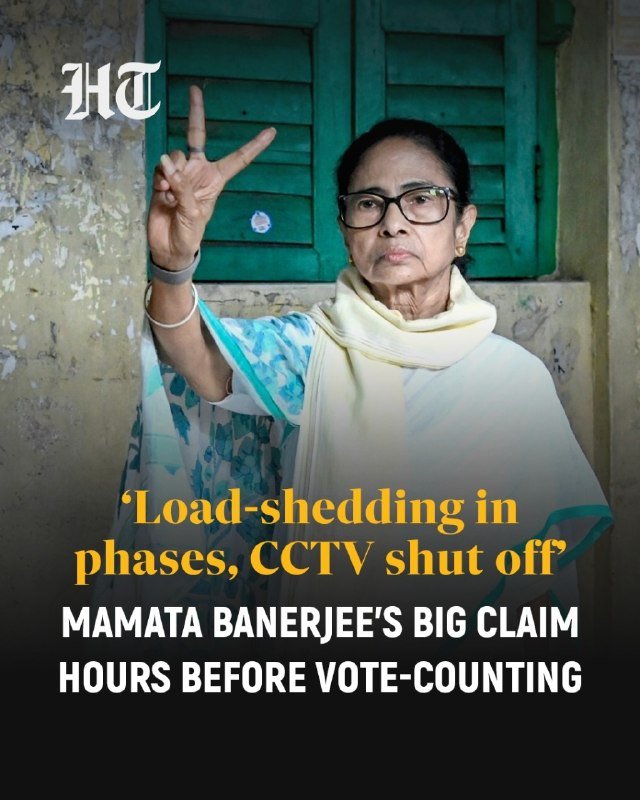
There is a particular kind of electoral surprise that India's political class finds hardest to absorb: not the upset in a marginal seat, but the decisive repudiation of a well-funded, well-organised national campaign. West Bengal's assembly results, finalised in the early hours of 4 May 2026, were that kind of surprise. The Bharatiya Janata Party spent two years and considerable resources building a Bengalis-against-Mamata-Banerjee narrative. Bengal's voters disagreed, and they disagreed by margins that left little room for equivocation.
The Indian Express's constituency-by-constituency tracking, published across the night of 3 May, told a consistent story across more than twenty districts: the Trinamool Congress held its core vote, expanded in pockets the party had previously ceded to the Left Front, and prevented any meaningful saffron breakthrough in the constituencies where the BJP had concentrated its campaign. This was not a narrow escape. It was a replication — in a different electoral cycle, against a better-resourced opponent — of the pattern Bengal has delivered before.
The BJP's Northern Arithmetic Doesn't Travel
The assumption driving the BJP's Bengal strategy was not complicated: national momentum, combined with a Hindutva message calibrated for a post-2019 electorate, should cut through regional identity wherever it is deployed with sufficient intensity. The logic worked in Uttar Pradesh, in Gujarat, in parts of the Northeast. The party spent heavily on direct outreach, cultivated local leaders who had broken from TMC, and deployed senior cabinet ministers for repeated visits across the state.
What that assumption failed to account for was the texture of Bengali political culture — a blend of regional linguistic identity, institutional memory of the Left's 34-year dominance, and a particular scepticism toward any political force that presents itself as having all the answers. Bengal has seen centralised national parties come before. The BJP's pitch, however slickly executed, arrived in a market where voters have developed their own filters.
The counterargument — that the BJP made real inroads at the municipal and Lok Sabha level — is not trivial. The party has climbed from a near-zero base in Bengal over the past decade. But assembly-level politics operates on different terrain. Local leaders, personal networks, and delivery on constituency-specific promises matter more than national narrative. On that terrain, TMC's ground organisation, for all its documented dysfunctions, proved more durable than Delhi's strategists had projected.
What the TMC Win Does Not Settle
It would be easy, in the aftermath of a decisive result, to treat the verdict as a clean endorsement of everything Mamata Banerjee's government has done. That would be a mistake of the same kind the BJP made going in. Bengal voted against a BJP takeover, in conditions that were favourable to the opposition — high unemployment, inflation pressures, and the inevitable fatigue that attaches to any long-serving government. The margin tells us about the ceiling of the anti-incumbent vote, not the floor of the government's approval.
Several constituencies where TMC won narrowly — Sitalkuchi, Singur, Katwa — will require the party to do more than celebrate. Sitalkuchi in particular, a seat associated with the 2021 post-poll violence, has been a reference point for opposition charges of political intimidation. That the Congress and the Left Front both ran competitive campaigns there, without either making a breakthrough, suggests a voter behaviour that is pragmatic rather than enthusiastic: choosing the least worst option, rather than endorsing the winner.
The sources do not specify exact margin data, but the pattern across constituency tracking pages indicates TMC holding in urban and semi-urban seats while running narrower margins in several districts the party had previously considered safe. The party won. Whether it won well is a separate question the results alone do not resolve.
The National Frame vs. the Regional One
Indian election coverage has a persistent problem with telescopic vision: national outlets treat state results as proxies for national trends, reading every assembly verdict through the lens of the next general election. West Bengal's 2026 results have already generated analysis pieces asking whether the BJP's failure there signals a ceiling on the party's national coalition.
The framing is not wrong, exactly. A BJP that cannot win Bengal — and Bengal sends 42 MPs to Lok Sabha — is structurally disadvantaged in any national arithmetic requiring a two-thirds majority. But the framing is incomplete. Bengal's voters were not making a statement about the national mood. They were making a statement about Bengal. The distinction matters because it suggests the limits of what national parties can import into regional political cultures, even with unlimited resources and a disciplined message.
India's electoral map has always been more heterogeneous than the national parties prefer. The BJP's success has obscured this, by normalising the idea that the right message, applied consistently, can overcome local particularities. Bengal says otherwise, as do several other states where regional parties continue to hold ground that national formations cannot dislodge. This is not a bug in India's democracy. It is the mechanism by which the country manages its diversity without the kind of ethnic mobilisation that other large, diverse democracies have struggled to contain.
The Stakes Ahead
The BJP will absorb these results and adjust. The party does not typically accept setbacks without response. The question is whether the adjustment involves a recalibration of the Bengal strategy — more resources, different messaging, a longer-term cultivation of local leaders — or a decision that the investment does not justify the return, and that those resources are better deployed in states where the path to a majority is more direct.
For TMC, the stakes are different but no less pressing. A state-level party that cannot translate consecutive assembly victories into governance improvements — reliable electricity, functioning schools, jobs for a young population that increasingly looks to Kerala, Karnataka, or abroad — will eventually exhaust the reservoir of anti-BJP sentiment that has sustained it. Bengal's political map is crowded. The Left, though diminished, is not absent. The Congress has occasionally shown the ability to contest seats effectively when it invests there. TMC's mandate is contingent on delivery, and the margin of the 2026 win should be read as a warning as much as a validation.
West Bengal's voters have delivered a clear message: this is our politics, and national parties will engage with it on those terms, or not at all. That message deserves to be taken seriously — in Kolkata and in Delhi alike.