Chevron Sounds Alarm as US Escort Mission Tests Iran Strait Threat
The head of one of America's largest energy companies told Arabic-language media on 4 May that closure of the Strait of Hormuz would cause an oil supply crunch, as the US Navy visibly escorted a commercial vessel through the waterway — a signal to Tehran that the passage will not go unguarded.
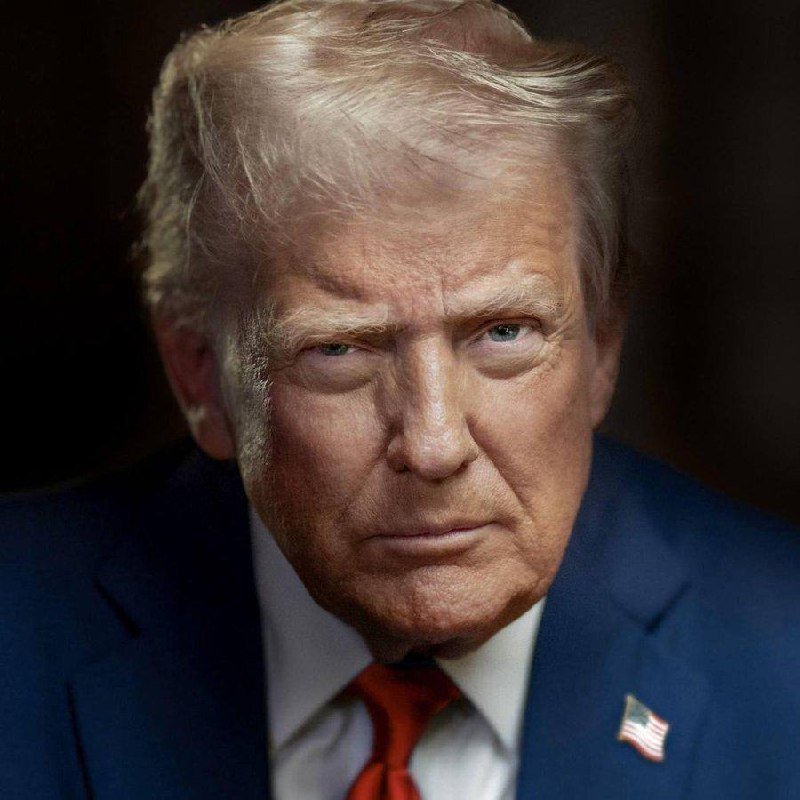
The chairman of Chevron told Al Alam Arabic on 4 May 2026 that a closure of the Strait of Hormuz would produce a visible shortage in global oil supplies. The warning landed hours after US destroyers attempted a passage through the strait, and a Maersk-operated commercial vessel successfully crossed the waterway under American naval escort — a sequence of events that put the world's most critical energy chokepoint at the centre of a charged geopolitical moment.
Chevron's position as a major operator across the Gulf states gives the chairman's assessment unusual weight. The company holds significant production stakes in Kuwait, the UAE, and Qatar, and any disruption to the Hormuz corridor would bite directly at its upstream portfolio. That the warning came in an Arabic-language interview — rather than a managed press release — suggests the company wanted its signal received across regional capitals as well as Western markets.
The timing matters. Iran's nuclear programme remains a live negotiating file in Vienna, with the Trump administration having re-escalated sanctions pressure in early 2026. The Hormuz strait — roughly 34 kilometres wide at its narrowest point between Oman and Iran — carries roughly 20 percent of global oil trade and 20 percent of liquefied natural gas flows, according to US Energy Information Administration data. Threatening its closure is a documented instrument in Tehran's political toolkit, deployed during previous rounds of sanctions intensification. What is less documented is how a US escort operation factors into the calculus.
A Signal, Not Just a Passage
Open-source intelligence on 4 May captured footage of US destroyers transiting the strait. Separately, the shipping company Maersk announced — with corroborating visual material — that one of its vessels had crossed the waterway without disturbance under American naval protection. The two events, taken together, read as a deliberate American message: free passage will be enforced, and commercial operators who seek protection will receive it.
The US Fifth Fleet, based in Bahrain, has long maintained that freedom of navigation through the strait is a non-negotiable interest. What has changed in recent months is the operational visibility. Shipping companies operating in the Gulf typically maintain radio silence on their movements; a public Maersk statement accompanied by footage is an unusual step. Either the company sought to reassure markets, or it was encouraged to demonstrate the passage was open. Neither explanation is comforting in isolation.
For energy markets, the stakes are immediate. Brent crude rose on the news, though not sharply — traders appear to be waiting for an actual disruption rather than pricing a hypothetical one. The Chevron chairman's framing, however, suggests the supply cushion is thinner than the price reaction implies. Gulf producers have been running high utilisation rates for two years as Asian demand — particularly from China and India — has sustained elevated throughput. That leaves less slack in the system than in previous episodes of Hormuz-adjacent tension.
Tehran's Calculus
Iran has significant incentive to keep the strait open for its own exports. The Islamic Republic exports oil primarily through terminal facilities on Kharg Island and via ship-to-ship transfers in the Gulf itself. Closure would inflict self-harm as well as external pressure. That structural reality has historically kept full closure off the table, even as Tehran has periodically threatened it.
The current moment, however, is different in one respect: the sanctions regime has already sharply curtailed Iranian oil exports. With nominal export volumes reduced to a fraction of pre-2018 levels, the marginal cost of a Hormuz threat has shifted. Tehran can threaten disruption at lower self-inflicted cost than when it was exporting 2.5 million barrels per day. US intelligence assessments have flagged this shifted incentive structure in recent months, and the escort operation appears calibrated against it.
The counter-argument is that a provoked Iranian response — even a partial one, targeting non-US flagged vessels or deploying naval assets to create harassment rather than blockage — would achieve Tehran's goals without requiring the full step of closure. Shipping insurance premiums in the Gulf are already elevated. A wave of incidents would price smaller operators out of the corridor without a single mine being laid.
Structural Context: Energy Security in a Multipolar Moment
The Hormuz episode sits inside a larger pattern that energy analysts have been tracking since 2024: the erosion of the US-led security guarantee as an implicit stabiliser of global oil markets. For decades, American naval presence in the Gulf functioned as a sort of insurance policy — assuring producers and shippers that the physical infrastructure of the market would remain intact. The assumption was embedded in freight pricing, in insurance contracts, in the strategic behaviour of state-owned producers willing to hold spare capacity rather than build it.
That architecture is under pressure from multiple directions simultaneously. Domestic US politics have reduced appetite for Gulf military commitments; the 2025 budget cycle saw further marginal cuts to Fifth Fleet operations. Meanwhile, Gulf producers themselves have been diversifying their customer bases — Saudi Aramco and ADNOC have signed long-term supply agreements with Chinese refiners that bypass the dollar-denominated spot market entirely. When the buyer and seller have a direct relationship, the US escort loses some of its structural value to both parties.
The Chevron chairman's warning, in this reading, is less a tactical alert and more a structural signal: the assumption of stable Hormuz transit is no longer automatically safe. Companies that price energy logistics on historical norms are underestimating the new variance.
What Follows
The immediate question is whether additional commercial vessels request US escort. Maersk's public move makes that more politically feasible for other operators — the precedent has been set. If convoy-style operations become routine, the Hormuz no longer functions as a transit corridor with a de facto American guarantee; it becomes an active theatre of US naval presence. That reclassification has consequences for insurance, for freight rates, and for the broader norm of Gulf neutrality that has governed regional energy politics for forty years.
Whether Tehran escalates, stands down, or chooses the intermediate option of harassment will define the next phase. The Chevron chairman's language — sharp, unhedged, issued outside the usual investor relations channels — suggests the industry believes the probability of a meaningful disruption is no longer negligible. Markets have not yet priced that probability fully. That gap, not the Hormuz footage, may be the most consequential element of the week.
This publication covered the Chevron warning and the US escort operation primarily through Telegram and open-source intelligence channels, which produced faster visual corroboration than the wire services on the day. The strategic framing draws on standard energy-security analysis rather than on named academic models.
Wire provenance
This editorial synthesis draws on the following public wire/social posts:
- https://t.me/alalamarabic
- https://x.com/sprinterpress/status/1920197304862294016
- https://t.me/osintlive