The Doctrine of Certainty: How Tehran Frames Faith as a Counter to Western Power
Mehr News Agency publishes an analysis crediting 'faith' and 'Iman' with halting Western military capabilities in 40 days — a claim that reveals more about Tehran's self-narrative than any battlefield calculus.
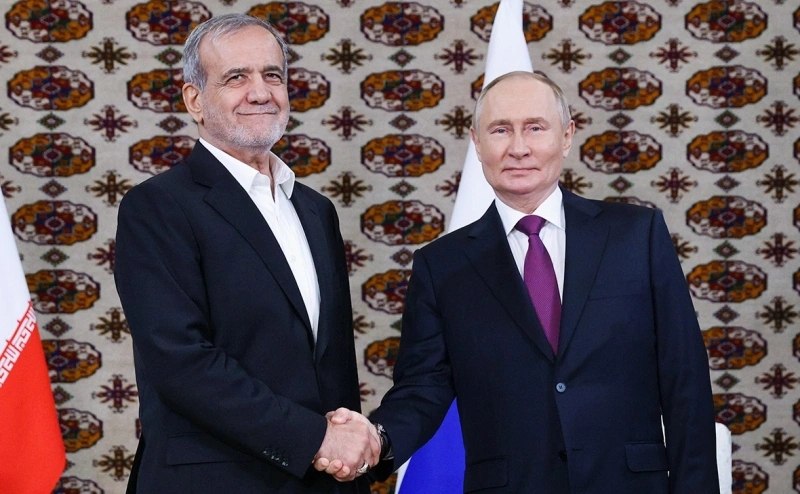
Mehr News Agency published an analysis on 4 May 2026 making a sweeping claim: that what it termed "Iman" — loosely, spiritual conviction — stopped the Western war machine in 40 days. The piece, carried under the headline "Doctrine of Certainty," argued that the United States and its allies deployed smart bombs, cognitive warfare, and media operations against Iran across four decades, only to find those tools deflected by an ideological architecture Tehran built specifically to resist external pressure. The claim is arresting, even by the standards of Iranian state media's常年 rhetorical register. It is also, upon examination, less a strategic analysis than a piece of cultural self-congratulation — one that reveals how Tehran communicates its resilience narrative both to domestic audiences and to the broader non-Western world.
The Mehr News analysis arrives at a moment of renewed scrutiny of Western Iran policy. Sanctions have compounded over successive administrations; military deterrence has remained constant but inconclusive; the nuclear programme has survived decades of negotiations, withdrawals, and re-negotiations. From Tehran's vantage, that survival looks like vindication. From Western capitals, it looks like a problem without resolution. The truth, as usual, sits uneasily between the two framings — and the Mehr News piece, by treating Iran's ideological infrastructure as the decisive variable, elides the structural conditions that have made direct confrontation costly for outside powers.
The Shape of the Claim
The "Doctrine of Certainty" analysis rests on several interlocking assertions. First, that Western military superiority — particularly American air power and precision munitions — was tested against Iran and found wanting. Second, that cognitive and media warfare, rather than kinetic action, became the primary lever of pressure after the initial confrontations. Third, that Iran developed a counter-doctrine rooted in ideological cohesion that neutralised those levers. The piece frames "faith" specifically as the variable that Western planners failed to model for — an element that made cost-benefit calculations on the adversary side behave unpredictably.
Western observers would note several problems with this framing. The Iran-Iraq War of the 1980s — a decade-long grinding conflict that killed hundreds of thousands on both sides — hardly constitutes a Western defeat. The absence of direct US-Iranian military confrontation after 1988 owes more to the absence of a casus belli that would survive international scrutiny than to any doctrinal failure of Western weapons. The sanctions architecture that has constrained Iran's economy was, until the 2018 JCPOA withdrawal, producing measurable pressure. That withdrawal, from Tehran's perspective, validates the resilience narrative; from Washington's, it was a calculated reassertion of leverage that has yet to fully resolve.
What the West Gets Wrong — and What Tehran Gets Wrong
The Mehr News framing is not entirely wrong. It is correct that Western analysts have consistently underestimated the durability of Iranian institutions, the coherence of the Islamic Revolutionary Guard Corps' external operations, and the degree to which anti-Western sentiment functions as a legitimising ideology within Tehran's political structure. The 2019 protests, the 2022 unrest following Mahsa Amini's death, and the recurring waves of economic discontent have not, however, produced the regime change Western policymakers have periodically anticipated. The ideological scaffolding Mehr News celebrates has real effects — it provides a language of resistance that resonates beyond the clerical class, and it frames external pressure as aggression rather than legitimate international concern.
But the framing also carries costs for Tehran. Treating "faith" as the decisive variable implies that material conditions — oil revenues, smuggling networks, sanctioned banking channels, the patronage relationships with Hezbollah, the Houthis, and Shia militias across the region — are secondary. They are not. The regime's survival owes as much to pragmatic adaptation as to ideological conviction. When economic necessity forced pragmatic compromises — uranium enrichment programme pauses under international pressure, selective cooperation with international inspectors — the ideological narrative strained to accommodate them. The "Doctrine of Certainty" paper does not grapple with these contradictions; it presents a cleaner story than the record supports.
The Regional Information Environment
What the Mehr News analysis does accomplish, however, is illuminate a genuine shift in the information warfare landscape. Iranian state media outlets have become increasingly sophisticated in positioning Tehran's perspective for international audiences. The multilingual output of Press TV, the Arabic-language operations of Al Alam, and the English-language content of agencies like Mehr News itself represent a deliberate effort to contest Western narratives in the broader Global South. The "Doctrine of Certainty" piece is calibrated for that audience: it offers a legible explanation for why Western pressure has failed to achieve its stated objectives, framed in terms that resonate with societies that have their own histories of external intervention.
This is not propaganda in the crude sense — it is narrative architecture. It provides a template for interpreting events that readers in Iraq, Lebanon, Yemen, or parts of Africa can apply to their own contexts. That reach is what makes the piece culturally significant beyond its specific claims about Iran. Western communicators have struggled to produce equivalent narrative frameworks — frameworks that explain the post-1945 order's value to societies that experienced colonialism without reducing the explanation to abstract universalism. The Mehr News piece, whatever its analytical weaknesses, does not make that mistake. It speaks from a particular historical experience, rooted in specific losses and humiliations, and it speaks to that experience directly.
The Stakes of the Framing
If the "Doctrine of Certainty" narrative gains traction in the wider region, it does several things. It validates Iran's self-image as a model for resistance. It provides rhetorical ammunition to proxy networks — Hezbollah, the Houthis, Kataib Hezbollah — who already frame their activities in terms of ideological struggle against Western encroachment. It complicates diplomatic pathways by presenting compromise as capitulation. These are not trivial consequences.
For Western policy, the challenge is not to disprove the Iranian narrative — narratives are not subject to empirical disproof — but to produce a more compelling account of why the international order, as currently configured, serves the interests of states that have historically been peripheral to it. That task has proven harder than the military and economic dimensions of the Iran problem. The Mehr News piece, for all its self-serving logic, at least attempts to tell a coherent story. Whether Western communicators can do the same, in terms that resonate beyond their own capitals, remains the unresolved question.
This publication covered Mehr News Agency's framing of Iranian resilience doctrine as stated. Western assessments of Iran's institutional durability and the efficacy of pressure-based policies are represented in the counter-framing sections above, drawing on documented policy outcomes and publicly available diplomatic history.
Wire provenance
This editorial synthesis draws on the following public wire/social posts:
- https://t.me/mehrnews