The Dollar's Quiet Surrender: Wall Street Is Betting Against Its Own Hegemony
Three stories broke over 48 hours that the market treated as separate. Taken together, they describe something far more consequential: a financial architecture quietly rewriting its own rules while its architects pretend not to notice.
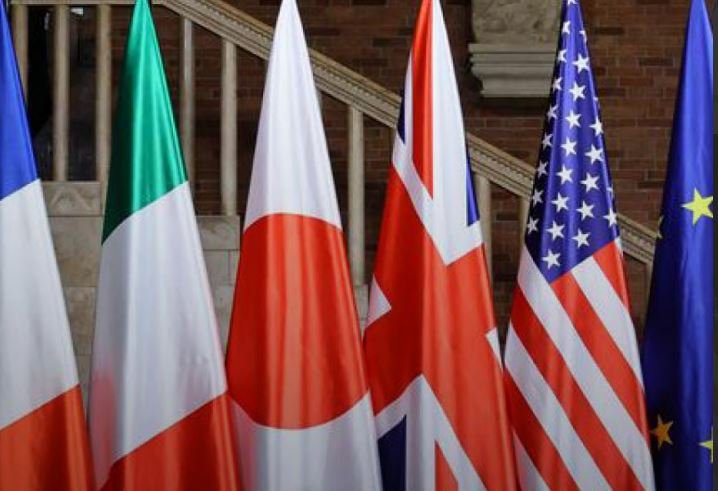
Three stories broke over 48 hours in early May 2026. The market treated them as separate. Goldman Sachs posted its best quarter in five years; the NYSE moved toward trading tokenized securities alongside traditional equities; and — quieter, but arguably most significant — Beijing instructed Chinese firms to disregard American sanctions on refiners handling Iranian oil. On the surface, these events belong to different sectors: investment banking, technology infrastructure, and geopolitical brinkmanship. But they share a common substrate. They all describe a financial order that is rewriting its own operating assumptions while the people nominally in charge of maintaining them pretend otherwise.
The dollar's role as the world's reserve currency has always rested on two pillars: the credibility of American enforcement mechanisms, and the willingness of market participants to price in dollar-denominated risk. Sanctions are the enforcement end of that arrangement. When you can cut a country, a company, or an individual off from the dollar settlement system, you dictate who can participate in global trade. That leverage has been American diplomacy's most potent tool for decades. China's instruction to domestic refiners to ignore those sanctions — to continue processing Iranian crude despite American blacklisting of the refiners involved — is not a rhetorical challenge. It is a functional rerouting. Chinese state-adjacent and private-sector entities are betting that the enforcement will not follow, or that the consequences of following are worse than the consequences of being caught. That is a rational bet. The American Treasury has sanctioned with enthusiasm and enforcement with considerably less bandwidth. The structural implication is that dollar dominance is being stress-tested in the one domain where it is most consequential: energy trade.
The Tokenization Gambit
The NYSE's reported move toward tokenized securities trading is the more technical but arguably more durable development. The exchange is preparing infrastructure to allow digital assets — tokenized equities, bonds, or other instruments — to trade on the same platform as their conventional counterparts. This is not a crypto novelty. It is a reclassification question. If major exchanges begin treating digital equivalents of conventional securities as a normal part of the order book, they create the operational foundation for assets whose settlement does not require correspondent banking rails denominated in dollars. Tokenized securities can be designed to settle on distributed ledgers with their own internal finality. The dollar is still present in the underlying accounting layers for now, but the architecture is being prepared for a world where that dependency is optional. The NYSE moving in this direction is not a political act. It is a commercial calculation — the exchange protecting its relevance in a market where the instruments it has always listed are being reimagined. But commercial calculations, aggregated across the industry, produce structural change.
The AI Infrastructure Build-Out
KKR's reported $10 billion commitment to AI-dedicated power plants and data centers is, on its face, a straightforward investment thesis. Compute is the scarce resource; power is the constraint on compute; owning the power-and-compute stack is the logical vertical integration. What gets less attention is the energy geopolitics embedded in that commitment. AI infrastructure at that scale requires reliable, cheap electricity. It requires grid stability, long-term power purchase agreements, and physical proximity to cooling capacity. That narrows the viable geography for where such infrastructure can be built. It also creates demand for energy infrastructure that competes with industrial and residential consumption in ways that will generate political friction. KKR is not building this capacity in a vacuum. It is building it in a world where the data center build-out has already triggered debates about grid capacity in Virginia, Texas, Ireland, and the Netherlands. $10 billion is a signal, not just an investment. It tells us the private equity consensus is that AI infrastructure is a generational asset class — and generational asset classes reshape the jurisdictions that host them.
The Ethereum Queue and What It Signals
The Ethereum staking queue — a reported 72,000 percent spike in pending unstakes over two weeks as of early May 2026 — is the most esoteric of the three signals, and potentially the most revealing about where institutional capital is looking. A sharp spike in unstaked ETH typically means large holders are moving assets toward liquidity. It could reflect profit-taking ahead of a market event, reallocation toward liquid alternatives, or simply an expectation that staked ETH will underperform in the near term. What it tells us operationally is that the Ethereum network — the most institutionally adjacent of the major public blockchain networks — is being read as a liquid instrument, not a lockbox. That reading is a recent innovation. Five years ago, ETH staking was a technical curiosity. Now it is a queue to exit. The speed of that reclassification, and the capital it represents, is itself a measure of how quickly financial instruments are being reassessed against new infrastructure. Blockchain infrastructure is now a venue for institutional positioning.
What the Pattern Means
None of these events is unprecedented in isolation. Sanctions have been dodged for as long as they have existed. Exchanges have listed new instrument types throughout their history. Private equity has made large infrastructure bets before. The significance lies in the simultaneous character of the developments, and in what they collectively suggest: that the financial infrastructure underpinning dollar hegemony is being rebuilt by commercial actors who are not primarily motivated by preserving that hegemony. The NYSE is tokenizing securities to stay relevant, not to undermine the dollar. KKR is building AI power plants for a return, not to challenge American energy architecture. Chinese refiners are processing Iranian oil because it is profitable, not because Beijing has declared war on the petrodollar. But the aggregate effect of all these decisions, taken together, is a financial system that is less dependent on American enforcement, less anchored to dollar-denominated settlement, and more tolerant of parallel systems running simultaneously. The dollar remains the dominant reserve currency. That fact is not in dispute. What is in dispute is the assumption that dominance is permanent rather than contingent — and the gap between those two framings is where the real risk sits. The institutions that benefit most from the current arrangement are quietly preparing for a world where that arrangement is one option among several. That preparation is not conspiratorial. It is prudent. And prudent adaptation, multiplied across thousands of firms and millions of decisions, is how hegemonies end — not with a crisis, but with a quiet migration.
Monexus covers this cluster of stories as a convergence of commercial and geopolitical signals rather than a single narrative. The Goldman Sachs earnings, the NYSE tokenization move, and the China sanctions defiance belong to the same structural conversation even as the market has so far treated them as disconnected data points.
Wire provenance
This editorial synthesis draws on the following public wire/social posts:
- https://t.me/Cointelegraph/11409
- https://t.me/Cointelegraph/11410
- https://t.me/Cointelegraph/11411
- https://t.me/Cointelegraph/11412
- https://t.me/Cointelegraph/11413