Dubai Air Alert Tests Ceasefire as Regional Tensions Resurface
Dubai issued its first missile threat alert since a regional ceasefire took hold, with three anti-missile launches recorded over the emirate on Monday, raising questions about the durability of the truce and the willingness of Iranian-aligned groups to test its limits.
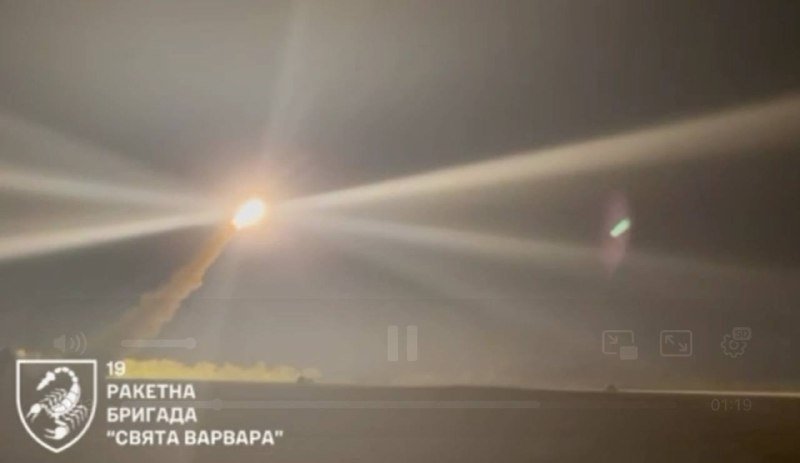
For the first time since a fragile regional ceasefire took hold, Dubai was placed under missile threat alert on Monday, 4 May 2026, according to local media and open-source intelligence monitors tracking the Gulf. Three anti-missile interceptor launches were recorded over the emirate as sirens sounded in the city. No strikes on the ground were immediately confirmed, and the alert was lifted within the hour, but the incident broke what had been, for weeks, an uneasy quiet over the UAE's commercial capital — a city that had largely stayed outside the most intense phases of recent regional hostilities.
The timing is significant. The alert came as ceasefire negotiations — brokered across multiple diplomatic tracks involving Qatar, Oman, and in some sessions Egypt — appeared to be stalling on verification mechanisms and the status of weapons flows to Iranian-backed groups. That stalling appears to have given regional actors room to probe.
What the Sources Show
The Telegram channels monitoring Gulf security — including osintlive and wfwitness — tracked three distinct interceptor launches visible from ground-level footage in the Dubai metropolitan area. UNIAN, a Ukrainian wire service with regional correspondents, reported a missile threat declared by local media. The Tsaplienko channel, which monitors regional aerospace activity, flagged it as a first: no similar alert had been recorded since the ceasefire framework was established.
Independent confirmation of the alert's cause — what kind of projectile triggered the response, and from which direction — is not yet available in the wire sources. The UAE Armed Forces have not issued a public statement as of the time of this reporting. That absence matters: Gulf states, particularly the UAE, have in prior regional escalations chosen operational silence over public threat disclosure, in part to avoid panic in markets and among the expatriate communities who make up a majority of the population.
What We Verified / What We Could Not
Verified: A missile threat alert was issued in Dubai on 4 May 2026 at approximately 13:07 UTC. Three anti-missile interceptor launches were recorded visually over the city. No ground impact was reported in the wire record. This was the first such alert since the regional ceasefire took effect.
Not verified: The origin and type of the projectile or projectiles that triggered the alert. Which state or non-state actor launched them. Whether the interception was fully successful. Whether any debris fell inside populated areas. The UAE Armed Forces have not publicly attributed the incident.
Structural Frame
The incident sits inside a pattern that Gulf analysts have been watching for months: the ceasefire, while holding in its broad architecture, was always understood to be a pause rather than a resolution. Iranian-aligned groups operating from Yemen, Iraq, and — in earlier phases — from Lebanese territory have not disarmed. Verification mechanisms remain under-negotiated. And the UAE, which shares a relatively open posture toward both Western military partners and quieter diplomatic engagement with Tehran, occupies an awkward position: it is covered by the ceasefire's security guarantees, but those guarantees depend on actors on both sides honouring their commitments.
What happened in Dubai on Monday — if it was indeed an Iranian-aligned launch — represents a clear test of the Iranian side's willingness to hold its proxy network in check. Whether the launch came from a group acting with Tehran's explicit knowledge, on a semi-autonomous impulse, or as a deliberate signal from the Islamic Republic itself is the central question regional capitals are now working through. Each scenario carries different implications for how the ceasefire holds.
The broader pattern is not unique to the Gulf. Across other active conflict theatres in recent years — Ukraine, the South China Sea — ceasefires have repeatedly been tested at their geographic and political margins: places where the ceasefire line runs through contested territory, where actors on the losing side of the military balance have an incentive to probe, and where the international community's attention is partial rather than consistent. The Gulf is no different in that structural logic.
Stakes
The immediate stakes are credibility. If the ceasefire's guarantor states — Qatar, Oman, the broader Arab Quartet states that had been aligned against Iran — cannot produce a response that deters further probes, the ceasefire framework risks becoming a formal arrangement with diminishing substance. That matters for commercial markets: Dubai hosts trillions of dollars in real-estate investment, sovereign wealth assets, and a hospitality sector that depends on a basic sense of security. Any sustained deterioration in the threat perception has outsized consequences for the local economy relative to the military scale of what triggered it.
For Washington and its regional partners, the incident forces a question they have been deferring: whether to expand the security architecture covering Gulf states to include explicit missile defence commitments and active monitoring of Iranian-aligned launch activity. For Tehran, the calculation is whether the political cost of a probe — which can be disavowed — is worth the diplomatic signal it sends about limits of the ceasefire framework. On current evidence, that calculation has landed in favour of testing.
The ceasefire, in other words, is not broken. But it is being tested, and the way that test is answered in the next seventy-two hours will determine whether it holds as a genuine framework or becomes a temporary arrangement before a further round of escalation.
—
This article draws on open-source intelligence monitoring and regional wire reporting. Monexus will continue tracking developments as UAE Armed Forces statements and diplomatic briefings become available.
Wire provenance
This editorial synthesis draws on the following public wire/social posts:
- https://t.me/wfwitness
- https://t.me/osintlive
- https://t.me/uniannet
- https://t.me/Tsaplienko