Escalation as Doctrine: When Both Sides Believe They Are Being Provoked
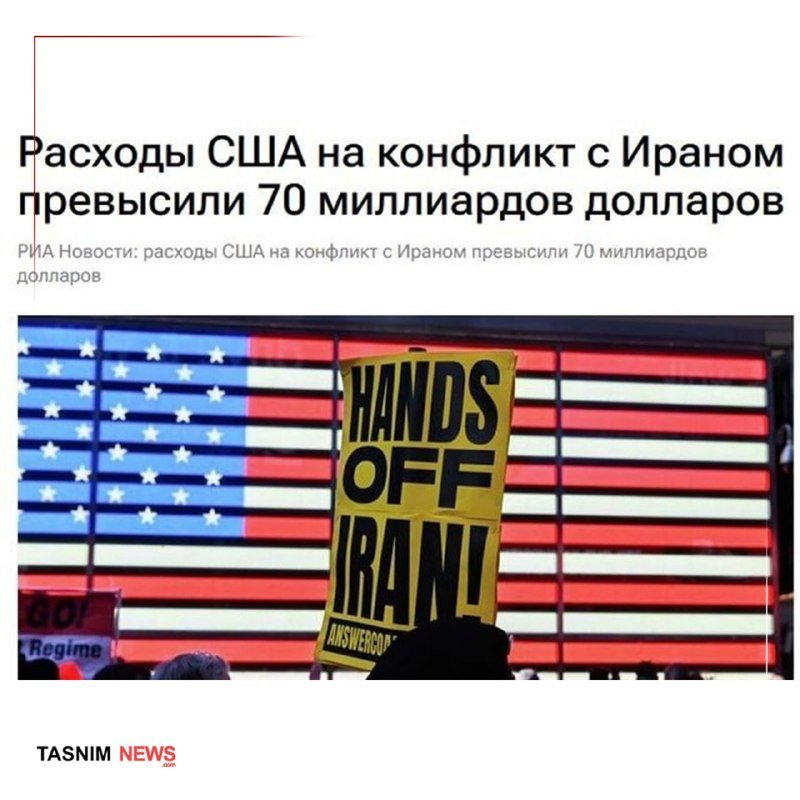
On 4 May 2026, the Trump administration delivered what it framed as a deterrent: the United States would, in the president's stated terms, "wipe [Iran] off the face of the earth" if Tehran attempted to assassinate American officials or responded violently to domestic protests. The phrasing carried the hallmarks of a public ultimatum — specific, visceral, and timed for maximum signal value. Within hours, Tehran's response was equally legible: a proposed draft law permanently banning Israeli vessels from Iranian waterways and denying transit to nations deemed hostile due to their alliance with the United States, alongside an explicit statement that Iran would strike preemptively against US warships and other targets if it perceived an imminent threat. Neither side appeared to be bluffing. That is the problem.
The pattern emerging from these simultaneous escalations is not hard to read. On one side, a second Trump administration pursuing what it presents as maximum pressure — the original maximum pressure campaign of 2017-2021 failed to撬动 the nuclear agreement, and the calculation now seems to be that stronger language produces stronger leverage. On the other, an Iranian leadership that has watched sanctions intensify, regional peace architecture collapse, and what it reads as systematic encirclement — and has decided that deterrence requires preemptive clarity about willingness to use force. Each side is rational within its own frame. Together, they are on a trajectory toward a collision neither has fully calculated the costs of.
The Logic of Mutual Threat
The Trump ultimatum, as reported, rests on a deterrence logic: make the cost of any hostile Iranian action so catastrophically high that Iran will choose not to act. This is the same logic that produced North Korean nuclearisation — the belief that only the credible willingness to destroy a regime forces it to behave. The empirical record on this approach is mixed at best. Tehran has absorbed sweeping sanctions, watched its economic proxies squeezed, and endured a US assassination campaign that included General Qasem Soleimani. Each episode produced momentary pressure. None produced capitulation.
Tehran's preemptive-strike doctrine, as outlined in its statement, is equally deterrence-oriented — but it inverts the logic. Rather than threatening punishment after an event, Iran is signalling that it will act first if it believes attack is imminent. This is not irrational. A state that has watched a US drone eliminate a general on a foreign airport tarmac, that has seen what befell Iraq and Libya when they were assessed to lack second-strike capability, and that is surrounded by US-aligned militaries has structural reasons to conclude that waiting for an actual attack is not survival-maximising behaviour.
What Deterrence Looks Like When Both Sides Believe They Are Being Provoked
The problem with mutual deterrence is that it requires both sides to believe the other will back down before the threshold is crossed. When neither does — when each reads the other's escalation as evidence of bad faith rather than as a negotiating signal — the doctrine tips into its unstable cousin: brinkmanship without a defined floor.
The Israeli vessel ban is the element that most clearly signals this shift is not purely rhetorical. Iran's proposed draft law is not merely a political gesture — it is a legal mechanism that would restrict transit through the Strait of Hormuz, through which roughly a fifth of the world's oil passes. If enacted, it transforms a diplomatic dispute into a question of freedom of navigation with direct implications for global energy markets. The United States has historically responded to any threat to Hormuz transit with the language of existential necessity. Tehran knows this. The draft law is not a bargaining chip; it is an escalation on its own terms.
The framing each side uses matters too. Washington speaks of Iranian aggression as though it is the sole source of regional instability. Tehran speaks of American imperialism as though the regional order it built — and the sanctions architecture it constructed — poses the only credible threat to its survival. Neither framing is complete. Both are functional.
The Structural Vacuum Driving This Spiral
What sits beneath the specific ultimatums is a structural reality: there is no agreed framework through which the US and Iran communicate without preconditions. The Joint Comprehensive Plan of Action, the 2015 agreement that constrained Iran's nuclear programme in exchange for sanctions relief, was abandoned by the Trump administration in 2018 and has not been restored. Diplomatic channels have been thinned. Messaging passes through intermediaries, through back-channel leaks, through social media — and through the kind of public ultimatums that foreclose flexibility.
This matters because escalation requires off-ramps. When leaders make specific, public threats — when the statement is "wipe them off the face of the earth" — the political cost of walking the threat back rises sharply. The domestic political logic of maximum-pressure politics rewards escalation and punishes compromise. That logic is not confined to Washington. Iran's clerical leadership operates under its own version: revolutionary legitimacy requires demonstrating that Iran does not submit to external pressure. The harder Washington pushes, the harder Tehran must be seen to push back.
The Risks Ahead
The most immediate risk is miscalculation. A US warship operating in the Gulf receives an ambiguous signal that Iran is moving to inspect or intercept. A Revolutionary Guard commander, operating under the new preemptive doctrine, reads an approach pattern as imminent threat. The strike happens before Washington has processed the escalation. The response follows. The cycle accelerates.
A secondary risk is that regional actors exploit the vacuum. Israeli vessels are already subject to the proposed ban; if enacted and enforced, it hardens a new front in the already-volatile Israeli-Iranian shadow war. Gulf states watching this exchange have no incentive to moderate the competition — they are either aligned with Washington or sheltering under its deterrent umbrella. The structural incentive for every actor in the region is to escalate to the level where the superpower commitment becomes credible, regardless of whether that commitment is actually forthcoming.
The stakes for global energy markets are equally direct. Hormuz closure, or even credible threat of closure, sends oil prices sharply higher. US refineries, Asian importers, and European consumers absorb the shock. The economic damage redistributes across an already-fragile global recovery. That is not a secondary consequence — it is a lever Tehran holds and Washington cannot ignore.
Neither side wants direct war. That much seems clear. What is less clear is whether either side has a theory of the case for how to de-escalate without appearing to have blinked first. The public ultimatums of 4 May 2026 may prove to be negotiating positions dressed in their most extreme clothing. They may also be the opening moves of a confrontation neither side planned but both are structurally positioned to produce. The difference between those two outcomes depends on whether anyone in either capital is willing to absorb the domestic cost of a quieter approach — and on whether the other side reads that quiet as an opening rather than a weakness.
This publication covered the dual escalations on their own terms rather than privileging either capital's framing. The Trump ultimatum is reported as stated; the Iranian legal and military responses are reported with equal specificity. The structural incentives driving both toward harder positions are assessed without equating them — the power asymmetry between the two states is real, and so is the asymmetry in incentives to absorb first-mover costs.
Wire provenance
This editorial synthesis draws on the following public wire/social posts:
- https://t.me/osintdefender/2134
- https://t.me/OSINTdefender/2133
- https://t.me/OSINTdefender/2132