Gulf of Oman Tanker Incident Tests the Edge of Transparent Maritime Reporting
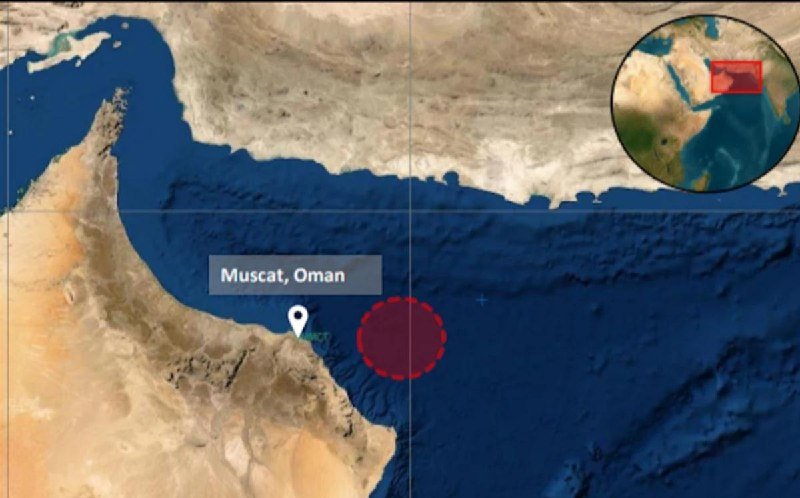
On 4 May 2026, the UK Maritime Trade Operations office confirmed it had received reports of an incident involving an oil tanker approximately 78 nautical miles north of Al Fujairah in the United Arab Emirates. The tanker reported being struck by unidentified projectiles; according to initial accounts, the vessel and its crew continued to their next port without casualties. That is what the record shows. Everything else — attribution, motive, escalation risk — is inference layered on a thin factual base.
This is the pattern with Gulf of Oman maritime incidents. The event itself is logged quickly; the explanation arrives later and varies depending on who is doing the logging. The sources carrying this story on 4 May were predominantly Iranian state-adjacent outlets — Tasnim News, Fars News International, Jahan Tasnim — which reported the incident as a confirmed attack. The language used in those dispatches carried institutional certainty: "attack," "missiles," "hit by projectiles." The UK Maritime Trade Operations statement, by contrast, used the word "incident" and noted only that a report had been received — a materially more cautious formulation that wire services and security analysts treat as standard until an investigation concludes.
That gap in certainty between what happened and how it is reported is not accidental. The Gulf of Oman is one of the world's most geopolitically saturated waterways, threading between Iran and Oman and connecting the Persian Gulf to the Arabian Sea. Every vessel transiting it operates inside a surveillance grid that includes American, British, and allied naval assets; Emirati coast guard; and Iranian naval and intelligence services. The volume of observation is enormous. The consensus on any given event is not guaranteed.
The Gulf's Infrastructure of Ambiguity
Al Fujairah sits on the Omani coast at the mouth of the Gulf of Oman. Its port is a significant bunkering hub — a place where vessels refuel before making the transit through the Strait of Hormuz, the corridor through which roughly 20 percent of global oil trade passes. That choke point has been the site of escalating incidents since 2019, when a string of tanker attacks — including the suspected sabotage of the Front Altair and the Kokuka Courageous — produced competing narratives that have never fully resolved. The United States blamed Iran. Iran denied involvement. Independent investigators faced access constraints that left key questions open.
The Fujairah corridor's strategic profile makes it useful for actors who want to signal capability without triggering a direct confrontation. An attack on a commercial vessel in international waters is deniable if unclaimed; it demonstrates reach without requiring attribution that would invite retaliation. This is a known instrument in the wider pressure campaign between Iran and the United States and its regional partners. The question of who benefits from any given incident is never straightforward — and the available evidence from this episode does not resolve it.
What the Sources Say and Don't Say
The Telegram-sourced reports carrying this story on 4 May use confident language about weapons used and the nature of the event. Tasnim News, reporting in English, described "unidentified projectiles" and later "missiles." Fars News International similarly framed the incident as an attack. Neither report cited a named vessel, a flag state, an owner, or a crew complement beyond the crew being safe. The UK Maritime Trade Operations advisory carried no attribution, no weapon description, and no vessel identification beyond the geographic coordinates of the incident.
This asymmetry is important. A news organisation that quotes "attack" language from a single sourcing lineage — particularly one adjacent to a party with strategic interest in the incident's framing — without noting the disparity between that language and the formal advisory is not reporting the event; it is amplifying a characterisation. This does not mean the characterisation is wrong. It means the verification step matters more than the initial report.
Verification Culture and the Cost of Speed
Maritime security reporting has improved dramatically since the early 2010s, when vessels routinely arrived in port before incidents were logged. Today, satellite AIS tracking, commercial satellite imagery, and the formalisation of bodies like the UK Maritime Trade Operations and its US counterpart have shortened the gap between event and confirmation. But the information economy around Gulf incidents rewards speed over certainty. Wire services competing for first placement will carry reports from adjacent-state media without the calibration that the formal advisory provides. That carries forward into regional and international coverage in ways that are difficult to reverse.
The vessel involved in the 4 May incident — unnamed in the sources reviewed — continued to its next port. No crew injuries were reported. Those facts are stable. Whether the projectiles were rockets, drones, or something else; whether they were fired from a vessel, a coastal position, or a state actor's territory; and whether the target was chosen for its commercial value, its flag state, or its symbolic position in a wider standoff — these remain open. Until the vessel's owner, flag registry, and insurer issue statements, and until an official investigation produces findings, the factual record is thin.
The Stakes
The Gulf of Oman is not a passive transit corridor. It is a pressure-release valve for a regional conflict that has not formally ended — Iran and the United States have not been at war, but they have engaged in a sustained cycle of sabotage, seizure, drone activity, and retaliatory strikes that occasionally approaches open conflict. Every incident carries the potential to be the one that crosses a threshold that neither side wants to cross but both have signalled willingness to approach.
What this episode confirms, yet again, is that the informational environment around Gulf maritime events is shaped by actors with skin in the game. The formal channels — UKMTO advisories, US Fifth Fleet statements, UN maritime agencies — move more slowly and with more epistemic caution than the Telegram channels that carry the first reports. A publication that treats the faster source as authoritative, before the slower sources establish what actually happened, is not giving readers the best available account. It is giving them the most available framing.
The vessel and crew are safe. The investigation will proceed. What the Gulf needs, and what responsible reporting should deliver, is time for that process before the narrative hardens.
Wire provenance
This editorial synthesis draws on the following public wire/social posts:
- https://t.me/Tasnimnews_EN/38987
- https://t.me/JahanTasnim/21843
- https://t.me/FarsNewsInt/52418