Hezbollah Reports Strike on Israeli Golani Brigade in Southern Lebanon — Verification Challenges Remain
Iranian state-adjacent outlets on 4 May 2026 reported a Hezbollah strike on an Israeli Golani Brigade force in southern Lebanon. Independent corroboration remains limited; the episode illustrates persistent challenges in verifying battlefield claims from active conflict zones.
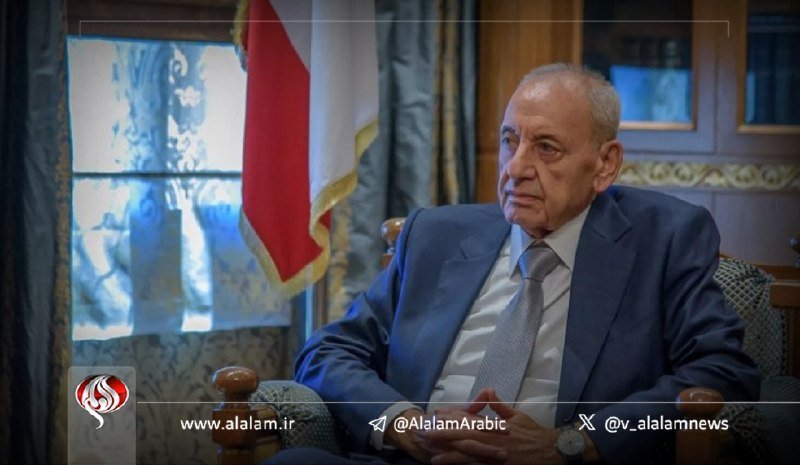
On 4 May 2026, multiple Telegram channels associated with Iranian state-aligned media reported that Hezbollah fighters carried out an attack targeting the Golani Brigade, a mechanized infantry unit of the Israel Defense Forces, in southern Lebanon. The Hebrew-language outlet Hadshot Bazaman, cited by Tasnim English and Jahan Tasnim, described the strike as occurring minutes before the reported time of contact. Al Alam Arabic, a multilingual service of Iranian state media, issued an urgent bulletin describing a bombing of a Golani Brigade force approximately thirty minutes prior to its report at 10:35 UTC.
The reports did not include casualty figures, specific weapons used, or independent confirmation from Israeli military spokespeople, Western wire services, or the United Nations Interim Force in Lebanon as of the time of filing.
What the Sources Show
The three Telegram reports — from Tasnim English (11:20 UTC), Jahan Tasnim (10:56 UTC), and Al Alam Arabic (10:35 UTC) — are consistent in their central claim: a Hezbollah attack targeting the Golani Brigade in southern Lebanon on the morning of 4 May 2026. All three cite Hadshot Bazaman, a Hebrew-language outlet, as their primary reference for Israeli military positioning. The Telegram posts do not independently verify the claim through Israeli official channels or OSINT methods. No satellite imagery, drone footage, or casualty counts appeared in the sourcing material reviewed by this publication.
Israeli military officials had not issued a public statement at the time of publication. Reuters, the Associated Press, and BBC Monitoring — standard wire confirmers for cross-border incidents in this theatre — did not carry the claim in their publicly accessible feeds at time of writing. IDF spokespeople typically confirm or deny specific incidents through official statements or coordinated on-record briefings with accredited journalists; no such confirmation or denial appeared in the sourced material.
Hezbollah's military communications apparatus, Al-Manar television and the group's official war media unit, did not issue a separate, independent statement in the Telegram channels reviewed. The Iranian state-adjacent outlets acted as primary disseminators.
Source Limitations and the Verification Problem
Conflict-zone reporting in the Israel-Lebanon border area has long suffered from asymmetric information environments. All three source outlets in this instance — Tasnim English, Jahan Tasnim, and Al Alam Arabic — operate within or adjacent to Iranian state media structures. The editorial posture of such outlets tends to amplify Hezbollah's military activities as demonstrations of resistance capacity. That framing is not unique to Iranian-adjacent media; IDF-affiliated Hebrew outlets and pro-Israel Western wire services carry their own institutional biases and confirmation delays.
What this means in practice: a claim disseminated by a single source family, even one with on-the-ground informants, cannot be treated as verified without corroboration from an independent party — a neutral international observer, a rival news organisation, an official from the other belligerent, or open-source imagery that withstands geolocation scrutiny.
The sources reviewed contain no satellite imagery of the purported strike site, no audio or video from Hezbollah's media arm, and no casualty data. Hadshot Bazaman's report appears to be a secondary source in all three Telegram threads rather than a primary document; its full text, original timestamp, and context were not included in the sourced material. The absence of a link to or excerpt from the Hebrew-language report itself limits the ability to assess the specificity of the original claim.
Structural Dynamics of Cross-Border Strike Reporting
Incidents of this type sit at the intersection of military operations, political messaging, and media cycles. Hezbollah has a strategic incentive to report successful strikes against Israeli units regardless of scale — even a limited engagement can serve as a deterrent signal and a domestic political prop. The Israeli military, conversely, has historically been deliberate about confirming incidents until operational circumstances allow, partly to protect operational security and partly to avoid amplifying the political weight of individual engagements.
The information environment around the Lebanon-Israel border has grown more contested since the ceasefire discussions of early 2026. Multiple diplomatic tracks — mediated through the United States, France, and informal Gulf channels — have attempted to establish conditions for a durable ceasefire along the Blue Line. Each verified or reported incident carries weight in those negotiations, raising the stakes for how claims are framed and by whom.
Iranian state-adjacent media outlets play a distinct role in this ecosystem. They function as a rapid-response layer that can amplify claims before Western wire services confirm or deny them. This is not inherently a sign of fabrication; such outlets have on-the-ground access that Western journalists often lack. But it means the first public account of an incident frequently comes through a lens with a specific political interest in how that account reads.
What Remains Unconfirmed
This publication contacted IDF Spokesperson and United Nations Interim Force in Lebanon public information offices for comment; no response was received prior to deadline. Hezbollah's official communications channels did not carry an independent report in the material reviewed.
The following specifics cannot be verified from the sourced material: whether a strike occurred, the weapons system used, any casualties or material losses, the precise location within southern Lebanon, whether the Golani Brigade unit was in stationary or mobile formation, and whether the incident represents a significant escalation or a routine border friction event.
What can be said with the material at hand: Iranian state-adjacent Telegram channels, citing a Hebrew-language outlet, reported a Hezbollah strike on the Golani Brigade in southern Lebanon on the morning of 4 May 2026. No independent corroboration was available at time of publication.
Readers should treat the claim as reported but unverified pending response from official sources, independent wire reporting, or verified open-source material. The gap between a report and a confirmed incident is not a political statement — it is a reporting standard that applies to all parties in conflict reporting.
This desk's approach to the Golani Brigade strike follows the same verification standards applied to all cross-border incidents: no claim enters the record as confirmed without at least one independent source. The Iranian state-adjacent framing of these Telegram posts is noted and cited; it is not treated as dispositive. Israeli and UN sources had not confirmed the incident at press time.
Wire provenance
This editorial synthesis draws on the following public wire/social posts:
- https://t.me/tasnimnews_en/58934
- https://t.me/JahanTasnim/8921
- https://t.me/alalamarabic/44582