The Hormuz Gambit: How America's Naval Blockade Is Redrawing the Map of Global Oil
A US naval blockade of the Strait of Hormuz has cut Iran off from its primary oil markets, stranding 1.8 million barrels a day. The question is not whether this will reshape global energy — but whether the side effects are worth the strategic gain.
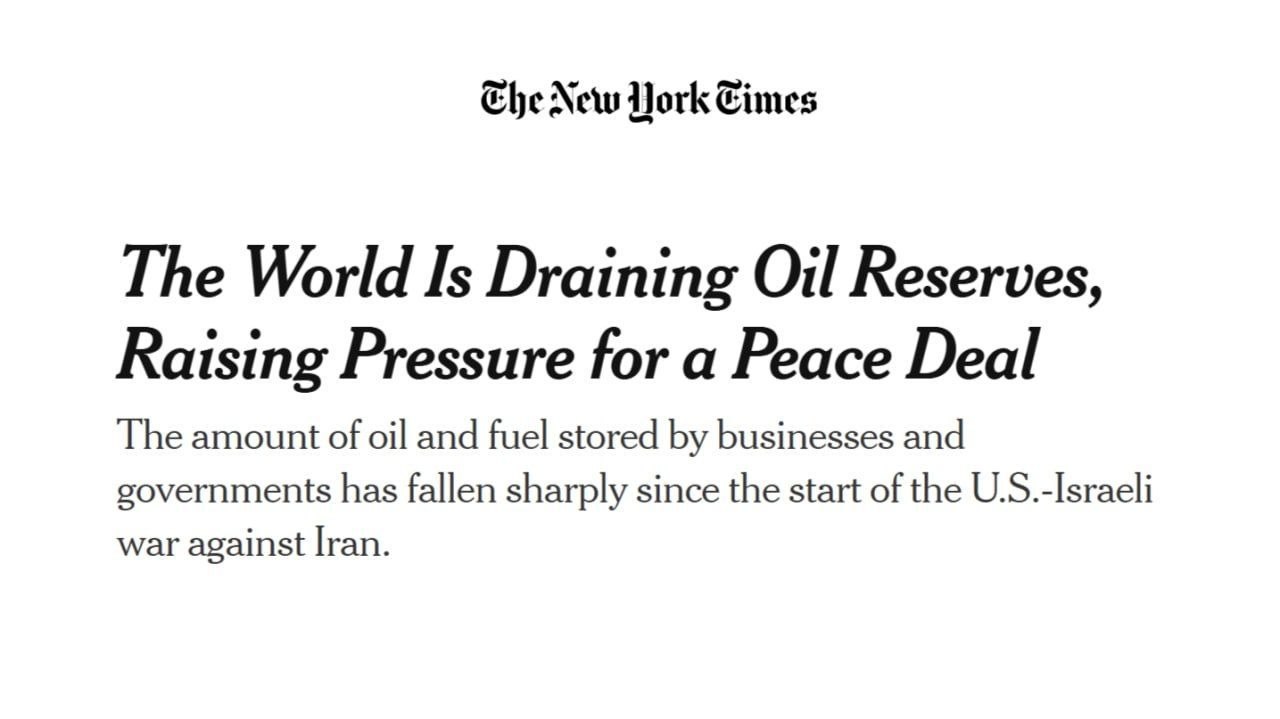
When the USS Kimberly slid into position across the Strait of Hormuz in the final week of April, it did not announce itself with a press release or a congressional briefing. The declaration came in the operational language of nautical charts and naval deployables — an area of exclusion zones, a pattern of patrol sweeps, a quiet but unmistakable signal that the United States had moved from sanctions enforcement to something closer to a blockade. By 3 May, according to Nikkei Asia, Iranian crude oil had lost access to markets in Asia, stranding roughly 1.8 million barrels per day — a figure that represents nearly all of Iran's seaborne export capacity — with Tehran scrambling to find alternative routes. The question now occupying energy ministers from Beijing to Brussels is not whether this changes the map. It is whether the reverberations stay contained.
The immediate trigger is familiar: a US administration that had spent months tightening the noose around Iran's oil revenues via secondary sanctions, now apparently willing to push the enforcement mechanism as far as international law permits — and possibly past it. A naval blockade in wartime is a recognized instrument of coercion. In peacetime, or in a conflict that has not been formally declared, it sits in legally contested territory. The US position, according to briefings from the State Department carried by wire services, is that the enforcement falls within existing sanctions frameworks and the UN Security Council resolutions that authorized them. Iran's position, predictably, is that this is an act of economic warfare that violates the principle of free navigation through an international strait — a principle the US itself has historically championed. The asymmetry is not lost on analysts in the Gulf: the same country that has spent decades invoking freedom of navigation against Chinese claims in the South China Sea is now imposing a de facto navigation restriction in one of the world's most critical arteries. That contradiction has not gone unnoticed in Beijing.
The Technological Dimension
The blockade itself would be incomplete without understanding the surveillance architecture underpinning it. The US Navy, according to reporting on Polymarket's wire feed on 3 May 2026, has deployed artificial intelligence software designed to accelerate the detection of Iranian naval mines in the Strait. The system, described in technical terms by Defense Department officials in background briefings, is capable of processing sensor data from sonar arrays and aerial surveillance platforms in real time, flagging anomalies for human review without the delay that typically characterises mine-countermeasure operations. The strategic implication is significant: Iran has historically relied on asymmetric naval capabilities — small attack craft, underwater mines, fast inlets — as a counterweight to US naval superiority in the Gulf. Mines in particular have been a favoured instrument because they are cheap, require no crew, and can create persistent commercial disruption far out of proportion to their cost. The AI system fundamentally changes that calculus. Mines that would have taken days to locate and catalogue can now be identified and plotted within hours. The advantage shifts decisively to the side with better sensor coverage and faster processing — which, in the Gulf, is not Tehran.
This is not simply a tactical upgrade. It represents a qualitative change in the credibility of US naval enforcement in the region. The risk calculus for Iranian planners — who may have previously calculated that mining operations could impose unacceptable costs on any blockade attempt — now has a new variable. That does not mean Iranian options are exhausted. But it does narrow the asymmetric menu in ways that did not exist eighteen months ago.
Beijing's Position: Quiet Concern, Hard Choices
No country has more at stake in the Hormuz equation than China. Iran supplies roughly ten percent of China's crude oil imports — not a dominant share, but a strategically significant one — and Beijing has invested heavily in a bilateral relationship that includes infrastructure commitments, arms cooperation, and a 25-year strategic partnership signed in 2021. When China's foreign ministry responded to the blockade, the language was carefully calibrated: not an explicit condemnation, not a direct threat of countermeasures, but a clear signal that Washington had overstepped the bounds of what Beijing considers legitimate enforcement of sanctions. The statement, carried by Global Times and Xinhua, invoked freedom of navigation language and called for dialogue rather than coercion. The structural position underneath that diplomatic phrasing is blunt: China cannot afford to be seen as accommodating a US-enforced strangulation of its third-largest crude supplier. The geopolitical optics, in a moment when Chinese strategists are mapping every instance of American willingness to use hard power outside the Pacific, matter as much as the barrel count.
But Beijing's options are also constrained. Chinese state oil companies — CNOOC, Sinopec, PetroChina — are deeply exposed to secondary sanctions risk if they continue purchasing Iranian crude under a US enforcement regime that has teeth. The Treasury Department's Office of Foreign Assets Control has been explicit: any institution facilitating transactions linked to Iranian oil exports faces exclusion from the US financial system. For a Chinese bank with dollar correspondent accounts, that is not a manageable risk. The result is a structural pressure that diplomatic language cannot fully offset. Beijing can protest. It can accelerate its own talks with Riyadh and Moscow to diversify supply. It cannot, in the near term, replace Iranian barrels without cost. This is the specific form of the dollar's coercive power in practice: not a ban, but a banking restriction that makes the ban self-enforcing.
The Precedent Problem
The Strait of Hormuz is not simply a transit corridor. It is the world's most concentrated single point of oil vulnerability. Roughly 21 million barrels per day flow through it — approximately 20 percent of global seaborne crude trade. A prolonged disruption, even partial, would send shockwaves through energy markets that make the 2022 supply crunch look modest. The 1979 Iranian revolution and the subsequent tanker war in the 1980s provide partial historical precedent: when Iran mined the waterway and targeted Kuwaiti tankers, global oil prices spiked sharply and insurance markets seized up. But the world economy in 2026 is more fragile in different ways. The post-pandemic recovery in aviation fuel demand is incomplete. European natural gas stocks remain weather-dependent. The energy transition has not proceeded fast enough to provide meaningful cushion against a crude supply shock. And the financial architecture that would transmit a disruption — trading platforms, clearing systems, commodity indices — is more integrated with the dollar system than ever.
The precedent problem cuts both ways for Washington. If the blockade is perceived as successful — if Iranian oil revenues collapse, if Tehran's leverage in nuclear talks diminishes — it establishes a template. Other administrations in other contexts will ask: why not apply the same pressure to Venezuelan crude? To Russian oil sales that currently flow through third-country intermediaries? To any state whose energy exports depend on access to the dollar-denominated global trading system? The mechanism is powerful precisely because it is invisible to most consumers but absolutely binding on the institutions that must obey it. That effectiveness is also its danger. The more successful this tool becomes, the more it normalises a form of economic coercion that has historically been associated with wartime blockades — and that the international legal order has never fully resolved for peacetime application.
What Comes Next
On 3 May 2026, Polymarket's trading implied a 52 percent probability that traffic through the Strait of Hormuz would return to normal by the end of June. That number — a market-derived consensus on the timeline — tells us something important: the uncertainty is genuine, and it is not trivial. A blockade of this kind is not a steady state. It escalates or it de-escalates. Iranian responses could include diplomatic escalation — bringing the issue to the UN Security Council, framing the blockade as a violation of the 1982 UN Convention on the Law of the Sea, which the US has ratified — or military posturing that raises the risk of miscalculation. The AI-enhanced surveillance makes the detection side of mine-laying operations faster, but it does not eliminate the possibility of a deliberate Iranian provocation designed to trigger a response that embarrasses Washington or splits the coalition enforcing the exclusion zones.
For European importers, the immediate concern is not supply disruption — Europe buys little Iranian crude directly — but price contagion. A Hormuz disruption would compress already-thin OPEC spare capacity and create bidding pressure that transmits to all waterborne crude markets. For Asian refiners, the direct hit is sharper: Chinese and Indian refiners that have historically taken Iranian cargoes will need to find alternative grades, likely at higher cost, as long as the enforcement holds. For Iran, the pressure is existential in fiscal terms. Oil revenues fund the government, fund the Revolutionary Guard, fund the regional proxy network that is central to Tehran's deterrence posture. A sustained revenue collapse does not simply weaken the regime's position at the negotiating table — it degrades the infrastructure of influence that has taken decades to build.
The blockade is, at its core, a test of whether economic coercion can substitute for military confrontation. The United States has chosen a tool that is deniable enough to avoid the appearance of war, powerful enough to impose real costs, and scalable enough to adjust if the diplomatic temperature changes. Whether it achieves its objectives without triggering the wider disruption it is designed to prevent is the question that will define the next phase of the Hormuz equation — and, by extension, the credibility of dollar-denominated enforcement as a first-order instrument of American statecraft.
This publication covered the Hormuz blockade primarily through the lens of enforcement architecture and geopolitical consequence. The dominant wire framing centred on Iranian isolation and US deterrence credibility; the Monexus frame prioritised the structural interaction between dollar leverage, Chinese energy security, and the legal ambiguity of the enforcement mechanism.
Wire provenance
This editorial synthesis draws on the following public wire/social posts:
- https://t.me/nikkeiasia/1243
- https://t.me/nikkeiasia/1243