The Hormuz Chokepoint: How America's Naval Blockade Is Redrawing the Map of Global Oil Markets
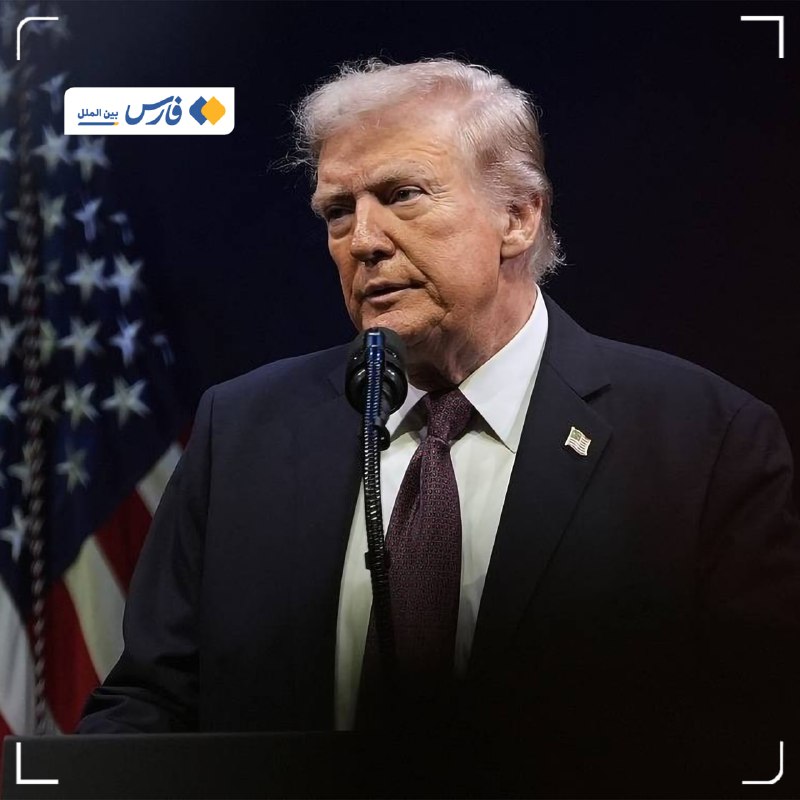
It has been eleven days since the United States Navy effectively sealed the Strait of Hormuz. In that time, Iranian crude oil has lost access to markets in Asia as a result of the blockade, leaving Tehran scrambling to find alternative routes and buyers willing to absorb the diplomatic risk of handling sanctioned cargo. According to Nikkei Asia, approximately 1.8 million barrels a day of Iranian crude — roughly the combined output of several OPEC smaller producers — is stranded. The number represents a significant portion of Iran's total oil export capacity, which Western analysts had estimated at between two and 2.5 million barrels per day before the blockade commenced.
The immediate cause, as described by available reporting, is a U.S. decision to interdict vessels carrying Iranian oil rather than rely solely on the secondary sanctions architecture that has governed Iran policy since 2018. The distinction matters. Secondary sanctions penalize foreign entities that purchase Iranian oil; the blockade physically prevents that oil from leaving port. Together with the deployment of AI-powered mine-detection systems — reported on 3 May 2026 via Polymarket's news aggregation feed — the operational posture represents a qualitative escalation from the economic pressure campaign that defined the prior administration's approach.
The decision has placed American allies in an awkward position. Estonian Prime Minister Kaja Kallas stated on 4 May 2026 that her government was ready to participate with naval equipment in securing the Hormuz Strait — an explicit endorsement of the blockade's legitimacy and a signal that smaller NATO members are prepared to associate themselves with a mission whose legal basis remains contested under international law governing blockades in neutral waters. The Polymarket intelligence feed citing her remarks did not include a full transcript; the office of the Estonian Prime Minister has not issued a separate written statement as of publication time.
The Geometry of the Chokepoint
The Strait of Hormuz is not merely a shipping lane. It is the world's most concentrated oil transit corridor, carrying roughly 20 percent of global oil trade on any given day. The waterway — at its narrowest point less than 30 nautical miles wide — is flanked by Iran to the north and Oman and the UAE to the south. For decades, its strategic significance has acted as a deterrent against outright military closure: the assumption, reinforced by repeated U.S. naval deployments, was that disrupting the strait would invite catastrophic retaliation against allied shipping and regional partners.
What has changed is the calculation on both sides. Iran's oil revenue has contracted sharply under sustained sanctions. The National Iranian Oil Company has spent years developing dark-fleet logistics — ship-to-ship transfers, falsified documentation, routing through third-country intermediaries — designed to move cargo beyond the reach of U.S. enforcement. Those mechanisms appear to be under severe stress. The blockade does not merely raise the cost of evasion; it makes evasion physically impossible in the same way it did before. The question now is whether Tehran's response will be diplomatic, economic, or kinetic.
Western intelligence assessments cited in open-source reporting suggest Iran has deployed naval mines in the strait — which would explain the AI detection systems now active on U.S. vessels. Mine-laying is a reversible action, however. It is also an action consistent with deterrence signaling rather than an intention to provoke a broader maritime conflict. Iranian state media has not published detailed statements on the blockade's legality, though Iranian officials have described the U.S. presence in the Gulf as provocative and consistent with what Tehran characterizes as an economic warfare posture.
Asian Buyers and the Limits of Secondary Sanctions
The blockade's most consequential test is not in the Gulf — it is in Beijing, New Delhi, and the boardrooms of South Korean refiners. China is Iran's largest oil customer by a substantial margin. For years, Chinese state-owned and independent refiners have navigated U.S. sanctions by structuring purchases through intermediary jurisdictions. Whether Beijing will continue that arrangement under the pressure of an active U.S. naval blockade — rather than merely the threat of secondary sanctions — is the central unresolved question of this episode.
Structural factors cut both directions. China has an interest in demonstrating that American secondary sanctions cannot dictate its energy procurement decisions. It has also built significant strategic petroleum reserve capacity and has been expanding domestic production in the Ordos and Tarim basins. On the other hand, Chinese banks and trading houses face real exposure if they are caught handling Iranian cargo that U.S. authorities can now directly interdict rather than merely penalize retroactively.
India faces a different calculus. New Delhi has sought to expand Iranian oil imports as part of its broader strategy of energy diversification, and Indian refiners have historically shown a willingness to absorb sanctions risk in exchange for favourable crude pricing. The current blockade, however, introduces a new variable: the practical difficulty of insuring vessels that would need to transit the strait with Iranian cargo aboard, knowing that U.S. naval interdiction is an active operational reality rather than a theoretical enforcement risk.
Market-based indicators suggest the blockade is not yet producing a sustained crude price spike. A Polymarket event tracking the probability of Hormuz traffic returning to normal by the end of June 2026 showed a 52 percent probability as of 3 May 2026 — essentially a coin flip, reflecting genuine uncertainty about the blockade's duration rather than a confident expectation of escalation. Brent crude benchmarks have moved but not dramatically, suggesting that markets are pricing in a temporary disruption rather than a permanent closure.
The Legal Gray Zone and Allied Friction
The legal basis for a naval blockade of an international waterway is well-established under the law of armed conflict — but it requires, at minimum, a state of armed conflict to exist. The United States has not declared war on Iran. Iran has not launched a direct attack on U.S. forces that could be characterized as triggering a self-defense response broad enough to justify a blockade. This creates an ambiguity that allied governments are quietly navigating.
Kaja Kallas's public endorsement of Estonian naval participation is notable precisely because it is relatively unusual for a European head of government to associate a small NATO member so directly with an operation whose legal characterization is disputed. Her statement — carried via X/Twitter on 4 May 2026 — suggests either a high degree of confidence in the legal rationale or a political decision to prioritize solidarity with Washington over legal caution. Estonian officials have not provided a follow-up clarification.
European Union member states are not uniform in their posture. Several EU governments have privately expressed concern that the blockade sets a precedent for extraterritorial naval enforcement that could be invoked against EU shipping in future geopolitical contexts. These reservations have not translated into public statements as of the time of writing, and it remains unclear whether the EU will be asked to formally endorse the operation or merely to facilitate individual member state contributions.
Stakes: Who Wins If the Blockade Holds
If the blockade is sustained for more than sixty to ninety days, the economic pressure on Iran becomes severe in ways that sanctions alone have not achieved. Iranian government revenue — already constrained by sanctions and poor investment in upstream capacity — would contract further. The Iranian rial, which has depreciated sharply in informal markets in recent months, would face renewed pressure. The ability of Iranian-aligned proxy networks across the region to sustain funding would diminish.
The risk is not that Iran collapses. It is that a cornered Iran responds in ways that are asymmetrically costly to its adversaries. Hezbollah, Hamas-affiliated networks, Iraqi militia groups, and Houthi forces in Yemen all draw varying degrees of support from Tehran. A sustained blockade may prompt the conclusion that lower-cost provocations in the Gulf — harassment of commercial vessels, attacks on regional energy infrastructure, cyber operations against port systems — are worth the cost if they demonstrate that the strait's functionality cannot be taken for granted.
The United States, for its part, has made a bet that the Chinese and Indian governments will accommodate the new reality rather than escalate in response. That bet may be correct. But it rests on the assumption that China does not calculate that preserving Iranian oil flows is worth the cost of a more direct diplomatic confrontation with Washington over freedom of navigation. The strait has, for fifty years, served as a reminder that concentrated chokepoints give the holder of naval superiority extraordinary leverage. What remains unclear is whether that leverage is durable once it has been exercised.
This publication's wire monitoring captured the Estonian Prime Minister's statement, the Nikkei Asia reporting on stranded cargo, and the Polymarket aggregation of AI mine-detection activity across separate data feeds on 3-4 May 2026. Western wire services have carried reporting on the broader U.S.-Iran confrontation but had not independently confirmed the blockade's precise legal basis or the extent of allied participation as of publication.
Wire provenance
This editorial synthesis draws on the following public wire/social posts:
- https://x.com/sprinterpress/status/1932569012345627141
- https://t.me/nikkeiasia/11547
- https://en.wikipedia.org/wiki/Strait_of_Hormuz
- https://en.wikipedia.org/wiki/Naval_blockade
- https://en.wikipedia.org/wiki/Secondary_sanctions
- https://en.wikipedia.org/wiki/Iranian_oil_exports