The Hormuz Gambit: How Iran's Naval Pressure Is Redrawing the World's Most Critical Oil Chokepoint
As commercial traffic diverts and traders push recovery forecasts to late summer, a new UN resolution and Iranian threats of force are turning the world's most contested shipping lane into a flashpoint with systemic implications for global energy markets.
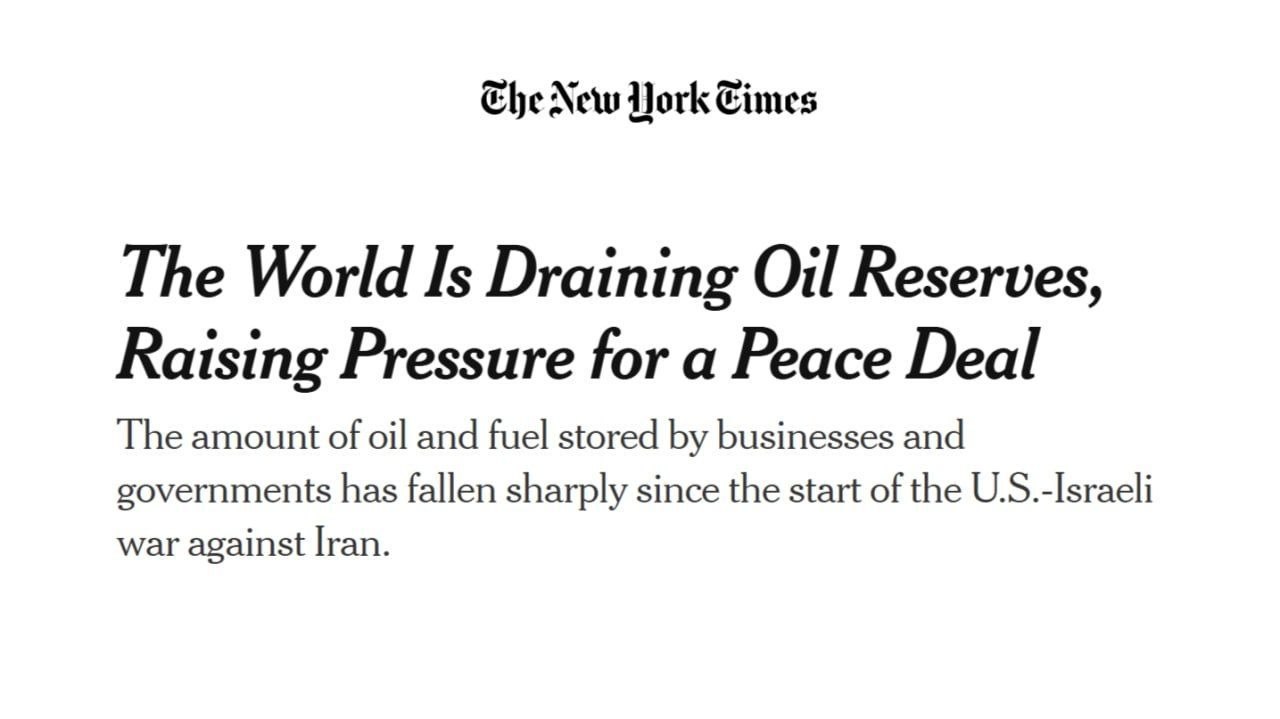
Commercial shipping through the Strait of Hormuz is running at a fraction of normal capacity, and traders now see no resolution before the end of summer. On 4 May 2026, the US Central Command confirmed that at least 50 commercial vessels had been redirected away from the waterway since the current standoff began — a figure that captures both the scale of disruption and the breadth of economic interests now held hostage to a single strategic passage.
The numbers tell part of the story. Forty percent of global seaborne crude oil flows through Hormuz. Liquefied natural gas shipments add further weight. When shipowners, insurers, and charterers recalculate the risk of transiting a waterway where one party has openly threatened to use force, rational actors reroute — even if the alternative Cape of Good Hope passage adds two weeks and meaningful cost. The disruption is not yet a crisis in the formal sense. But it is a slow squeeze, and the pressure is mounting on every player with a stake in Gulf energy exports.
The immediate trigger is Iran's declaration, confirmed on 4 May 2026, that vessels violating its regulations in the strait will be met by force. The statement came without the detailed regulatory framework that would allow shipowners to calibrate compliance — a deliberate ambiguity that serves Tehran's purpose of maximising uncertainty. CENTCOM's tracking data, published the same day, quantifies the effect: fifty commercial vessels diverted, rerouted, or held at anchorage pending clarification that has not come.
What began as a maritime regulatory dispute has escalated into something with the hallmarks of a coerced diplomatic outcome. Iran is using the geography of the strait — narrow, bordered by its territory and that of Oman and the UAE — to impose costs on an opponent it cannot meet in conventional terms. The US and Gulf Arab states are not without leverage. But their options are constrained by the same geography that gives Iran its advantage.
A Resolution at the United Nations
The US and several Gulf Arab states have responded by drafting a new United Nations resolution addressing freedom of navigation in the strait, a copy of which was circulated among member states on 4 May 2026. The draft, reported by Reuters, invokes established international law governing innocent passage through territorial seas and calls on all parties to refrain from interference with commercial shipping. It stops short of naming Iran directly — a deliberate choice that reflects the difficulty of building consensus around a resolution that would explicitly assign blame.
The resolution's language matters less than its existence. Any UN measure, even a non-binding one, establishes a paper trail that the US and its partners can use to characterise Iranian behaviour as a violation of international obligations. That framing has operational consequences: it strengthens the legal basis for naval escorts, reinforces insurance arguments for rerouting, and provides diplomatic cover for Gulf states whose own shipping companies are absorbing the costs of the standoff.
But resolutions require votes, and votes require diplomats willing to be seen voting alongside Washington on a contested geopolitics question. China's position will be decisive. Beijing imports more than ten million barrels of crude per day, much of it from the Gulf, and has shown no appetite for endorsing measures that would be read in Tehran as Western encirclement. The draft text's careful avoidance of direct accusation is likely an attempt to keep China from exercising a veto or abstaining in a way that would signal indifference to Gulf stability. Whether that gambit succeeds remains to be seen.
The Economics of Deterrence
Markets are pricing a prolonged disruption. Traders on the Kalshi prediction platform, which offers contracts tied to real-world outcomes including shipping恢复正常 timeline, have increasingly shifted expectations toward August 2026 or later as the date at which traffic through the strait returns to normal. That shift reflects more than pessimism — it captures the structural reality that negotiating a de-escalation requires both parties to have something to show their domestic audiences, and neither currently does.
The insurance market is where the pressure becomes arithmetic. Lloyd's of London and the various war-risk pools that cover Gulf transits have already adjusted their risk models. Premiums for vessels transiting Hormuz have risen sharply since late March, and underwriters are understood to be requiring enhanced security assessments before offering coverage. For a supertanker carrying two million barrels of crude, even a marginal increase in per-barrel insurance cost translates into meaningful margin compression. At sufficient scale, that arithmetic tips the commercial calculation toward rerouting regardless of what naval escorts the US or its partners might offer.
The rerouting itself is not costless. The Cape of Good Hope passage adds roughly 14 days to a voyage between the Gulf and European markets. That translates into higher charter costs, greater fuel consumption, and delayed cargo delivery — costs that ultimately flow back to refiners, and from there to consumers. The International Energy Agency has not published a formal estimate of the price impact from the current disruption, but oil markets have moved since March in a way that suggests traders are building in a sustained premium for Hormuz-related supply uncertainty.
Iran's Calculus
Tehran's position is, on its own terms, coherent. Iran has long maintained that the strait's security is a collective responsibility and that foreign military presence in the Gulf is itself a source of instability. The US Fifth Fleet, based in Bahrain, and the various bilateral security arrangements that accompany it are framed in Tehran's official statements as provocative — an enduring grievance that pre-dates the current standoff.
What is new is the explicit linkage between regulatory enforcement and the use of force. Iran's statements on 4 May represent a hardening of position that goes beyond the regulatory language typical of previous periods of elevated tension. The threats are nonspecific enough to preserve deniability but clear enough to alter commercial behaviour. That is precisely the effect Iran would want: pressure without the triggering event that would justify a US or coalition military response.
The risk in this strategy is miscalculation. A single incident — a vessel fired upon, a collision with naval escort, an Iranian coast guard action against a flagged tanker — could trigger the very escalation Tehran appears to be trying to avoid. The gap between coercive signalling and actual use of force is narrow, and both sides understand that the strait's geography offers limited space for graduated responses. If a US warship is in the vicinity when Iranian forces act against a commercial vessel, the chain of escalation becomes difficult to control.
The Gulf States' Precarious Position
The Arab Gulf states — Saudi Arabia, the UAE, Qatar, Kuwait, Oman — occupy an uncomfortable position in this standoff. They share the US security architecture that includes the Fifth Fleet and various bilateral defense agreements. They also depend on Gulf oil revenues, and a sustained disruption to shipping damages their fiscal positions just as they attempt to manage post-pandemic budget pressures and longer-term economic diversification ambitions.
Oman, which shares the strait's northern shore with Iran, has historically occupied a mediating position between Tehran and Washington. Muscat's reluctance to be drawn into overt anti-Iranian coalitions has been a consistent feature of Gulf diplomacy. That posture is now being tested. A UN resolution sponsored by the US and Gulf partners, if it includes language Oman finds too confrontational, could complicate Muscat's delicate balancing act.
The UAE and Saudi Arabia have deeper security relationships with Washington but also have commercial interests that benefit from a functioning Hormuz transit regime. Both have invested heavily in alternative export infrastructure — pipelines that can bypass the strait, port capacity that can handle rerouted cargo — but neither has export infrastructure sufficient to fully offset a prolonged Hormuz closure. Their interests lie in de-escalation, even if that requires quiet diplomatic distance from the more confrontational elements of the US approach.
What Comes Next
The current trajectory points toward a prolonged standoff with no clean off-ramp. Iran has demonstrated that it can impose costs on commercial shipping without the kind of overt attack that would trigger a military response. The US has demonstrated that it can draft resolutions and reposition naval assets, but has not yet found the combination of carrots and sticks that would bring Tehran to the table on terms that preserve American credibility.
The Kalshi traders are not wrong to push their expectations toward August. A negotiation requires something to negotiate over, and neither party has yet signalled a willingness to offer the concessions that a deal would require. Iran's leadership would need to see a tactical benefit to de-escalation — perhaps sanctions relief, perhaps a formal commitment to reduced naval activity — that is not currently on offer. Washington's leadership would need to see a way to accept de-escalation without appearing to reward the coercive behaviour that the current disruption represents.
In the meantime, the rerouting continues. The Cape of Good Hope gets busier. Insurance premiums rise. Asian refiners adjust their procurement patterns to favour shorter-haul cargoes where possible. These adjustments are manageable in the short term but become costly if the disruption persists. The strait was built into the architecture of global oil trade on the assumption of relative safety. That assumption is now being stress-tested, and the test is not short.
The US-Gulf Arab resolution at the UN represents the opening position in what will be a protracted diplomatic effort. Whether it produces a meaningful outcome depends on whether China can be persuaded that stability in the Gulf is worth the diplomatic cost of appearing to endorse American framing of the problem. That calculation is not primarily about the strait — it is about the broader relationship between Washington and Beijing, and the space either side is willing to give the other in regions where both have overlapping interests.
This article was structured around CENTCOM shipping data, the Reuters wire report on the UN resolution draft, Iranian state media statements confirmed via independent wire reporting, and Kalshi prediction market data reflecting trader expectations as of 4 May 2026. Monexus coverage prioritised commercial shipping disruption and multilateral diplomatic response over the military dimensions of the standoff.
Wire provenance
This editorial synthesis draws on the following public wire/social posts:
- http://reut.rs/4eKGzIL
- https://t.me/wfwitness
- https://x.com/unusual_whales/status/1920456789123456789