Hormuz Gambit: Oil Markets Shaken as U.S. Deploys Massive Naval Operation in the Strait
Brent crude surged past $113 per barrel on May 4, 2026, as the United States announced a large-scale military escort operation in the Strait of Hormuz. The question is whether this is deterrence or provocation — and who ends up paying the price.
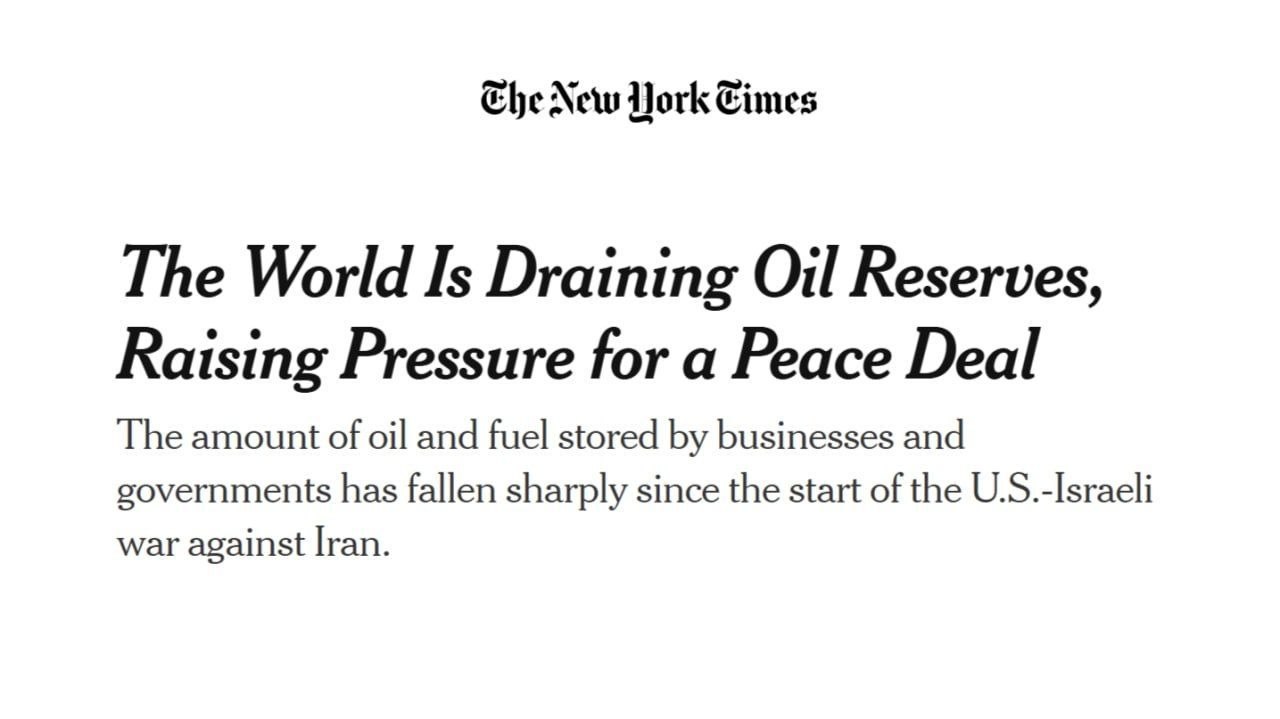
On the morning of May 4, 2026, Brent crude oil breached $113 per barrel — a move of more than five percent in a single session, according to market data cited by Reuters. The proximate cause was not a supply disruption in the traditional sense. No storm had knocked out a platform. No pipeline had been sabotaged. Instead, the market was reacting to the announced deployment of more than one hundred aircraft and fifteen thousand personnel to the Strait of Hormuz, with the stated aim of "guiding" stranded vessels through one of the world's most consequential maritime corridors. It was, in the language of oil traders, a geopolitical premium. And it was a premium that had been building for weeks.
The operation, confirmed by the U.S. military on Monday, represents the most significant visible commitment of American force in the Gulf region since the withdrawal from Afghanistan and the subsequent reconfiguration of U.S. military posture across the Middle East. Pentagon briefing documents, as reported by BBC News, described the escort mission as a "freedom of navigation operation" — terminology that, in the calculus of international maritime law, carries both legal weight and political signal. Whether that signal is directed at Iran, at market volatility, or at both simultaneously, depends entirely on which interpreter you consult.
The Immediate Picture: A Strait Under Pressure
The Strait of Hormuz is, by any measure, a choke point of the global economy. Roughly twenty to twenty-five percent of the world's oil shipments pass through its narrow channel — a forty-kilometer-wide passage between Oman and Iran at the mouth of the Persian Gulf. Any disruption, even a temporary one, reverberates through tanker markets, consumer fuel prices, and the spreadsheets of every central bank managing currency risk in oil-importing economies. To say the strait matters is understatement; it is more accurate to call it a load-bearing structure of the post-war energy architecture.
That architecture is now under visible stress. The Reuters traffic tracker for the Strait of Hormuz, updated throughout May 4, showed reduced commercial vessel movement in the immediate run-up to the U.S. announcement. Several shipping sources operating in the Gulf confirmed in background comments carried by wire services that vessels had been delaying transits pending clearer guidance on the military situation. The combination of heightened U.S. presence and ambiguous signaling created the conditions for what traders call a "risk-on" spike — buyers pricing in a scenario in which the strait's throughput drops, even temporarily.
The U.S. position, as articulated by the Pentagon and echoed in statements from regional allied commands, frames the operation as protective. "Guide" was the operative word in the public messaging from the Trump administration — a term suggesting assistance to vessels caught in a deteriorating security environment, not an act of confrontation. National security communications staff described the mission as consistent with longstanding American commitments to the free flow of commerce through international waterways. That framing has historical precedent: the U.S. Navy has run escort and protection operations in the Gulf before, typically in response to specific threats to tanker traffic.
The Counter-Narrative: How Tehran Reads the Move
Iranian state media, reporting on the developments from Tehran's perspective, characterises the U.S. operation as an act of provocation rather than protection. Iranian Foreign Ministry statements, circulated via official channels and carried by regional wire services, describe the American military build-up as an effort to "militarise" the strait and to apply economic pressure through security means. The framing from Tehran draws on a long-standing Iranian position: that the presence of foreign military forces in the Gulf is itself a source of instability, and that the U.S. naval posture in the region is designed to sustain American influence over energy flows rather than to protect them.
This framing has structural coherence, even for observers who do not share Tehran's broader political orientation. The Strait of Hormuz sits in Iranian territorial waters for a portion of its width. Iran's position, under the United Nations Convention on the Law of the Sea, holds that passage through the strait is governed by its own maritime regulations rather than the full open-seas regime that applies in more open ocean spaces. The United States does not recognise Iran's claimed jurisdiction over transit passages and has consistently operated under the doctrine of "transit passage" — the principle that international straits must remain open to all vessels regardless of coastal state approval. That legal dispute is not abstract; it sits at the root of every U.S.-Iranian maritime encounter in the Gulf.
From Tehran's standpoint, an American operation that "guides" vessels through the strait is not a neutral act of navigation security. It is a statement that the U.S., not Iran, controls the transit conditions. That is a provocation — and Iran has historically responded to such provocations not with diplomatic notes but with demonstrations of its own capability to disrupt.
Structural Context: Energy, the Dollar, and the Chokepoint
The Strait of Hormuz is not simply a logistics corridor. It is a node in the architecture of dollar-denominated oil trade. Much of the world's petroleum sales — even after decades of discussion about "petroyuan" and alternative pricing mechanisms — still settles in dollars. The dollar's role in global oil markets is not incidental; it is load-bearing. It means that disruptions in Gulf transit affect not just supply chains but currency markets, interest rate expectations, and the relative value of every asset denominated in dollars worldwide. When Brent crude spikes, the dollar strengthens against emerging market currencies, tightening financial conditions from Cairo to Karachi to Jakarta. The premium that oil traders priced in on May 4 was not only a physical supply risk — it was a dollar risk premium, and it landed in markets that were already navigating higher-for-longer rate environments in the United States and Europe.
The chokepoint dynamic compounds this. Because a single corridor carries such a large share of global oil, the market cannot easily reroute supply when it faces disruption there. There is no alternative pipeline from the Persian Gulf to global markets that can compensate for even a partial closure of Hormuz. Tankers can redirect around the Cape of Good Hope, but that adds weeks to transit times, raises insurance premiums, and effectively removes those vessels from the market for the duration. The strategic depth of the global oil system — its ability to absorb shocks — is lower at Hormuz than at almost any other transit point on earth. That is why even modest disruptions generate outsized price moves, and why both Washington and Tehran understand that the strait's normal functioning is, in itself, a form of geopolitical equilibrium.
American policy in the Gulf has long pursued that equilibrium through the maintenance of a credible military presence — what defense analysts call a "forward deployed" posture that makes the U.S. role in Gulf security inseparable from the region's energy architecture. That integration has been a source of American leverage, but also a source of dependency. Every Administration since the Carter doctrine has understood that Gulf oil flows are a matter of American national interest, not merely a global commodity. That conviction shapes the operational calculus behind the May 4 deployment: the U.S. is not simply protecting ships, it is protecting the assumption that the global oil market operates under an American security guarantee.
Precedent and Pattern: What the Historical Record Shows
The Gulf has been a theatre of U.S.-Iranian maritime tension before. In 2019, a series of limpet mine attacks on commercial vessels near the Strait of Hormuz — attributed by the United States to Iran — raised transit insurance costs sharply and briefly pushed Brent above $75 per barrel. In 2020, the targeted killing of Iranian General Qasem Soleimani raised the prospect of Iranian retaliation against U.S. assets in the region, sending markets into a brief but sharp spike before cooler heads and diplomatic back-channels de-escalated. In each case, the pattern was similar: a U.S. action or Iranian response generated a market reaction, followed by a period of managed tension in which both sides Signalled through military posture without crossing the threshold of direct combat.
The current situation fits that pattern with a variation. The scale of the U.S. deployment — one hundred aircraft, fifteen thousand personnel — is at the high end of what the military would describe as a "show of force" operation. It is larger than the typical freedom-of-navigation transit, which usually involves a single warship passing through contested waters as a legal assertion rather than a combat operation. This is a statement of sustained presence, not a single assertion. And it comes against a backdrop of already elevated U.S.-Iranian tension over Iran's nuclear programme, the status of the 2015 Joint Comprehensive Plan of Action, and the broader competition for influence in the Gulf that has defined the relationship since the 1979 revolution.
What the historical record also shows is that oil markets tend to overshoot in the immediate aftermath of Gulf incidents and then partially correct as the situation stabilises. The premium priced in on May 4 may not persist if the escort operation proceeds without incident and if both sides maintain the verbal discipline that has, so far, prevented escalation from becoming confrontation. But that "if" is doing significant work. The variables that could cause the situation to deteriorate — a miscalculated maritime encounter, a commander's decision to challenge an escort operation, an Iranian test of the limits of American willingness to sustain the presence — are not hypothetical. They are the structural realities of operating a large military force and a sovereign state's naval capability in close proximity in one of the world's most contested waterways.
Stakes and Forward View
The stakes of this episode are not symmetrical. For Washington, the operation is about credibility — the credibility of the American security guarantee to Gulf allies, the credibility of the freedom-of-navigation doctrine, and, in a broader sense, the credibility of American willingness to project force in theatres where the dollar-interest is explicit. A successful escort operation that stabilises transit would reinforce the U.S. role in the Gulf. A failure — defined as an incident that causes casualties, a vessel attack, or a significant escalation — would be politically expensive for an administration already navigating contested relationships with Gulf partners and a domestic electorate sensitive to the costs of foreign military commitments.
For Tehran, the stakes are about sovereignty and leverage. Iran has watched the United States expand its Gulf presence gradually over decades, and Iranian strategists understand that each increment of American military posture reduces the strategic depth Iran has in a crisis. An escort operation that effectively transfers control of transit conditions to the U.S. military is, in Tehran's calculus, an erosion of Iranian leverage in the strait — and therefore an erosion of the tool Iran has used, in extremis, to signal its capacity to disrupt global oil markets. That is not a cost Iran absorbs passively.
For the global oil market, the stakes are immediate and measurable. Brent above $113 is not a crisis level — the market survived $120 crude in 2022 without systemic collapse — but it is a condition that feeds inflation expectations, tightens monetary conditions in importing economies, and puts pressure on the fiscal positions of governments in South and Southeast Asia that subsidise fuel for domestic consumption. The countries with the least capacity to absorb oil price shocks are often the countries most exposed to instability in the Gulf — a dynamic that makes the intersection of energy security and geopolitical risk not an abstract policy question but a concrete human one, playing out in petrol queues and inflation metrics from Lagos to Lahore.
What remains uncertain, and what the sources consulted for this article do not fully resolve, is the exact threshold at which the current operation either stabilises the strait's transit conditions or triggers the dynamic it was designed to prevent. The U.S. military posture is visible. The Iranian response is not yet fully visible — it may take the form of diplomatic protest, cyber operations against shipping infrastructure, naval demonstrations in adjacent waters, or the activation of proxy capabilities in the broader Gulf. Each of those options carries a different risk profile for escalation, and the decision calculus in Tehran is not one that outside observers can fully reconstruct from open sources. The market priced in a geopolitical premium on May 4. The question the market cannot yet answer is whether that premium is the floor or the floor of a much higher room.
This article was filed from the Middle East desk. Monexus coverage centred on the structural dollar-oil relationship and the asymmetric stakes between Washington and Tehran. Wire framing emphasised the military operation as a navigational dispute; this desk sought to place the transit dispute within the longer arc of Gulf security architecture and its global economic dependencies.
Wire provenance
This editorial synthesis draws on the following public wire/social posts:
- https://x.com/sprinterpress/status/1920745631874236417
- https://t.me/alalamfa
- https://t.me/alalamarabic
- https://x.com/reuters/status/1920738368499331412
- https://en.wikipedia.org/wiki/Strait_of_Hormuz
- https://en.wikipedia.org/wiki/United_States_doctrine_of_free_navagation