The Strait of Hormuz Gambit: How a Maritime Chokepoint Became the World's Most Dangerous Flashpoint
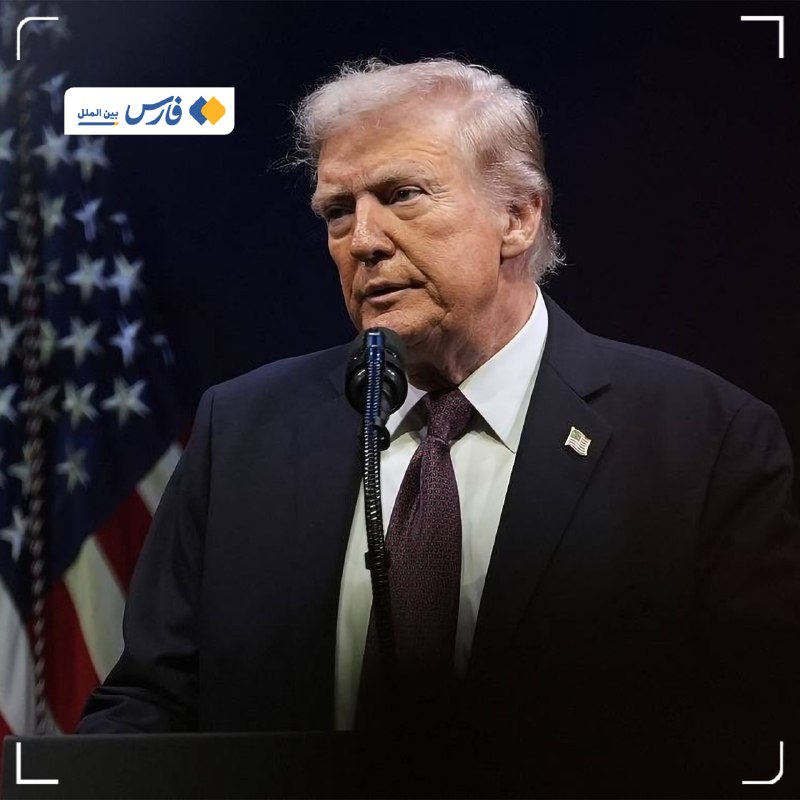
On the morning of 4 May 2026, the world's attention fixed on a sliver of water no wider than sixty miles at its narrowest point. The Strait of Hormuz — the transit corridor through which roughly twenty percent of the world's oil shipments pass — had become the locus of a direct naval confrontation between the United States and Iran. President Donald Trump announced that Washington would begin an operation, codenamed in his public remarks as a form of "project freedom," to escort and guide stranded vessels through the Iranian-gripped waterway. Hours earlier, Iranian officials had made their own position unambiguous: any United States warship entering the strait would be treated as a legitimate target.
The sequence of statements left analysts, energy markets, and allied governments scrambling to assess whether the exchanges constituted the opening phase of a new military engagement or an elaborate form of coercive signalling. The truth, as with most escalations of this kind, likely sat somewhere in the contested territory between the two.
The Announced Operation
Trump's remarks, carried by France 24 on the morning of 4 May 2026, outlined what he described as a "humanitarian gesture" directed at neutral nations whose vessels had found themselves effectively trapped on either side of the strait. The President's framing emphasised civilian shipping — commercial operators with no involvement in the political dispute between Washington and Tehran — as the intended beneficiaries of American naval intervention. According to the France 24 report, the operation was slated to commence on Monday morning, with the United States Navy tasked with guiding vessels out of the contested zone.
The language was deliberate. By invoking humanitarian necessity and framing the operation as assistance to third-party neutral shipping, the White House sought to establish a moral position that would complicate any Iranian response. An attack on an American warship conducting a civilian escort mission would be an attack on international shipping itself — a framing designed to broaden the potential coalition of states willing to pressure Tehran.
The specifics of what "guide" meant in practice remained unclear from the available reporting. Naval operations of this kind range from passive radio coordination to active close-quarters escort to what amounts to a warship transiting disputed waters under armed protection. The distinction matters enormously: passive assistance posed little direct risk of escalation, while armed escort through waters Iran claims jurisdiction over carried a near-certainty of incident.
Tehran's Response
Iran's counter-position, reported by Middle East Eye on the same day, made no allowance for ambiguity. Iranian state-linked sources and official statements left no doubt that Tehran viewed any United States naval presence in the strait as an act of hostility. The language used — that warships entering the waterway would be treated as targets — carried the weight of a formal statement of intent rather than rhetorical escalation.
The Iranian posture must be understood in the context of Tehran's broader strategic calculation. The Strait of Hormuz represents Iran's most significant asymmetric leverage over the global economy. Unlike the United States, which projects power through carrier groups and expeditionary capacity, Iran's strength in this arena lies in its ability to close the strait at relatively low cost — using mines, fast-attack craft, shore-launched missiles, and naval drone swarms that would impose prohibitive costs on any adversary's mine-clearing and surface warfare operations.
When Trump announced on the same morning that he would review a nuclear proposal Iran had sent through diplomatic channels, but added that Tehran "hasn't yet paid a high enough price for what they have done to humanity," the combined signal was a hard one. The United States was simultaneously offering a diplomatic off-ramp and a military ultimatum. Iran was responding to both simultaneously — rejecting the military pressure while leaving the diplomatic door, however slightly, ajar.
The Strategic Logic of a Chokepoint
The Strait of Hormuz has functioned as a geopolitical pressure point since at least the 1980s Iran-Iraq War, when the so-called Tanker War saw both sides attack neutral commercial shipping in the Gulf. The lesson from that conflict is instructive: closing the strait is not the same as surviving the consequences of closing it. When Iraq attacked Iranian oil infrastructure and Iran retaliated by mining the shipping lanes, the United States ultimately intervened — Operation Earnest Will in 1987-88 saw US Navy vessels escorting reflagged Kuwaiti tankers through the strait, the largest naval convoy operation since World War Two.
Iran's leadership is acutely aware of that precedent. Closing the strait would not merely punish the West; it would impose severe costs on China, Japan, South Korea, and India — all of whom depend on Gulf crude and all of whom maintain interests that do not automatically align with American pressure on Tehran. Iran has historically been careful to calibrate its threats in a way that extracts maximum diplomatic leverage without triggering the kind of coordinated international response that would undermine its position.
What is different in 2026 is the state of the nuclear negotiations. The reference to a plan Iran "just sent" — which Trump indicated he would review — suggests that some form of diplomatic channel remains operative. Whether that channel is genuine or a holding tactic while one side or the other repositions, the sources do not establish. What is clear is that the announcement of a naval escort operation was made in conjunction with, and inseparable from, the posture on the nuclear talks. The military and diplomatic tracks are moving simultaneously, each constraining and shaping the other.
What Remains Unresolved
The available reporting leaves several dimensions of the situation underdetermined. The precise rules of engagement under which the announced American operation would proceed were not specified in the available sources. Whether the US Navy would transit the narrowest point of the strait — the Iranian territorial waters at its narrowest — or would position itself in international waters to provide remote coordination remained ambiguous.
The status of the Iranian nuclear proposal itself was similarly unresolved. The sources do not indicate the content of the plan, the channel through which it was transmitted, or whether it represented a substantive offer or a procedural gesture designed to forestall further escalation while negotiations continue. Trump's statement that Iran "hasn't yet paid a high enough price" suggests that whatever Tehran proposed fell short of what Washington regards as adequate.
The role of third-party naval powers also remains unclear. The Gulf states — Saudi Arabia, the UAE, Oman, Qatar — maintain their own strategic calculations. Their shipping industries are deeply exposed to strait disruption. Whether any of these states would support an American escort operation, tacitly or openly, or would seek to distance themselves from what they regard as an American-Iranian confrontation that does not serve their own interests, cannot be determined from the current source base.
The Stakes Ahead
The immediate danger is not a broad military conflict — neither side has signalled appetite for one — but rather the accumulation of incidents. Naval operations in confined waters, between powers that do not formally recognise each other's rights in the disputed zone, generate friction regardless of intent. A collision, a misidentification, a misread signal — any of these could convert a coercive standoff into a shooting incident that neither side had planned.
For global energy markets, the stakes are tangible. Oil traders have been pricing in elevated risk premiums for Gulf tensions since the escalation began. A sustained disruption to Hormuz transit — even a temporary one triggered by a single high-profile incident — would transmit immediately into refined product prices, affecting economies from Southeast Asia to Western Europe.
The longer structural question is whether the Hormuz standoff represents a transitional moment in the broader architecture of Gulf security. The United States has long positioned itself as the guarantor of free transit through the strait — a role it has exercised with carrier presence, bilateral security agreements with Gulf partners, and a generally maintained posture of visible dominance. A confrontation with Iran that results in either an American retreat from that posture or a reconfiguration of it — perhaps toward a more distributed security arrangement involving regional actors — would reshape the geopolitics of the entire region.
Tehran, for its part, has spent the post-sanctions years rebuilding its economic relationships across Asia, deepening energy partnerships with China and India that give it a degree of insulation from Western pressure. That insulation is not complete — Iranian oil exports remain constrained by secondary American sanctions — but it is sufficient to ensure that Tehran does not approach these confrontations from a position of total vulnerability.
What happens in the coming days will hinge on whether the diplomatic channel Iran has opened proves substantive enough to pause the military posture, or whether the two tracks proceed in parallel toward a collision neither side explicitly seeks but both believe they can manage. The Strait of Hormuz has survived many confrontations. Whether this one is different will depend on details that remain, at present, undisclosed.
This desk covered the Hormuz standoff as a military-diplomatic escalation rather than as a straightforward geopolitical conflict. France 24's reporting on the humanitarian framing of Trump's operation was taken as the primary US-sourced account; Iran International and regional outlets provided context on Tehran's posture, while the structural analysis of chokepoint politics drew on historical precedent from the Tanker War era. The nuclear proposal Iran transmitted remains unverified in the available sources and is not speculated upon here.