The Strait at the Edge: How Hormuz Became the Fulcrum of a New Maritime Standoff
President Trump announced a unilateral military operation to break an Iranian blockade of the Strait of Hormuz, deploying warships, aircraft and 15,000 troops in what would be the most significant US naval intervention in the Persian Gulf in decades. The consequences extend far beyond the channel itself.
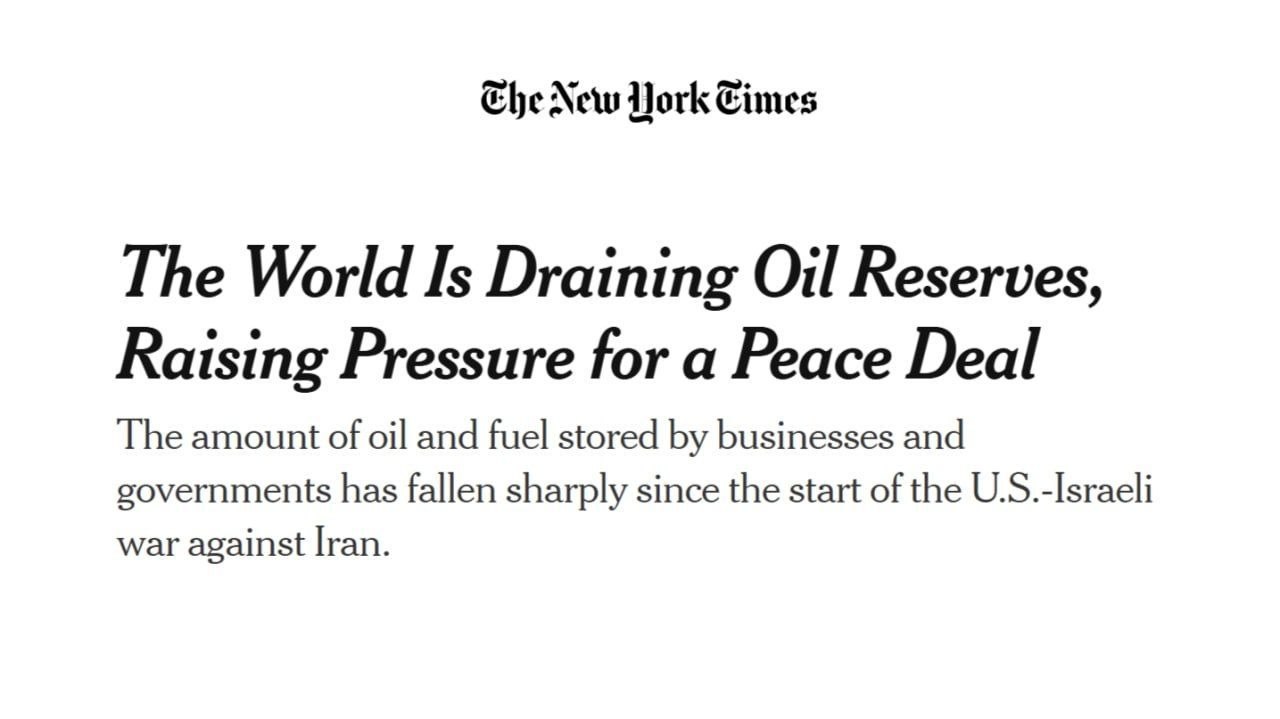
At 05:25 UTC on 4 May 2026, President Trump announced that the United States would begin a unilateral operation the following morning to "liberate" merchant ships through the Strait of Hormuz. By 05:42 UTC, US Central Command had publicly detailed the scale of the commitment: missile destroyers, one hundred aircraft, and fifteen thousand soldiers. The announcement came less than two hours after new navigational signs for the Strait were reported to have been posted by Iranian authorities. Ships, by multiple accounts, were already trapped in the channel.
The Strait of Hormuz is not merely a chokepoint. It is the arterial system through which roughly a fifth of the world's oil flows, connecting the Persian Gulf to the Gulf of Oman and the open ocean beyond. To threaten it is to threaten the pricing architecture of global energy markets. To intervene in it, forcibly, is to convert that threat into a present, kinetic reality. What the Trump administration has labelled "Project Freedom" arrives, by that logic, with consequences that will outlast the immediate military calculus.
This publication finds that the operation as announced represents the most consequential US naval posture in the Persian Gulf since the Iran–Iraq tanker wars of the 1980s. Whether it achieves its stated goal of freeing trapped vessels, or whether it becomes the inciting incident for a wider regional conflict, will depend on calculations still in motion.
What We Know About the Blockade
The thread leading to this announcement is not fully transparent. Multiple Telegram channels reported on 4 May 2026 that new rules and signage for the Strait of Hormuz had been posted by Iranian authorities, and that ships were now stuck within the channel. The specific legal mechanism Iran invoked — whether a formal blockade declaration, an "administrative restriction," or something in between — is not clear from the sources currently available. That ambiguity matters, because the legal threshold for responding to a blockade under international maritime law differs substantially from the threshold for responding to a customs enforcement action.
What is unambiguous is the scale of the choke point. Approximately 20 to 21 million barrels of oil pass through Hormuz daily in normal conditions, according to long-standing industry estimates. Even a partial restriction reverberates through tanker调度, insurance premiums, and spot market pricing within hours. The sources do not provide current oil-flow data, and satellite AIS tracking data, which would confirm whether commercial traffic has thinned, is not included in the current reporting thread.
Iran has periodically threatened to close or restrict the Strait before, most recently in 2024 and 2025. Those threats were largely rhetorical. The question now is whether what is being reported on 4 May 2026 represents a rhetorical escalation, a negotiating posture, or the actual imposition of a maritime restriction.
The Freedom Project: Force Structure and Legal Ambiguity
The force commitment announced by Central Command — destroyers, one hundred aircraft, fifteen thousand personnel — is not a coastal patrol. It is a strike group-level posture, consistent with an expeditionary intervention rather than a signalling operation. The terminology "Project Freedom" is deliberate: it frames the action as liberation rather than confrontation, a rhetorical choice that also serves a legal function in how the administration might justify the operation to Congress and to allied governments.
International maritime law, as codified in the 1958 Geneva Conventions and customary law, treats unannounced blockades of international straits as illegal. But the converse — forcible military intrusion into a chokepoint claimed as territorial waters or under coastal state jurisdiction — carries its own legal risks if the coastal state's actions do not meet the threshold of a formal, notified blockade. The United States has historically taken the position that the Strait of Hormuz is an international strait under Part III of UNCLOS, entitling all vessels to right of transit passage. Iran does not recognise the US interpretation of the legal regime.
The legal ambiguity is not incidental. It is the space in which both sides are operating. What the administration calls "liberation," Tehran may characterise as an act of aggression against sovereign waters. The outcome of that framing contest, fought in diplomatic cables and at the UN Security Council, may matter as much as the military outcome.
Energy Markets and the Asian Import Variable
The Strait of Hormuz's significance to global energy markets is well-established. What is less often foregrounded in Western coverage is the distribution of who depends on that flow. China, India, Japan, South Korea, and several Southeast Asian economies are the primary end-users of Gulf crude that transits the Strait. A sustained disruption — whether from the blockade itself or from the kinetic risk of a US-Iranian confrontation in the channel — would hit Asian refining capacity first and hardest.
China in particular has made no secret of its interest in energy security arrangements that do not pass through chokepoints controlled by the US Navy. The Belt and Road-linked ports in Pakistan, the Trans-Caspian route through Kazakhstan, and growing Gulf cooperation with Beijing on long-term supply contracts are all structural responses to precisely this vulnerability. A military confrontation at Hormuz that disrupts flows for weeks would accelerate those trends rather than reverse them. Asian buyers would accelerate diversions; the US would find that its leverage over Gulf shipping routes has a shelf life.
For European consumers, the immediate calculus is different but no less acute. European gas prices spiked in 2022 following the Ukraine war and again in 2024 following infrastructure disruptions. A Hormuz incident would compound existing energy anxiety. Unlike the United States, which is effectively energy self-sufficient in crude terms, Europe remains exposed to maritime supply chain shocks in a way that constrains its diplomatic options in any Gulf confrontation.
The Regional Dimension: Who Wins If This Escalates
The immediate theatre is the Strait itself. The wider theatre is the set of relationships and alliances that any US-Iranian confrontation would activate. Hezbollah in Lebanon, Iraqi Shia militias, the Houthis in Yemen, and Iranian-aligned groups across the region have demonstrated, repeatedly since October 2023, that they can apply pressure on US assets and regional partners without direct Iranian involvement. An overt US military operation against Iranian maritime infrastructure would almost certainly trigger responses from one or more of those networks.
Israel, which has been engaged in sustained military operations in Gaza and periodic operations against Iranian-linked targets in Syria and Lebanon, would face pressure to remain focused on its existing front. The Biden administration's legacy approach — calibrated support for Israel combined with diplomatic outreach to Iran — has given way to a more confrontational posture. The question is whether the current administration has accounted for the difference between a surgical operation to free ships and a wider maritime conflict that activates every Iranian proxy simultaneously.
Iran's calculus is equally opaque from the available sources. Tehran has invested heavily in asymmetric maritime capabilities — fast attack craft, sea mines, anti-ship missiles — designed precisely to complicate US naval dominance in confined waters. The Strait of Hormuz, at its narrowest thirty-three kilometres wide, is not open ocean. A destroyer-led US flotilla moving through it in the open is not the same as carrier-based air operations over the Arabian Sea. The asymmetry favours the defender in a chokepoint.
What Comes After: The Stakes and the Uncertainties
The sources at hand do not confirm that the operation announced on 4 May has commenced as of publication time. The stated start time — the following morning, 5 May 2026 — means the window for de-escalation is measured in hours, not days. What is already clear is that the underlying tensions did not begin with this announcement and will not end with it.
The structural pressures driving Iranian behaviour — sanctions, diplomatic isolation, and what Tehran frames as a consistent US policy of economic strangulation — remain in place regardless of what happens in the Strait this week. The structural pressure driving US posture — the intersection of Gulf state relationships, global energy pricing, and the domestic politics of demonstrating strength — remains in place as well. One operation, successful or otherwise, does not resolve those pressures. It redistributes them.
This publication will continue to track the operational timeline, the legal justifications offered by both sides, and the secondary effects on energy markets and regional security structures. The sources currently available leave significant gaps — the specific Iranian legal instrument for the blockade, the current flow status of commercial traffic, the degree of allied coordination — that the incoming reporting cycle will need to address. What is not in question is that a maritime chokepoint carrying a fifth of the world's oil has become the site of a direct great-power confrontation. The outcome will be shaped by military hardware, but also by the diplomatic and economic architecture that both sides are racing to build around it.
This article covers the Strait of Hormuz as a geopolitical flashpoint and energy security chokepoint. The wire framing from pro-Iranian channels focused on the naval hardware; this publication has foregrounded the structural context — chokepoint economics, Asian energy dependency, and legal ambiguity — that the immediate headlines do not surface. We are seeking independent confirmation of current commercial shipping status through AIS data and additional Western wire reporting.
Wire provenance
This editorial synthesis draws on the following public wire/social posts:
- https://t.me/tasnimplus/48342
- https://x.com/sprinterpress/status/1920094267827019972
- https://t.me/abualiexpress/28471
- https://t.me/abualiexpress/28466
- https://t.me/abualiexpress/28464
- https://t.me/abualiexpress/28458
- https://t.me/abualiexpress/28457