The Strait of Hormuz Standoff: Oil Markets, Diplomatic Silence, and the Price of Indecision
As Iran signals escalation against US naval presence in the Strait of Hormuz and prediction markets price a slim chance of de-escalation, the world's most critical oil artery remains in a state of managed tension — with consequences that reach far beyond the Persian Gulf.
For a waterway barely thirty kilometres wide at its narrowest point, the Strait of Hormuz absorbs an extraordinary amount of global anxiety. On 3 May 2026, Polymarket oddsmakers placed a 22 percent chance that traffic through the strait would return to normal — whatever normal means in a region that has not experienced genuine calm in decades — by the end of the month. A concurrent 39 percent probability was assigned to the prospect of a US-Iran diplomatic meeting before May concluded. The two numbers together tell a story of profound uncertainty: the market, such as it is, cannot decide whether the coming weeks will bring resolution or rupture.
This is not a new anxiety. The strait has served as a pressure point in US-Iranian relations since the Islamic Revolution of 1979, and both sides understand the symbolic and strategic weight of the corridor. Iran controls the northern approaches; the US Navy, through its Fifth Fleet based in Bahrain, patrols the southern lanes. Any disruption to the roughly twenty-one million barrels per day that transit the waterway sends shockwaves through every Brent crude futures contract, every diesel price at the pump in Berlin or Buenos Aires, every industrial margin calculation from Mumbai to Munich. That physics has not changed. What has shifted is the diplomatic temperature — and it is running dangerously cold.
The Threat, and What Lies Behind It
Iranian state media, as reported by Middle East Eye on 4 May 2026, carried threats of action against US presence in the Hormuz Strait. The language was pointed, consistent with a pattern of rhetorical escalation that Tehran has deployed when it believes Western pressure has reached an intolerable threshold. The specifics of what action Tehran envisions remain opaque — Iran has historically preferred asymmetric responses (covert mining, drone swarms, harassment of commercial vessels) to direct naval confrontation, which it would almost certainly lose. But the intent signal is clear enough: Iran is communicating that the current arrangement is untenable from its perspective, and that consequences will follow if the pressure does not ease.
The immediate trigger, according to the Reuters analysis published the same morning, is the prolonged US-Iran stalemate over the nuclear file and the broader sanctions architecture. Washington has maintained maximum pressure since the 2018 withdrawal from the Joint Comprehensive Plan of Action, and the sanctions regime has progressively strangled Iranian oil exports — the country's primary source of foreign currency. Tehran's response has been to expand its nuclear programme to threshold levels while seeking leverage through regional proxies. Neither strategy has produced the relief Tehran sought. What it has produced is desperation, and desperation in possession of a strategic chokepoint is a condition that global markets cannot afford to ignore.
The Indian rupee and Indian bond markets, as Reuters noted, were identified as among the first indicators that traders were pricing this risk into sovereign instruments. India imports more than eighty percent of its crude from the Middle East, and a meaningful disruption to Hormuz transit would immediately worsen its current account deficit and put upward pressure on the rupee. The Reserve Bank of India has limited tools to respond: raising rates to defend the currency would further cool an economy already navigating post-pandemic consolidation. Indian bond yields have been tracking these concerns, reflecting a broader pattern in emerging market sovereign debt where geopolitical premiums are becoming structural features rather than temporary spikes.
What Normal Even Means Anymore
The Polymarket odds of 22 percent for a return to normal traffic by end of May deserve scrutiny. The concept of normal in the Hormuz context has always been contested. Even during periods of relative quiet, the US presence is an irritant to Tehran — a reminder that a rival power controls the maritime exit from what Iran considers its sphere of influence. Normal, in practical terms, has meant managed tension: enough harassment to remind Washington that the strait is not a neutral space, but not enough to trigger the kind of response that would compel a US decision to escalate.
That equilibrium has grown increasingly fragile. Three structural forces are eroding it. First, Iran's nuclear programme has advanced to a point where breakout time — the period required to produce enough fissile material for a weapon — has compressed from months to weeks. The strategic calculus in Tehran has shifted accordingly: the nuclear card is worth less as a deterrent the more countries in the region acquire their own nuclear capabilities or security guarantees. Second, the collapse of the JCPOA has removed the diplomatic framework that, however imperfectly, kept both sides talking. Without those channels, misperception becomes more likely and the threshold for miscalculation lowers. Third, the broader realignment of Middle Eastern geopolitics — Saudi Arabia's détente with Iran, the shifting US posture toward regional partners — has created a new landscape in which the old rules of engagement no longer apply cleanly.
On the question of a diplomatic meeting happening before the end of May, the 39 percent probability reflects a structural reality that prediction markets tend to price in accurately: neither side has an obvious incentive to initiate, but both have overwhelming incentives to avoid the worst outcome. A meeting is the rational move. Reason and geopolitics, however, are not always well-acquainted.
The Dollar Dimension
No discussion of Hormuz is complete without acknowledging the currency in which oil is priced. Brent crude, the global benchmark, trades in dollars. Every disruption to supply — or to the perceived safety of supply — strengthens the dollar's role as a safe haven and complicates the position of those actors attempting to create dollar-alternative transaction architectures. China, which imports roughly half its crude from the Middle East, has obvious interests in a stable Hormuz. So too do the BRICS-aligned nations that have been working, with limited success, to develop alternative settlement mechanisms that sidestep dollar clearing.
The irony is sharp: the very sanctions regime that Washington uses to pressure Iran simultaneously creates the demand for dollar-alternative systems. Every barrel of Iranian oil that disappears from the legitimate market is a barrel that trades in grey-market channels, priced in yuan or rupees or local currencies, and tracked in ledgers that US financial regulators cannot see. The Hormuz standoff, by raising the premium on Middle Eastern crude, actually benefits the dollar in the short term — risk aversion drives demand for dollar assets — while accelerating the structural diversification that erodes dollar dominance in the long term. Washington wins the battle and loses the war, a pattern that has become familiar in the literature on sanctions effectiveness.
The Asian Exposure
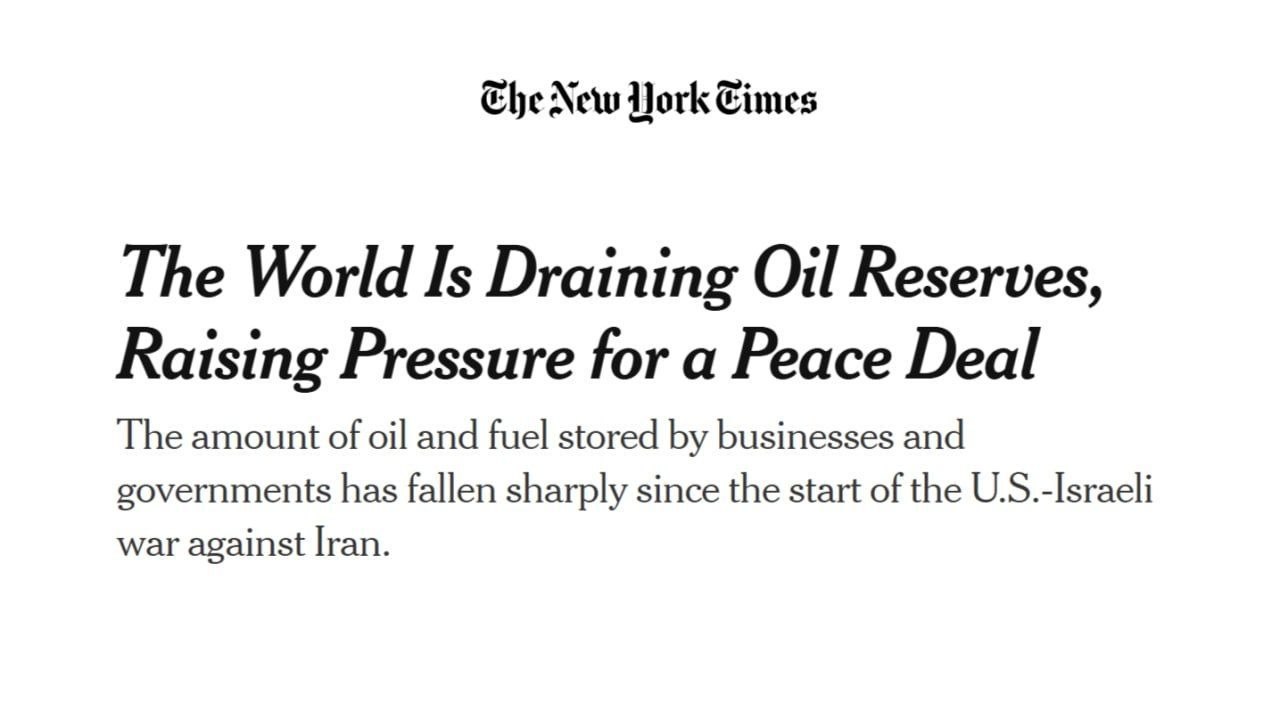
India is not the only Asian economy with acute Hormuz exposure. China, Japan, South Korea, and the ASEAN nations collectively account for the majority of oil shipments through the strait. A disruption lasting more than a few weeks would force these economies to draw down strategic reserves — a buffer that took decades to accumulate and that represents a genuine hedge against exactly this scenario. The International Energy Agency's member-country reserve requirements were designed with disruptions like the 1973 embargo in mind; whether they are adequate for a sustained modern scenario is a question that has not been subjected to rigorous stress-testing in public.
South Korea, whose KOGAS strategic reserve system is among the most sophisticated in Asia, would face immediate pressure on liquefied natural gas supplies as well — the strait handles significant LNG volumes. Japan, still recovering from the reputational damage of its post-Fukushima energy conservatism, has limited domestic alternatives. China's position is more complex: Beijing has been building strategic petroleum reserve capacity precisely to manage this kind of shock, but the infrastructure is unevenly distributed and the logistics of redistribution within a country of China's geography are non-trivial.
The broader implication is that Asian economies have become the de facto guarantors of Hormuz stability in a way that US policy has not fully acknowledged. Washington can project force; it cannot control demand. The incentive for diplomatic resolution, from an Asian perspective, is overwhelming — and that incentive creates pressure on both Washington and Tehran to find off-ramps that preserve credibility while avoiding conflagration.
What Comes Next
The Polymarket odds tell us that the market assigns a sixty-one percent probability that Hormuz traffic does not return to normal by end of May, and a sixty-one percent probability that no diplomatic meeting occurs. These are not reassuring numbers. They suggest that the current trajectory — of rhetorical escalation, managed sanctions pressure, and zero direct communication — is the most likely near-term outcome. That trajectory carries its own risks: each week of silence increases the probability of an incident — a misidentified vessel, an automated system failure, a commander on either side acting without adequate guidance — that neither side intended and both sides would struggle to contain.
The structural stakes are clear. If the strait is disrupted, the price of Brent crude rises in a pattern that is non-linear rather than linear — small reductions in transit volume produce disproportionately large price increases because the market prices in the risk of further disruption, not merely the current disruption itself. At levels above one hundred dollars per barrel, the inflationary pressure on import-dependent economies becomes politically destabilising in ways that go beyond the economic. Governments fall. Protest movements gain traction. The social contract in fragile states — and there are several in Asia and Africa where energy price spikes interact with existing grievances — comes under strain.
The counterargument, which proponents of a tougher line in Washington and Tehran would advance, is that managed tension is the only stable equilibrium in a relationship defined by fundamental incompatibility. That argument has merit — it is, in essence, the argument that has kept the strait open for fifty years. But it assumes that both sides retain the capacity for calibrated response, and that assumption is increasingly tested by domestic political pressures in both capitals that reward escalation and punish compromise.
What this publication finds is that the Hormuz standoff in May 2026 represents a crystallisation of broader trends: the erosion of diplomatic architecture, the advance of nuclear threshold capabilities, the recalibration of Asian energy security assumptions, and the dollar's paradoxical position as both beneficiary and long-term casualty of sanctions enforcement. The strait is not merely a shipping lane. It is a pressure valve for a global energy system that has not yet made the investments — in diversification, in reserve capacity, in diplomatic redundancy — that would make it genuinely resilient to disruption. Until those investments materialise, the anxiety will remain, and the Polymarket odds will continue to reflect a world that is one miscommunication away from crisis.
This article was filed from multiple wire services and energy market reporting as of 4 May 2026. Monexus will continue monitoring Hormuz transit data and US-Iran diplomatic signals.
Wire provenance
This editorial synthesis draws on the following public wire/social posts:
- http://reut.rs/4d3yoEG
- https://en.wikipedia.org/wiki/Strait_of_Hormuz
- https://en.wikipedia.org/wiki/Brent_crude
- https://en.wikipedia.org/wiki/Joint_Comprehensive_Plan_of_Action
- https://en.wikipedia.org/wiki/United_States_Fifth_Fleet
- https://en.wikipedia.org/wiki/International_Energy_Agency