Hormuz Tensions Drive Brent Above $113 as Analysts Warn of $200 Barrel Scenario
Oil markets moved sharply on 4 May 2026, with Brent crude climbing more than 5 percent to surpass $113 per barrel as tensions escalated in the Strait of Hormuz, the narrow waterway through which roughly one-fifth of the world's oil supply passes daily. The price spike, reported by Reuters on the day, came as US maritime forces maintained an active blockade posture in the Gulf and regional sources described the situation as increasingly volatile.
The immediate move compounds anxiety that has been building since the blockade began. Energy sector professionals surveyed by Sprinter Press on 4 May 2026 laid out a stark range of outcomes: if the Strait of Hormuz closes and the US maritime interdiction continues through mid-June, the upper scenario projects Brent crude reaching $180 to $200 per barrel. That would represent a near-doubling from levels seen before the blockade commenced. The market has not priced that scenario yet—but the directional signal from analysts inside the US energy establishment is unambiguous.
The Immediate Price Shock
The Reuters reporting on 4 May captured a market in reactive mode. A move of more than 5 percent in a single session is not unusual during genuine geopolitical events, but the context here matters: the strait's traffic controls affect a volume of oil large enough that even short-term disruption ripples through tanker bookings, freight futures, and retail fuel markets within days. Singapore and Rotterdam storage indicators, though not yet formally reported for the full day, showed elevated activity consistent with buyers attempting to front-load inventory before prices move further. The market is not yet in crisis pricing—but it is alert to the possibility.
The US energy sector forecast obtained by Sprinter Press suggests the market's next move depends heavily on whether the blockade holds as a containment posture or transitions into something more active. A sustained blockade keeping the strait partially open still suppresses throughput; a formal closure changes the arithmetic entirely. Energy traders in Singapore, London, and New York were described in industry channels as recalibrating risk premiums, with some desks reportedly adding exposure to upside scenarios that had been discounted before the blockade began.
Why Hormuz Cannot Be Easily Circumvented
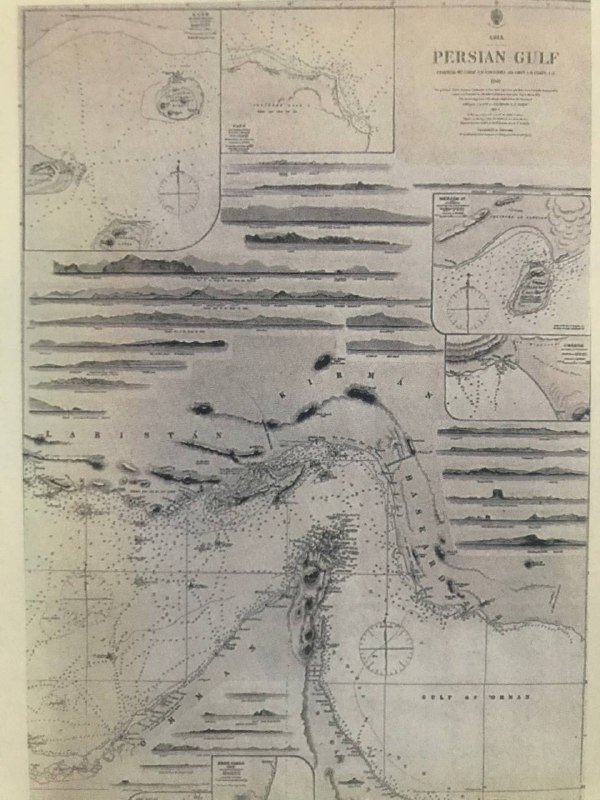
The Strait of Hormuz sits between Oman and Iran at the mouth of the Persian Gulf. It is not merely a transit point—it is the access corridor for the entire Gulf production apparatus. Saudi Arabia, Iraq, Kuwait, the UAE, Qatar, and Iran itself all route exports through it. No land alternative exists at scale. Pipelines proposed across Arabia—some partially built—would require years and billions in capital expenditure before reaching the capacity needed to meaningfully offset a strait closure.
The most commonly cited alternative route is around the Horn of Africa via Cape of Good Hope. That detour adds two to three weeks to voyage times, inflates shipping costs, and requires vessels to transit higher-insurance-risk waters. For supertankers already operating on thin freight margins, that is not a cost-effective workaround—it is a crisis improvisation. The infrastructure simply does not exist to reroute global oil trade at the volumes Hormuz handles without a sustained, severe price shock reaching consumers within a six-to-eight-week window.
This is the structural vulnerability that every energy security assessment has identified for decades. The global economy has built its oil logistics around a single chokepoint in a region where geopolitical fault lines are permanent. A disruption that would be manageable elsewhere becomes existential when it occurs here.
The Dollar Architecture Under Pressure
There is a financial dimension to this spike that often goes unexamined in the immediate reporting. Brent crude is priced in US dollars. When oil prices rise, the cost of importing energy rises for every country that does not earn dollars from exports—at precisely the moment that the dollar itself strengthens against those same importing nations' currencies. The mechanism is automatic: higher oil prices mean more dollar demand globally, which bids the dollar up against non-dollar currencies, which in turn makes the oil even more expensive in local terms.
This dynamic intensifies the pressure on countries already operating under US sanctions or dollar access restrictions. Iran, targeted by the US maritime operation, is itself one of the producers affected—meaning the blockade is simultaneously restricting supply and tightening the financial noose on its remaining customers. For secondary sanctions targets—states that transact in dollars or rely on dollar-denominated financing—the spike functions as a structural penalty layered on top of the physical disruption.
The dollar-petrol nexus has long been a feature of American financial power. What the current moment surfaces is its recursive logic: sanctions that restrict oil supply push prices up, which strengthens the dollar, which makes the sanctions more expensive for their targets, which deepens the dependency on dollar-denominated trade even for neutral parties. The mechanism does not require explicit US action beyond maintaining the blockade posture. The market does the rest.
Forecast Scenarios and who Stands to Gain
The $180–200 scenario from US energy analysts, while speculative, is structurally coherent. It assumes a closure lasting six to eight weeks, which would exhaust floating storage buffers and force drawing down onshore inventory across Asia and Europe. At that point, prices paid at the pump in importing economies would reflect the shock within sixty to ninety days, depending on local tax structures and retail pricing mechanisms.
For major oil-importing nations—India, Japan, South Korea, much of Southeast Asia—the exposure is direct and significant. These countries maintain strategic petroleum reserves, but reserves at current estimated volumes cover thirty to forty days of import dependency under normal draw rates. A prolonged Hormuz closure accelerates drawdown and creates political pressure to release reserves, which then creates the expectation of a future replacement purchase that itself bids prices higher.
The winners in that scenario are identifiable: energy exporters outside the Hormuz corridor, including the United States itself, Russia, and Venezuela, would see windfall revenue at those price levels. American shale producers, whose break-even economics sit comfortably below the current $113 floor, would expand output into a tighter market. The incentive structure rewards producers already positioned outside the disruption zone.
What remains uncertain—and the sources do not fully resolve—is whether the blockade constitutes a defined endpoint operation or represents an open-ended posture. A negotiated de-escalation before mid-June changes the upper scenario entirely. A prolonged stalemate that maintains elevated tension without formal closure keeps insurance and freight costs elevated, preserving market uncertainty without reaching full crisis pricing. That middle scenario is, perhaps, the most likely near-term outcome—and the most difficult one for policymakers in importing capitals to plan around.
Monexus is tracking Hormuz-area maritime traffic indicators and will update as commercial shipping data and diplomatic reporting becomes available.
Wire provenance
This editorial synthesis draws on the following public wire/social posts:
- https://t.me/sprinterpress/2476
- https://t.me/alalamfa/89234
- https://t.me/alalamarabic/114567
- https://t.me/alalamarabic/114568